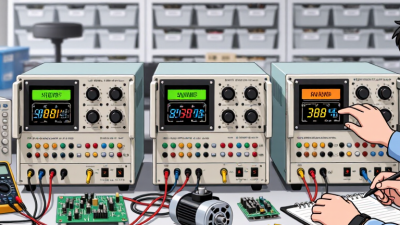
How to Choose Programmable DC Power Supplies?
Choosing Programmable DC Power Supplies requires more than comparing voltage ranges and front-panel displays. A suitable unit must deliver stable, measurable power for the actual device under test. Engineers should examine output voltage, current capacity, power limits, ripple, noise, and transient response. A 0–30 V, 5 A supply may suit a small embedded circuit, but it will not support every motor or battery experiment. Check the datasheet carefully. Marketing terms can hide important operating limits.
Control and protection features also deserve close attention. Remote sensing can compensate for voltage drops across long test leads. Current limiting helps protect a prototype when a component fails unexpectedly. Overvoltage, overtemperature, and short-circuit protection provide valuable safeguards, but they are not substitutes for careful laboratory practice. Digital interfaces, such as USB, LAN, or RS-232, matter when tests must run repeatedly. Automation can record voltage and current readings more consistently than manual adjustment. Still, software integration is not always effortless. I have seen engineers overlook driver compatibility and lose hours during setup.
This guide presents a practical method for selecting Programmable DC Power Supplies. It considers application requirements, accuracy, resolution, response speed, channel configuration, and total ownership cost. Calibration records and independent test data can strengthen purchasing decisions. When possible, compare a candidate supply with a trusted meter under realistic loads. Test it cold, warm, and near its rated output. Small details matter. The best choice balances electrical performance, usability, safety, and future testing needs rather than relying on price alone.
Read more »


 By:Oliver
- September 20, 2026
By:Oliver
- September 20, 2026
 By:Ethan
- September 20, 2026
By:Ethan
- September 20, 2026