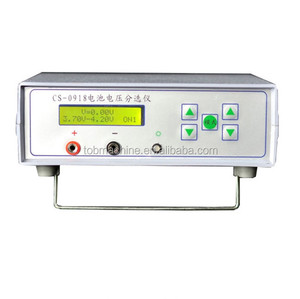
Lithium Ion Battery Voltage Current Capacity Tester
Precision electrochemical tester providing ultra-stable constant current/voltage charging & discharging validation for lithium cell manufacturing and QA testing in Kanto energy research facilities.

Explore our specialized portfolio of high-dynamic programmable DC power supplies, multi-channel battery cell simulators, and industrial power emulation instruments tailored for Tokyo's rigorous laboratory and manufacturing standards.
Precision electrochemical tester providing ultra-stable constant current/voltage charging & discharging validation for lithium cell manufacturing and QA testing in Kanto energy research facilities.
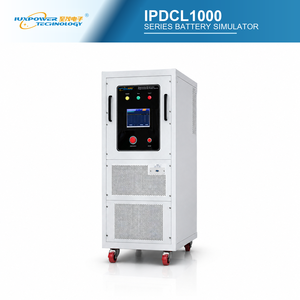
Compact rack-mount DC power supply featuring constant power function, sub-millisecond dynamic response, and programmable internal resistance curve modeling for ATE integration.
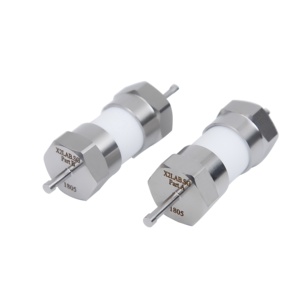
Designed for IoT micro-electronics, wearable devices, and electrochemical sensor validation. Features ultra-low noise output stage and removable cell-jig interface.
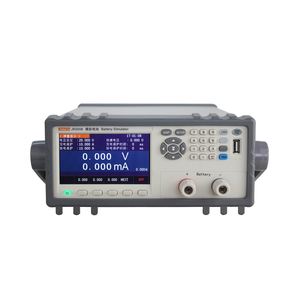
High-speed isolated multi-channel DC power module capable of simulating individual cell voltage characteristics for consumer electronic battery management systems (BMS).
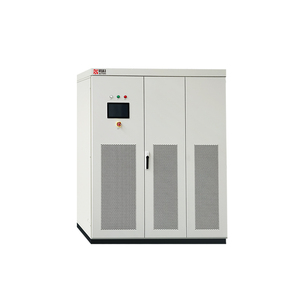
Megawatt-class heavy-duty DC supply equipped with liquid cooling heat transfer channels for EV drivetrain testing, grid storage emulation, and heavy vehicle inverter validation.
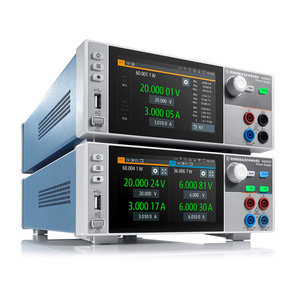
Precision two-quadrant bipolar programmable DC supply for ultra-fast transient response, active load emulation, and high-speed current measurement in RF semiconductor test benches.
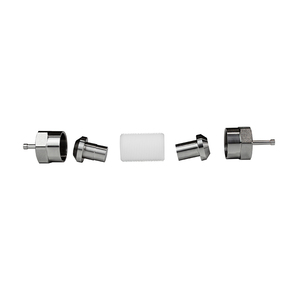
Laboratory-grade simulation power system dedicated to coin-cell battery lifecycle emulation, internal resistance pulse simulation, and energy harvesting circuit testing.
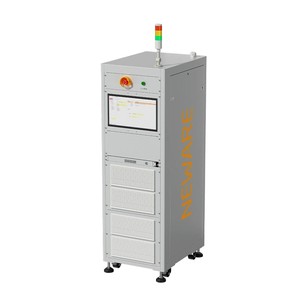
High-density 24-channel programmable DC simulator designed to validate automotive BMS controllers, fault injection scenarios, passive/active cell balancing, and SOC estimation algorithms.
The Greater Tokyo Metropolitan Area—encompassing major industrial corridors across Kanagawa (Yokohama, Kawasaki), Chiba, Saitama, and the Tsukuba Science City—represents one of the world's most concentrated hubs for semiconductor fabrication, automotive powertrain R&D, and high-energy physics research. However, operating multi-kilowatt and megawatt-scale direct current (DC) power test infrastructure within Tokyo presents unique architectural and logistical challenges:
Unlike conventional voltage-fed power supplies that utilize large electrolytic capacitor banks at the DC bus—making them vulnerable to catastrophic short-circuit currents—our liquid-cooled industrial DC supplies utilize a Current-Fed Inverter Topology. An inductive storage element naturally limits instantaneous fault currents. If a device under test (DUT) experiences dielectric breakdown or an arc event during wafer testing, the current-fed topology prevents energy surges, ensuring continuous protection for million-dollar prototype semiconductors in Japanese labs.
Water possesses a specific heat capacity ($C_p \approx 4.184 \text{ kJ/kg}\cdot\text{K}$) nearly 4,000 times greater than air by volume. Liquid cooling cold-plates placed directly against high-power IGBT switches, high-frequency planar transformers, and output rectifiers dissipate waste heat at thermal resistance levels unattainable by air-cooling copper fins.
| Engineering Metric | Traditional Air-Cooled DC Power Racks | Direct Water-Cooled DC Power Systems |
|---|---|---|
| Volumetric Power Density | 15 kW to 30 kW per 42U Cabinet | 100 kW to 500 kW per 42U Cabinet |
| Facility Heat Load Impact | 100% of heat rejected into ambient room air | >90% of heat transferred directly to facility water loop |
| Cleanroom Compatibility | Poor (High air movement, dust re-entrainment) | Ideal (Sealed chassis, zero ambient air turbulence) |
| Acoustic Noise Level (at 1m) | 78 dBA – 85 dBA (High-pitch fan noise) | < 58 dBA (Whisper-quiet fluid circulation) |
| Operating Temperature Stability | Vulnerable to ambient HVAC temperature swings | Isothermal cold-plate balance ($\pm 0.5^\circ\text{C}$ regulation) |
| Long-Term Reliability (MTBF) | Dust accumulation accelerates thermal degradation | Hermetically sealed electronics payload (>100,000 hrs MTBF) |
Our water-cooled programmable DC power supplies and battery simulators are tailored to match the infrastructure requirements of Japan's key technology clusters.
Locations: Kanagawa (Kawasaki/Yokohama), Chiba Industrial Belt.
In Silicon Carbide (SiC) and Gallium Nitride (GaN) wide-bandgap device characterization, fast transient response and stable DC bus voltage are paramount. Our water-cooled DC supplies provide rigid high-voltage outputs (up to 1500V DC) for double-pulse testing, plasma etching, and epitaxial layer deposition without injecting thermal stress into cleanroom environments.
Locations: Tochigi R&D Centers, Tokyo Bay Automotive Engineering Labs.
Automotive OEMs and Tier-1 suppliers testing 800V EV traction inverters require bidirectional power emulation capable of sinking and sourcing hundreds of kilowatts continuously. Our liquid-cooled battery simulators (such as the 150kW-1000kW series) interface with dSPACE and LabVIEW platforms via CAN/Modbus, delivering sub-millisecond voltage response under rapid acceleration profiles.
Locations: Tokyo Science Innovation Zones & Energy Research Centers.
Aligned with Japan's national Hydrogen Strategy, water-cooled high-current DC power units supply constant, low-ripple current (up to several thousand Amperes) to PEM and Solid Oxide Electrolyzers (SOEC). The sealed water-cooled housing protects interior electronics against corrosive airborne gases in electrochemical laboratories.
Locations: Tsukuba Science City & KEK National Laboratory.
Precision physics experiments demand extreme current stability (ppm-level drift over 24 hours). Utilizing the DBx high-stability liquid-cooled module option, our power supplies deliver low-drift magnet power for quadrupole steering magnets, maintaining precise thermal equilibrium regardless of lab ambient variations.
Locations: Shinagawa, Shin Yokohama High-Tech Parks.
When space in multi-story urban research buildings is constrained, stacking multiple 1U/2U or cabinet units in enclosed rack bays is necessary. Direct liquid cooling enables zero-clearance side-by-side mounting, effectively doubling available rack space without triggering thermal over-temperature trips.
Locations: JAXA Supply Chain Partners & Aerospace Contractors in Kanto.
Simulating solar array I-V curves under space thermal vacuum conditions. Our specialized PPPE software combined with liquid-cooled DC power supplies replicates high-voltage solar array outputs, orbital illumination transients, and eclipse entry/exit curves with pinpoint accuracy.
Under the Japanese Ministry of Economy, Trade and Industry (METI) Green Transformation initiative, Japan is accelerating investments in renewable energy integration, solid-state battery development, and high-efficiency power electronics. Tokyo-based procurement teams are actively migrating away from inefficient air-cooled test setups toward water-cooled topologies that offer total system efficiency exceeding 95%, drastically reducing the carbon footprint of industrial test centers.
With major Japanese automotive giants advancing next-generation electric platforms, the demand for DC power test equipment capable of delivering 1000V+ output at megawatt scale has surged. Water-cooled DC power supplies provide the necessary isolation voltage ratings and rapid voltage slew rates (>450 V/ms) required to stress-test wide-bandgap traction inverters, DC-DC fast chargers, and high-voltage battery management systems.
Tokyo facilities face rising electricity tariffs and strict municipal carbon emission quotas. Traditional air-cooled power equipment wastes significant energy by requiring double-conversion HVAC cooling (cooling the hot air exhausted by power supplies). Direct liquid cooling routes waste heat into facility water cooling towers or heat-recovery loops, reducing facility PUE (Power Usage Effectiveness) from 1.6 down to below 1.15.
Four decades of power conversion engineering, vertically integrated USA manufacturing, and dedicated regional support for the Japanese market.
Every water-cooled cold plate, high-frequency planar transformer, sheet-metal cabinet, and SMT PCB assembly is engineered and built inside our dedicated factory facility. This ensures stringent quality control and predictable 4–6 week build lead times for custom Tokyo orders.
Our patented current-fed power processing topology stores energy in robust inductors rather than delicate capacitors. This provides inherent immunity to short-circuits, continuous load arcs, and severe inductive kickbacks common in semiconductor plasma and motor testing.
From compact 1U rack units up to massive liquid-cooled multi-megawatt cabinet banks, our master/slave digital bus architecture allows engineers to parallel units effortlessly without dynamic phase lag or current imbalance.
Standard SCPI command sets, LXI Ethernet, USB, RS-232, and isolated 37-pin analog I/O are uniform across all product lines. Standardized NI LabVIEW, IVI, and Python drivers ensure your test automated scripts transition seamlessly from bench R&D to megawatt production.
Prior to global shipment to Japan, 100% of water-cooled units undergo continuous full-power thermal burn-in under maximum coolant temperature stress, accompanied by NIST-traceable calibration documentation.
Our global service ecosystem provides rapid replacement assemblies, calibration assistance, and direct technical access to power design engineers to support your critical projects in Japan.