
Direct factory-engineered testing equipment compliant with SASO IEC requirements, optimized for Saudi Arabia's renewable energy, EV manufacturing, and grid research sectors.
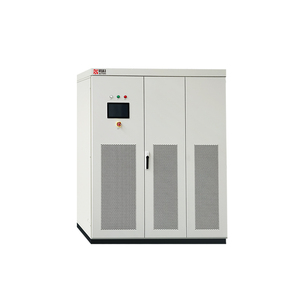
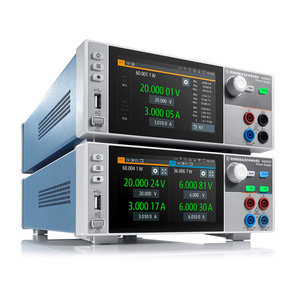
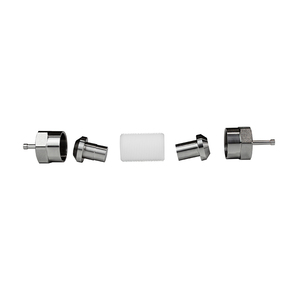
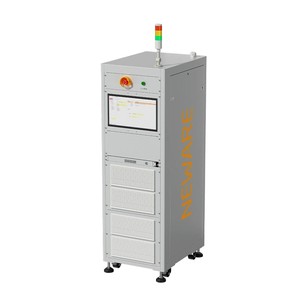
In modern industrial power electronics, testing power conversion systems against high-frequency step changes—commonly designated as transient load testing—is essential to ensuring system survivability, grid compliance, and operational reliability. As the Kingdom of Saudi Arabia accelerates its transition toward modern energy infrastructure under Saudi Vision 2030, power electronic equipment deployed in desert microgrids, solar PV installations, and EV charging hubs must endure sudden load transitions while operating under high ambient temperatures.
Traditional voltage-fed electronic loads rely on substantial capacitive banks on their input stages. When subjected to rapid pulse loads or abrupt short-circuit transitions, capacitive energy storage can generate uncontrolled inrush currents, inducing localized thermal stress across power switching semiconductors. As an established global exporter of high-power test systems, our engineering paradigm prioritizes a current-fed power processing topology.
By positioning an energy-storing inductor on the internal DC bus prior to the semiconductor conversion stage, current-fed architectures naturally bound fault currents. In transient load emulation, when a unit under test (UUT)—such as a grid-tied central solar inverter or an electric traction drive—experiences a instantaneous 0-to-100% duty cycle step change, the current-fed topology prevents catastrophic voltage overshoot and oscillation ringing. This inherent short-circuit tolerance makes current-fed loads exceptionally durable for high-power industrial validation.
When selecting transient electronic load equipment for high-precision battery simulation or fuel cell characterization, understanding the trade-off between switch-mode and linear topologies is critical:
1. Switch-Mode DC Loads: Ideal for high power density and energy recovery (regenerative loads). However, high-frequency pulse-width modulation (PWM) inherently introduces switching ripple noise to the UUT, which can corrupt low-level sensor feedback during delicate electrochemical state-of-charge (SOC) evaluation.
2. Linear MOSFET Loads (e.g., MagnaLOAD ALx Architecture): Utilize solid-state MOSFET devices operating entirely within their active linear region. This delivers virtually ripple-free current sinking with bandwidths extending into tens of kilohertz. For micro-drain coin cell analysis, BMS balance strategy verification, and SiC/GaN wide-bandgap double pulse testing, linear MOSFET loads provide pristine signal integrity without feedback distortion.
From megaprojects in Tabuk and NEOM to industrial hubs in Jubail, Yanbu, and Riyadh, our transient load simulators empower key national growth sectors.
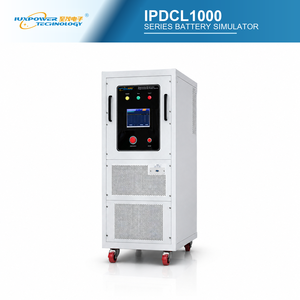
Testing utility-scale PV inverters and battery energy storage systems (BESS) under extreme solar irradiance step-changes. Emulating severe transient dips caused by cloud cover transients in desert environments.
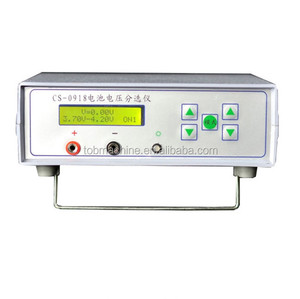
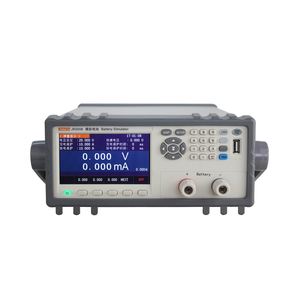
Multi-channel battery cell simulators (such as the 24-Channel BMS Validation system) allow automakers in King Abdullah Economic City (KAEC) to execute dynamic cell balancing, SOC calibration, and fault condition emulation.
Sustained, high-current DC transient loading for megawatt-scale electrolyzer stacks. Current-fed water-cooled systems ensure zero downtime under continuous electrochemical production cycles.
Saudi Electricity Company (SEC) grid compliance verification. Simulating load dump scenarios, microgrid islanding transitions, and high-voltage DC harmonic absorption across transmission networks.
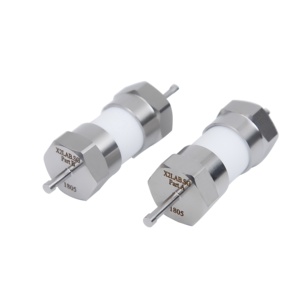
Advanced R&D in battery chemistries (Solid-State, Sodium-ion, Lithium-Sulfur). Compact coin cell simulators enable micro-amp resolution testing for electrochemical energy storage research.
High-dynamic load power supplies engineered to sustain aggressive pulsed RF loads, naval radar electronics, and airborne power units under strict electromagnetic interference standards.
Exporting industrial test instrumentation into the Arabian Peninsula requires solving specific physical and electrical challenges native to the region:
In standard laboratory environments, equipment is specified for 25°C operation. However, industrial test facilities in Riyadh, Dammam, and Yanbu routinely face ambient enclosure temperatures exceeding 45°C to 50°C. Conventional electronic loads rapidly thermal-trip under these conditions. Our engineered products utilize oversized heat-sink extrusions, intelligent variable-speed fan curves, and optional closed-loop liquid cooling (water-cooled ML Series scaling up to 10 MW) to maintain continuous rated duty cycles without derating in Middle Eastern ambient heat.
The Saudi Arabian Standards Organization (SASO) and the Communications, Space and Technology Commission (CITC) mandate rigorous electrical safety, EMC/EMI suppression, and grid-tied harmonic distortion limits. Industrial sites in KSA operate primarily on 380V/415V three-phase 60Hz systems. Our export configurations feature wide AC input tolerances (up to 480VAC nominal) with integrated power factor correction (PFC > 0.99), ensuring full immunity against localized grid sags and voltage spikes.
As Saudi energy projects scale from kilowatt prototypes to megawatt pilot plants, test equipment must grow adaptively. Utilizing the proprietary MagnaLINK™ digital bus, multiple power supplies or transient loads can be configured in a master/slave array. A master controller automatically balances current sharing across paralleled units, enabling test engineers to scale from 15 kW to 10 MW seamlessly without dynamic response degradation.
Over four decades of dedicated power electronics design, total vertically integrated manufacturing, and global direct export capabilities.
Every magnetic core winding, sheet-metal enclosure fabrication, PCB assembly, and high-power busbar system is designed and assembled within our single manufacturing plant.
Prior to international freight packaging to King Abdulaziz Port (Dammam) or Jeddah Islamic Port, every unit undergoes rigorous full-load thermal burn-in and dynamic step verification.
Operate all instruments via SCPI command scripts, Python automation libraries, or native LabVIEW/IVI drivers. Control logic remains identical across small benchtop units and megawatt systems.
Frequently asked questions regarding international logistics, SASO compliance, local site installation, and customized specs for Saudi buyers.
Our vertically integrated manufacturing facility allows us to deliver standard built-to-order configurations in 4 to 6 weeks. Fast-track dispatch is available for stocked models. Air freight to King Khalid International Airport (Riyadh) or King Fahd International Airport (Dammam) typically takes 5–7 business days, while sea freight to Jeddah or Dammam ports takes approximately 25–35 days.
Yes. All exported test equipment can be supplied with Certificate of Conformity (CoC) documentation issued via the SABER online portal in accordance with SASO technical regulations for low-voltage equipment and electromagnetic compatibility (EMC).
Yes. Unlike standard laboratory power supplies designed strictly for 25°C controlled environments, our current-fed air-cooled systems are rated for continuous operation up to 50°C ambient temperatures. For ultra-high-density megawatt testing, our water-cooled ML Series decouples heat dissipation entirely from room HVAC by interfacing with facility chilled water loops.
Our ALx linear MOSFET series delivers high bandwidth current sinking with current rise times under 100 microseconds. Additionally, high slew rate (+HS) options can be specified at the factory to eliminate inductive voltage spikes when testing fast-switching wide-bandgap semiconductors.
Absolutely. Units can be factory-configured for 380V, 415V, or 480V 3-phase AC input options operating at 60 Hz, ensuring direct compatibility with regional utilities (SEC) and isolated industrial microgrids without requiring external step-down transformers.
All instruments are delivered with factory-traceable calibration certificates. Remote engineering support, firmware diagnostics, and automated calibration utility software are provided directly by our senior applications engineering team. Spare modules and replacement power assemblies can be dispatched rapidly under standard warranty coverage.
Provide your voltage range, transient slew rate, cooling preferences, and SASO compliance requirements. Speak directly with a senior power electronics application engineer.