Traction Tester & Battery Simulator Suppliers for the United States Market

High-Precision Emulation Hardware, Bipolar DC Power Systems, and BMS Hardware-in-the-Loop (HIL) Test Equipment for Automotive, Aerospace, and Defense Applications

< 100 µs Transient Response Speed
150kW - 3MW High-Dynamic Power Range
24 Channel Precision BMS Emulation
ISO 9001 Quality Compliant Standards
Product Catalog

High-Precision Traction Testers & Battery Simulators

Engineered to satisfy demanding US testing protocols including SAE J2464, UL 2580, and UN 38.3 standards for electric vehicles and industrial energy storage systems.
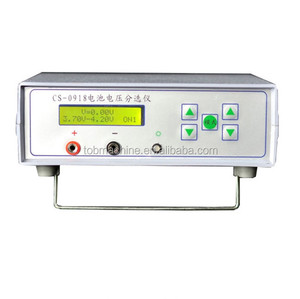
Lithium Ion Battery Voltage Current Capacity Tester
Target: EV Pack & Module Validation Feature: High-Precision Charge/Discharge Interface: CAN-BUS / RS485 / LXI
Get Catalog
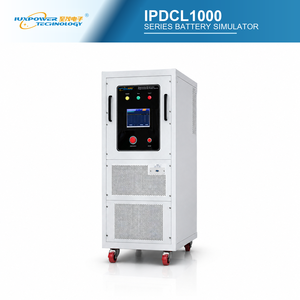
IPDCL1000 Series 220V 1KW High-Precision Battery Simulator
Target: Automotive ECU & Inverter Test Feature: Constant Power Function Response: Microsecond Switching
Get Catalog
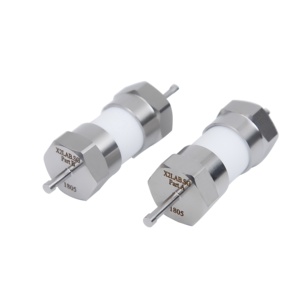
Removable Coin Battery Simulator for Coin Cells
Removable Coin Battery Simulator for Coin Cell Testing
Target: Micro-Power & Sensor R&D Feature: Ultra-Low Noise Sinking Design: Modular Quick-Swap Interface
Get Catalog
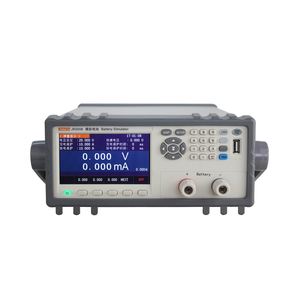
JK5506 Battery Simulator
JK5506 Multi-Channel Programmable Battery Simulator
Target: Consumer & Medical Power R&D Feature: Bi-directional Current Sinking Accuracy: 0.02% Voltage Readback
Get Catalog
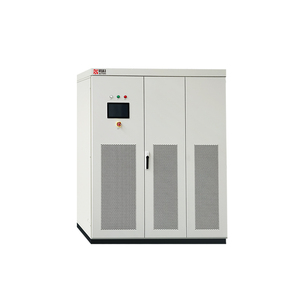
Power Aikesaibo High-Precision Battery Simulator 150-1000KW
ABS High-Dynamic Battery Simulator (150kW - 1000kW)
Target: Heavy-Duty EV & Grid Traction Feature: Regenerative Power Recovery Topology: Current-Fed High Voltage
Get Catalog
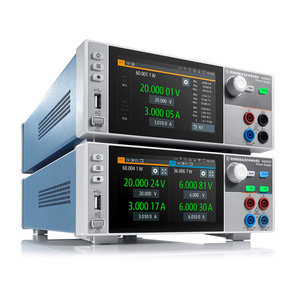
Rohde & Schwarz NGM201-NGM202 Battery Simulator
Rohde & Schwarz NGM201-NGM202 Bipolar DC Simulator
Target: High-Speed IoT & Telecom Test Input: 100-240V AC Universal Feature: Fast Transient Linear Output
Get Catalog
Coin Cell Simulator CR2032/2016 for Electrochemical Labs
Electrochemical Lab Coin Cell Simulator (CR2032 / CR2016)
Target: Electrochemical Research Labs Emulation: Variable Ri & SOC Curves Feature: Multi-Channel Isolation
Get Catalog
24-Channel Battery Cell Simulator for BMS Validation
Target: Automotive BMS HIL Testing Functions: Active/Passive Balancing Feature: Fault Injection (Short/Open)
Get Catalog
Technical White Paper

Traction Emulation & Battery Simulation Architecture for North American OEMs

The transition toward high-voltage architectures—scaling from standard 400V propulsion systems up to 800V and 1200V Silicon Carbide (SiC) inverted power platforms—has completely transformed the technical requirements for test equipment across the United States. Modern traction test systems can no longer rely on simplified programmable DC power supplies paired with resistive load banks. Today’s automotive, aerospace, and defense testing facilities demand bipolar, bidirectional battery simulators capable of seamless four-quadrant operation, sub-millisecond dynamic current response, and integrated internal resistance ($R_i$) emulation.

When selecting traction testers and battery cell simulators for deployment within North American testing environments, engineering procurement teams must evaluate hardware capabilities against strict compliance frameworks mandated by US testing standards, such as SAE J2464 (Electric and Hybrid Electric Vehicle Rechargeable Energy Storage System Safety and Abuse Testing), UL 2580, and UN 38.3. Achieving compliance requires power electronics capable of emulating real-world battery behavior under extreme operational conditions, including instantaneous regenerative braking surges, fast-DC charge profiles, and localized cell-fault conditions.

Core Technological Pillars of Modern Battery Emulation

To deliver accurate information gain and precise Hardware-in-the-Loop (HIL) validation, state-of-the-art battery simulation systems incorporate three fundamental technological breakthroughs:

  • Current-Fed Bipolar Power Topologies: By utilizing inductive energy storage on the internal DC bus rather than large capacitive banks, current-fed simulators offer inherent short-circuit tolerance and zero-voltage crossing capabilities. This topology prevents catastrophic voltage spikes during rapid load dump conditions typical of electric traction motor testing.
  • Programmable Programmable Internal Resistance ($R_i$ Emulation): Real lithium-ion, sodium-ion, and solid-state battery packs exhibit dynamically changing internal resistance based on State-of-Charge (SOC), temperature, and health status (SOH). Advanced simulators dynamically calculate $V_{out} = V_{oc} - (I_{load} \times R_i)$ in real time with updating loop frequencies exceeding 100 kHz.
  • Cell-Level Fault Injection & Active Balancing Validation: Multi-channel simulators (such as 24-channel BMS validation units) provide isolated bipolar output per cell, allowing validation engineers to simulate open-circuit faults, cell-to-cell leakage, wire harness impedance mismatch, and overvoltage condition triggers without hazardous physical battery testing.
System Architecture

Engineering Advantages & Test Automation Capabilities

Hardware and software integration designed to eliminate test cycle bottlenecks in high-throughput American laboratories.

Ultra-Fast Dynamic Transient Response

Engineered with low output capacitance stages that achieve sub-100 microsecond transient recovery times during step-load changes from -100% torque to +100% full regenerative load acceleration profiles.

Native LXI & CAN-FD Bus Automation

Equipped with standardized SCPI command syntax, Ethernet LXI Class C compliance, dual-channel CAN-FD interfaces, and turnkey LabVIEW/Python drivers for fast integration into National Instruments dSPACE automated test stations.

Regenerative Energy Grid Feedback

High-power battery simulators (150kW to 1000kW+) feature bidirectional active front-end (AFE) technology, returning up to 96% of absorbed power back to the 480VAC/3-phase facility grid to drastically reduce thermal HVAC requirements and utility overhead.

Specification Matrix

Comparative Performance Matrix for US Sourcing Managers

Selecting the optimal equipment tier based on test scope, power density, and isolation requirements.

Equipment Category Primary US Application Voltage / Current Range Response Speed Key Standard Compliance
Multi-Channel Cell Simulators BMS HIL Validation & SOC Estimation 0 - 6V DC per channel / ±5A < 50 µs ISO 26262 / ASIL-D Testing
Low-Power Bipolar Simulators ECU, Sensor & Micro-Traction R&D 0 - 220V DC / up to 100A < 100 µs USCAR-2 / SAE J1113
High-Power Traction Simulators EV Inverter & Motor Dyno Testing 150kW - 1000kW+ / 0-1200V < 1 ms SAE J2464 / UL 2580 / UN 38.3
Capacity & Cycling Testers Pack Burn-In & End-of-Line (EOL) Up to 800V / 0-600A Sinking Ramp Dependent IEC 62660 / DOE FreedomCAR
Localized Deployment Scenarios

Primary Application Frameworks Across United States Industry Hubs

1. Automotive OEM & Tier-1 EV Powertrain Validation (Midwest Manufacturing Corridor)

In major automotive engineering centers across Michigan, Ohio, and Indiana, engineering teams use high-power battery simulators (150kW–1000kW) to replace physical high-voltage battery packs on dynamometer test cells. Physical batteries decay, present thermal runaway risks during over-torque tests, and require lengthy standard charging cycles between runs. By implementing bidirectional battery simulators with custom programmable SOC profiles, US automotive engineers execute 24/7 continuous acceleration, hill-climb, and regenerative braking drive-cycle simulations (such as EPA US06 and WLTP cycles) with zero downtime.

2. Aerospace Auxiliary Power Unit (APU) & eVTOL Hardware Testing (California & Texas Defense Corridors)

Next-generation electric vertical takeoff and landing (eVTOL) aircraft and defense aerospace systems require ultra-stable DC power supplies operating under severe electrical noise environments. Utilizing bipolar linear and current-fed simulators like the Rohde & Schwarz NGM series and high-precision IPDCL equipment, flight control hardware engineers validate dual-redundant bus architectures under simulated transient brownout and lightning-surge induced input fluctuations.

3. Commercial Grid Energy Storage System (BESS) Integration (CAISO & ERCOT Regions)

As utility-scale energy storage installations expand rapidly across California (CAISO) and Texas (ERCOT), battery storage system integrators rely on multi-channel capacity testers and high-voltage simulators to test power conversion systems (PCS). Our multi-channel battery emulators simulate non-uniform degradation patterns across thousands of series-connected cells, evaluating whether microgrid master controllers accurately detect thermal hot-spots and initiate active cell balancing before system-level trips occur.

US Market Insights

United States Battery Emulation Sourcing Trends (2025–2030)

Driven by federal investments via the Inflation Reduction Act (IRA) and domestic manufacturing incentives for clean energy technologies, procurement managers in the United States face unique strategic imperative shifts:

  • Rise of 800V to 1200V Architecture: The industry-wide transition from 400V to 800V+ EV powertrains requires test facilities to procure programmable DC power sources capable of wide constant-power envelopes. Test rigs must scale output voltage smoothly without dropping amperage headroom.
  • Direct HIL Hardware Integration: Sourcing managers are moving away from isolated benchtop power supplies in favor of modular rack-mount units (such as 1U to 3U form factors) that integrate directly into centralized ATE enclosures alongside real-time target machines (e.g., dSPACE, Speedgoat, National Instruments).
  • Domestic Serviceability & Fast Delivery Cycles: Global supply chain disruptions have heightened the importance of working with suppliers who maintain extensive spare assemblies, domestic calibration support, and short manufacturing build times (4 to 6 weeks standard), avoiding extended factory downtime for US defense contractors and automotive OEMs.
Help Center

Frequently Asked Questions for US Procurement & Test Engineers

Addressing common technical inquiries regarding voltage matching, grid connection, software control, and calibration traceability.

What is the key difference between a standard DC power supply and a dedicated battery simulator?
A standard programmable DC power supply operates primarily in single-quadrant Mode (sourcing current only) with slow voltage slew rates and fixed low internal impedance. A dedicated battery simulator features two-quadrant or four-quadrant operation (sourcing and sinking current dynamically), microsecond-level transient response, and programmable internal resistance ($R_i$). This allows the simulator to dynamically lower its terminal voltage when load current increases, perfectly mimicking real chemical battery behavior.
How do multi-channel cell simulators validate Battery Management System (BMS) balancing logic?
Multi-channel cell simulators (such as 24-channel units) feature galavanically isolated voltage outputs that can be wired directly to the sense leads of a BMS ECU. Test automation software can individually adjust voltage on Channel A while keeping Channel B constant, emulating cell unbalance conditions. The simulator measures whether the BMS successfully engages passive bleed resistors or active shuttle capacitors to re-balance the simulated battery string.
Are these high-power battery simulators compatible with standard US 480VAC 3-phase facility power?
Yes. All high-power units (150kW up to 1000kW+) are designed for standard North American industrial grid inputs, including 480VAC 3-phase 60Hz (and 208VAC 3-phase options for smaller rack units). Regenerative models incorporate Active Front End (AFE) power factor correction (PFC > 0.99) with low harmonic distortion (THD < 3%), ensuring compliance with IEEE 519 grid interconnect guidelines.
What software drivers and remote control interfaces are supplied for automated test environments?
Equipment comes standard with Ethernet (LXI), USB, RS-232, and isolated analog/digital I/O ports. GPIB (IEEE-488) and Modbus TCP options are also available. Units support standard SCPI syntax and include native IVI-COM, IVI-C, and National Instruments LabVIEW drivers, as well as Python API libraries for seamless automated execution.
Is calibration traceable to NIST standards for ISO/IEC 17025 certified US laboratories?
Yes. All units ship with factory calibration documentation traceable to the National Institute of Standards and Technology (NIST). Annual recalibration procedures can be performed on-site by field service technicians or at certified calibration centers across the US.
What lead times can US customers expect for custom engineered battery simulation solutions?
Due to vertically integrated manufacturing processes (in-house magnetics winding, sheet metal fabrication, and automated PCB assembly), standard catalog configurations typically ship within 4 to 6 weeks. Standard stocking units are available for immediate dispatch to support urgent test bay expansion programs.

Consult with an Application Power Engineer

Provide us with your target voltage window, peak current dynamics, slew rate targets, and automation interfaces. Our engineering team will formulate a precise system proposal tailored to your application.

Get Catalog