
Canadian Heavy-Duty & Transit Engineering

Traction Controller Test Equipment Factories & Exporter serving Canada

High-Precision Battery Simulators, Programmable DC Power Supplies & Dynamic Load Sinking for Rail, Heavy EV, Mining & Industrial Powertrains across North America.

Precision Traction Test Hardware & Battery Simulators

Engineered for high-dynamic hardware-in-the-loop (HIL) validation, BMS balance testing, and converter dynamic loading.
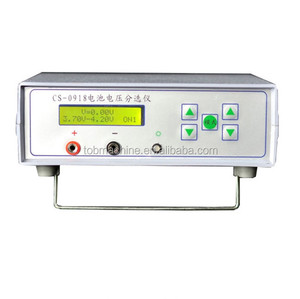
Lithium Ion Battery Voltage Current Capacity Tester

Lithium Ion Battery Voltage Current Capacity Tester

Get Catalog
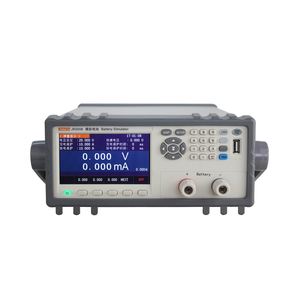
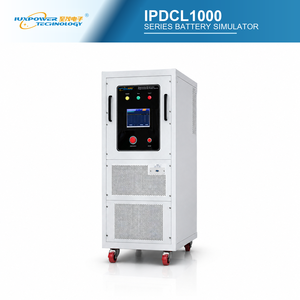
IPDCL1000 Series High-Precision Battery Simulator

IPDCL1000 Series 220V 1KW High-Precision Battery Simulator Constant Power Function Testing Equipment

Get Catalog
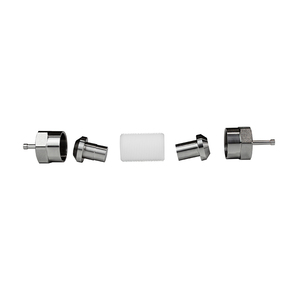
Removable Coin Battery Simulator

Removable Coin Battery Simulator for Coin Battery test Coin Cells Simulator

Get Catalog
JK5506 Battery Simulator

JK5506 High-Dynamic Multi-Channel Battery Simulator

Get Catalog
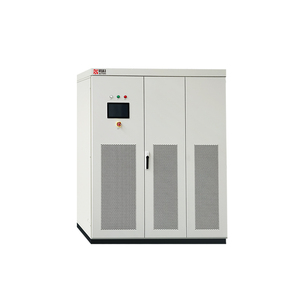
ABS High-precision High-dynamic Battery Simulator 150-1000KW

Power Aikesaibo ABS High-precision, High-dynamic Battery Simulator With Universal Programmable Functions 150-1000KW

Get Catalog
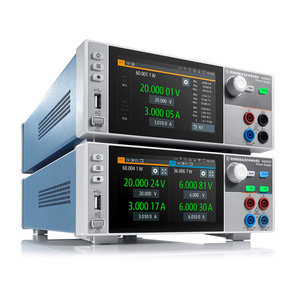
Rohde & Schwarz NGM201-NGM202 Battery Simulator

Rohde & Schwarz NGM201-NGM202 Industrial DC Power Bipolar Battery Simulator with 100-240V AC Input

Get Catalog
Electrochemical Cell Simulator CR2032/2016

Coin Cell Simulator Battery Simulator for Coin Cell Cr2032/2016 Commonly Used in Electrochemical Laboratories

Get Catalog
24-Channel Battery Cell Simulator for BMS Validation

24-Channel Battery Cell Simulator for BMS Validation SOC Estimation and Balance Strategy Testing

Get Catalog
10 MW+
Max Parallel Testing Power
< 1 ms
Dynamic Transient Slew Rate
400k+
Programmable Configurations
CSA/UL
Canadian Market Compliant

Technical Whitepaper: Next-Gen Traction Controller Emulation & Dynamic Testing Architecture

Modern electrical powertrains—spanning light rail transit (LRT), heavy-duty underground mining rigs, freight locomotives, and commercial electric vehicles (EVs)—rely on highly sophisticated traction controllers (variable-frequency drives and motor inverters). These units dynamically convert DC bus energy into precisely modulated multi-phase AC torque commands while managing high-energy regenerative braking back-EMF spikes.

Validating these complex control algorithms demands test equipment capable of operating at extreme dynamics. Traditional passive resistive loads and conventional voltage-fed power supplies fail to emulate real-world operational challenges. Our factory-engineered Traction Controller Test Equipment utilizes advanced current-fed power processing topologies, dynamic battery cell/pack simulators, and high-speed linear electronic loads designed specifically for tier-1 OEMs and transport authorities across Canada.

Information Gain Insight: Unlike standard power supplies, current-fed test equipment stores energy inductively on the DC bus. This provides natural immunity to catastrophic short-circuits during IGBT breakdown tests, delivering uninterrupted testing throughput for demanding Canadian commercial vehicle certifications.

Why Dynamic Battery Emulation Matters for Traction Controller Validation

A battery pack is not a simple static DC voltage source. Its terminal voltage varies rapidly based on State of Charge (SOC), internal resistance ($R_{int}$), discharge rate, and thermal gradients—especially under cold-start conditions common in Canadian operations. Our programmable battery simulators reproduce complex equivalent circuit models (including Randles circuit parameters) in real-time:

  • Bi-directional Seamless Energy Flow: Effortlessly transition from sourcing current during full-throttle acceleration to sinking high-current energy impulses during regenerative braking without voltage overshoots.
  • Programmable $R_{int}$ Dynamics: Emulate the internal resistance escalation observed in lithium-ion and solid-state batteries down to -40°C, exposing potential low-voltage cutout glitches in the traction controller software.
  • Multi-Channel BMS Hardware-in-the-Loop (HIL): Validate cell balancing strategies and SOC estimation algorithms under severe current ripples and dynamic load steps using integrated 24-channel simulators.

Localized Canadian Application Scenarios & Industry Trends

Strategic test solutions mapped to Canadian geography, extreme weather demands, and federal clean transportation mandates.

Extreme Sub-Zero Thermal Derating Simulation

Testing traction inverters for transit fleets in Alberta, Ontario, and Quebec requires simulating battery packs at extreme ambient cold. Our equipment mimics high internal resistance drops and cold-temperature voltage sagging during initial vehicle launch.

Zero-Emission Heavy Mining Powertrains

Hard-rock subterranean mining operations in Sudbury and British Columbia are replacing diesel rigs with high-voltage battery-electric haulers. Our 150 kW to 10 MW test platforms emulate high-torque, heavy-ramp traction profiles under dusty, continuous duty cycles.

Urban Light Rail Transit (LRT) Expansion

With major LRT developments underway in Toronto (TTC), Montreal (REM), and Vancouver (TransLink), our dynamic bi-directional DC sources allow manufacturers to verify traction inverter efficiency, harmonic distortion, and grid compliance effortlessly.

Comparative Performance Matrix: Traditional Power Supplies vs. Dynamic Traction Simulators

When selecting test systems for high-reliability traction controllers, understanding energy topology and response times is vital. The comparative breakdown below outlines why our factory equipment yields superior testing accuracy for Canadian exporters and OEMs.

Performance Feature Conventional Voltage-Fed DC Source Magna-Power / Industrial Current-Fed System High-Dynamic Battery Simulator (150kW-1MW+)
Short-Circuit Resilience Fuses trip / potential FET damage Inherent inductive current limiting Active instantaneous over-current trip (<10µs)
Regenerative Energy Handling Requires external dissipation resistors Optional integrated blocking/sinking stage Full bi-directional power regeneration to AC grid
Transient Response Time 50 ms – 200 ms slow recovery < 2 ms fast step response Sub-millisecond dynamic profile switching
Operating Envelope Fixed single-point nominal power Wide full-power voltage/current window Programmable $V$-$I$, SOC, & thermal curve mapping
Noise & EMI Injection High switching ripple Low EMI filter topology Linear MOSFET stage (Ultra-low noise sinking)

Vertically Integrated USA Manufacturing & Canadian Export Advantage

As a premier factory and global exporter dedicated to North American engineering standards, our vertical integration ensures complete control over product quality, lead times, and long-term serviceability. Every component—from sheet metal enclosure fabrication and heavy transformer magnetics winding to surface-mount PCB assembly—is executed within our state-of-the-art facility.

Rugged Current-Fed Topology

Inductive DC energy storage prevents voltage spikes and short-circuit lockouts during aggressive traction inverter switching test routines.

Rapid 4–6 Week Build Cycles

In-house manufacturing allows us to bypass global supply chain bottlenecks and deliver fully customized rack-mount or cabinet test systems swiftly to Canadian facilities.

Unified Automation & SCPI API

Seamlessly integrate with NI LabVIEW, MATLAB/Simulink, Python, and LXI/Ethernet automated test environments across all power levels.

Frequently Asked Questions by Canadian Procurement & Test Engineers

Addressing common technical, logistical, and compliance questions for importing and deploying traction test systems in Canada.

How do your test platforms handle high regenerative energy from traction motor deceleration?
Our dynamic test systems can be configured with bi-directional regenerative sinking stages or integrated high-speed electronic load modules. During motor deceleration, back-EMF energy dumped onto the DC bus is cleanly absorbed and converted back to AC grid power or dissipated smoothly through programmable load banks without triggering over-voltage protection trips.
Are these dynamic battery simulators compatible with Canadian electrical standards (CSA)?
Yes. All manufactured systems comply with rigorous North American safety standards including CSA C22.2 No. 107.1 and UL 1778/61010-1. They feature complete galvanic isolation, programmable interlock safety loops, and emergency power off (EPO) integration suitable for Canadian industrial testing laboratories.
Can the software simulate specific battery cell chemistries like LFP, NMC, or Solid-State?
Absolutely. Using our advanced emulation software, test engineers can upload custom mathematical models or CSV profiles defining non-linear open-circuit voltage ($V_{oc}$) vs. State of Charge (SOC) curves, dynamic internal resistance ($R_{int}$), temperature coefficient lookup tables, and cell capacity degradation curves.
What are the logistics and import procedures for shipping heavy equipment to Canadian provinces?
We handle cross-border logistics seamlessly under USMCA / CUSMA protocols. We supply full NAFTA/USMCA documentation, customs clearance manifests, and duty-deferred shipping options directly to facilities in Ontario, Quebec, British Columbia, Alberta, and nationwide.
How does the hardware handle Hardware-in-the-Loop (HIL) automation integration?
Standard communications include Ethernet/LXI, USB, and isolated analog I/O (0-10V/4-20mA), with optional IEEE-488 (GPIB) and Modbus TCP. The low-latency control board accepts ultra-fast SCPI commands and provides real-time digital feedback for hardware-in-the-loop (HIL) platforms such as dSPACE, OPAL-RT, and RTDS.

Consult with a Senior Power Electronics Engineer

Require custom voltage windows, multi-megawatt parallel configurations, or specific Canadian site compliance? Send us your traction controller specs for immediate technical analysis.

Get Catalog