Engineered for Battery Management System (BMS) Validation, Hardware-in-the-Loop (HIL) Simulation, and High-Dynamic Power Sinking in Extreme Climatic Environments.
Analyzing how current-fed topologies, real-time internal resistance ($R_i$) emulation, and dynamic fault injection accelerate EV powertrain and renewable energy developments in the Kingdom of Saudi Arabia.
Testing complex Battery Management Systems (BMS) with physical lithium-ion, sodium-ion, or solid-state cells introduces significant hazardous risks—thermal runaway, chemical off-gassing, and degradation cycles—while lacking the repeatability required for standard compliance. Physical cells cannot rapidly simulate arbitrary State of Charge ($SOC$), extreme temperature-dependent Internal Resistance ($R_i$), or specific cell-level fault conditions (such as micro-short circuits, wire bonding disconnections, or cell imbalance) in real-time.
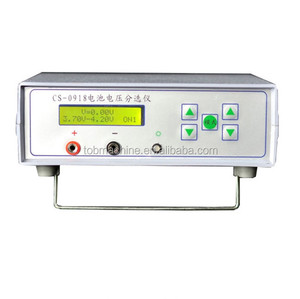
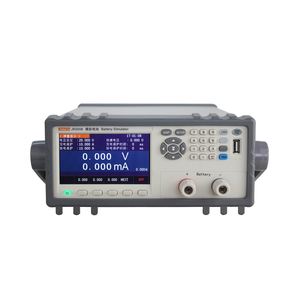
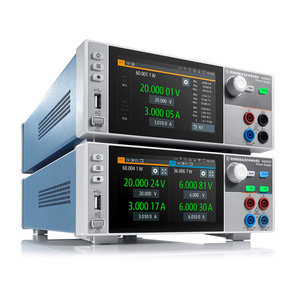
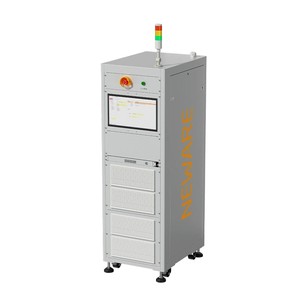
A true programmable multi-channel cell simulator replaces chemical cells with high-speed, isolated bipolar DC sources capable of sourcing and sinking current. It enables engineering teams in Riyadh and across the Middle East to run continuous Hardware-in-the-Loop (HIL) automation, validating SOC estimation algorithms, passive/active balancing circuits, and fault diagnostics in a safe, mathematically controlled laboratory environment.
Unlike standard voltage-fed power supplies that rely on large output capacitive banks, our industrial cell simulators utilize an inductive energy storage stage on the internal DC link.
Automated software-driven fault injection allows verification of safety-critical BMS reactions under ISO 26262 and ASIL-D functional safety standards.
Featuring dual-quadrant linear and high-frequency switching stages that switch between charging and discharging in under 1 millisecond.
How state-backed gigafactories, extreme desert ambient temperatures, and smart grid battery installations demand high-precision cell simulation infrastructure in the Riyadh region.
Under Saudi Arabia's Vision 2030 initiative, Riyadh is emerging as the operational hub for automotive electrification. With the launch of Ceer Motors (the Kingdom's first domestic EV brand) and major manufacturing investments in King Abdullah Economic City (KAEC) with support from the Public Investment Fund (PIF), localized R&D laboratories in Riyadh require cell and battery pack simulators capable of validating high-voltage platform architectures (400V to 800V DC).
Our cell simulation systems allow local engineering teams to emulate individual cell behavior across hundreds of series-connected channels, testing pack balance strategies under local drive cycles without requiring imported physical prototype packs.
Battery packs operated in Riyadh, Western Province, and the Empty Quarter experience severe environmental stress where ambient temperatures frequently surpass 50°C. BMS thermal management algorithms must be stress-tested to prevent premature degradation or thermal runaway.
Our programmable cell simulators allow researchers at institutions like King Abdulaziz City for Science and Technology (KACST) to dynamically program cell internal resistance ($R_i$) temperature curves. Engineering teams can test how BMS software triggers thermal throttling, cooling fluid pumps, and cell equalization under extreme heat profiles without physically overheating toxic battery chemistries.
Saudi Arabia is deploying massive utility-scale solar PV and wind projects integrated with Battery Energy Storage Systems (BESS) across NEOM, the Red Sea Project, and SEC utility sub-stations. Cell-level simulators are indispensable for testing containerized BESS control units before commissioning on site.
By simulating long-term charge-discharge degradation, capacity fade, and cell mismatch across 1000V+ strings, operators can verify grid stability functions, frequency response, and active cell balancing strategies prior to physical field deployment.
Saudi Standards, Metrology and Quality Organization (SASO) and IEC international standards mandate stringent electrical safety and performance compliance for imported and locally assembled electronics. Our factory supplies Riyadh-based test bays with CE, UL, and SASO-compliant testing hardware, backed by comprehensive SCPI command sets, NI LabVIEW drivers, and native Python SDKs for seamless integration into production ATE lines.
A technical side-by-side comparison of testing BMS and power electronics using physical chemical cells versus enterprise programmable cell simulators.
| Evaluation Parameter | Physical Lithium-Ion Cells | Programmable Multi-Channel Cell Simulator |
|---|---|---|
| Test Repeatability | Poor (degrades with every cycle; sensitive to ambient temperature shifts) | 100% Deterministic (software-controlled voltage, current, and $R_i$) |
| SOC Setup Time | Hours (requires physical charging/discharging to reach specific SOC points) | Instantaneous (< 1 ms) (direct digital command set to target voltage) |
| Fault Condition Injection | Dangerous & destructive (requires physical cutting, puncturing, or shorting) | Non-destructive & Instantaneous (programmable software relays & fault modes) |
| Thermal Danger / Safety | High risk of thermal runaway, explosion, and toxic fumes in closed labs | Zero Chemical Hazard (pure electronic power conversion with built-in interlocks) |
| Cell Imbalance Simulation | Requires manually matching or mismatching physically degraded cells | Independent Channel Control (set individual mV offsets per channel instantly) |
| Operating Temperature Testing | Requires thermal chambers and lengthy soak times per test run | Emulated $R_i$ Curves (simulate ambient heat impacts purely through electrical impedance) |
Combining world-class vertical integration, field-proven current-fed designs, and global logistical support to serve the Saudi industrial sector.
From internal high-frequency planar transformer winding and CNC sheet metal fabrication to multi-layer PCB assembly and automated burn-in testing, every instrument is manufactured under one roof to guarantee strict quality control.
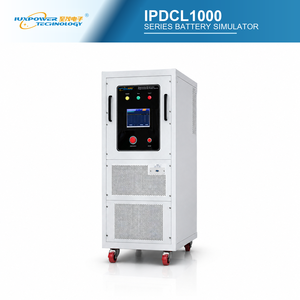
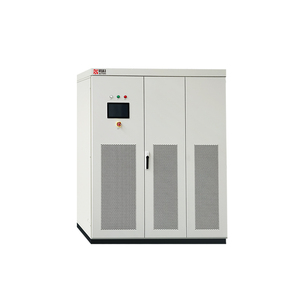
Our solutions scale seamlessly from coin-cell laboratory simulators (CR2032/CR2016 testing) up to megawatt-level cabinet systems (150kW – 10MW) featuring master/slave paralleling for traction power packs.
Integrated SCPI command architecture, native LabVIEW Virtual Instruments (VIs), MATLAB/Simulink models, and Python packages allow fast setup inside automated ATE test benches without expensive vendor lock-in.
Addressing power grid compatibility, shipping to Saudi Arabia, SASO certification, calibration, and local technical support.
Connect directly with our senior power electronics application engineers to discuss voltage requirements, channel counts, dynamic response targets, and custom delivery schedules for your project.
Inquire Now