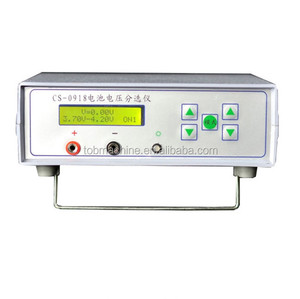
Lithium Ion Battery Voltage Current Capacity Tester
High-precision diagnostic testing system engineered for multi-cell lithium-ion pack validation, continuous charge-discharge cycling, and capacity degradation analysis.

Curated DC power systems, programmable battery simulators, and electrochemical cell test modules engineered for heavy-duty R&D, EV powertrain testing, and grid storage integration.
High-precision diagnostic testing system engineered for multi-cell lithium-ion pack validation, continuous charge-discharge cycling, and capacity degradation analysis.
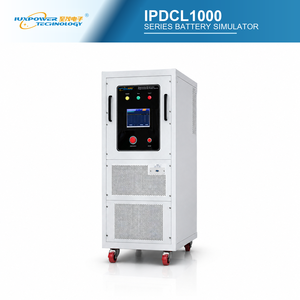
Constant power function testing platform offering ultrafast dynamic response, programmable internal resistance emulation, and zero-noise DC sourcing.
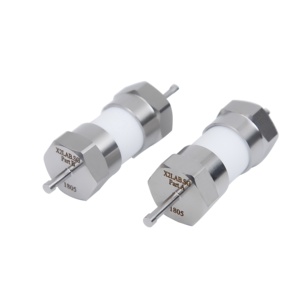
Modular laboratory-grade fixture designed for precise potentiostatic and galvanostatic characterization of micro-energy storage chemistry.
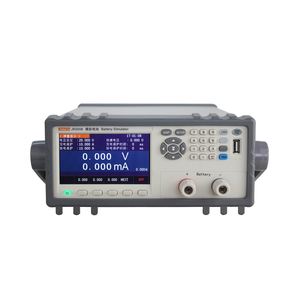
Industrial multi-channel voltage source for BMS testing, cell balancing algorithm verification, and low-power automotive ECU simulation.
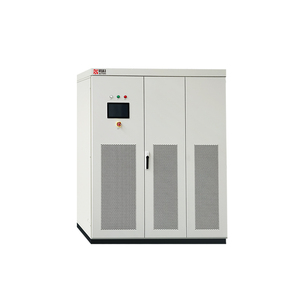
Megawatt-class high-voltage bidirectional power system tailored for heavy EV drivetrain testing, microgrid simulation, and fast-charging validation.
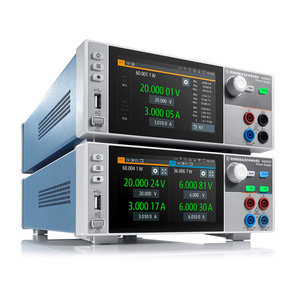
Precision dual-quadrant DC power supply featuring sub-microamp current recovery analysis, ultra-fast transients, and wide 100-240V AC input tolerance.
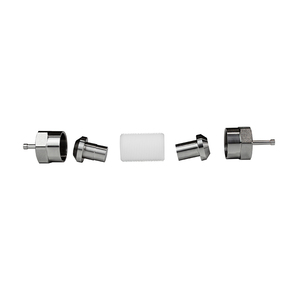
Specialized physical cell emulator standardizing impedance spectroscopy and half-cell testing routines in advanced materials laboratories.
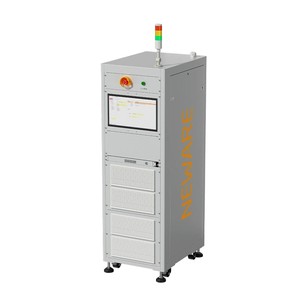
High-density automated test rack simulating individual cell voltages, SOC estimation models, and active balance strategies for OEM automotive suppliers.
In high-stakes power testing environments across Berlin and the wider European Union, equipment reliability under harsh dynamic loading determines project velocity.
Traditional programmable DC supplies rely on large output capacitive banks (voltage-fed topology), which store immense amounts of electrical energy. In the event of a device under test (DUT) breakdown or arc fault, this stored energy discharges instantaneously into the test article, often causing permanent thermal destruction. Our current-fed topology utilizes an inductive DC link as the primary energy storage element. This inherently limits peak fault current, provides short-circuit immunity, and guarantees seamless transition between Constant Voltage (CV) and Constant Current (CC) modes.
When characterising battery pack internal resistance (ESR), fuel cell stack dynamics, or ultra-sensitive electrochemical cell impedance, high-frequency switching noise from conventional regenerative electronic loads distorts measurement fidelity. By employing a linear MOSFET power sinking architecture (such as featured in MagnaLOAD ALx series and advanced laboratory bench simulators), sinking operation introduces zero high-frequency switching interference, preserving pure signal paths for accurate automated test equipment (ATE) data acquisition.
Every magnetics assembly, sheet metal enclosure, PCB surface-mount sequence, and high-power burn-in protocol is executed inside our single vertically integrated USA facility. This eliminates long offshore component dependencies, yielding predictable 4-to-6 week delivery schedules to European tech hubs.
Whether operating a 1U 1.5 kW benchtop unit or a multi-cabinet 3 MW megawatt system, the software interface, SCPI command sets, isolated analog/digital I/O pinouts, and LabVIEW/Python driver stack remain 100% consistent across all product platforms.
Exporting high-power instruments to Germany requires strict adherence to CE directives, DIN EN ISO standards, and localized technical field service. Comprehensive calibration records, spare parts availability, and regional EU service hubs ensure long-term operational uptime.
Berlin and the surrounding Brandenburg metropolitan region have emerged as Europe’s premier hub for electric mobility innovation, green hydrogen development, and advanced clean-tech manufacturing.
With major electric vehicle assembly facilities and tier-1 powertrain engineering hubs operating in Grünheide and Adlershof, high-power battery simulators capable of delivering 150 kW to 1000 kW (such as the Power Aikesaibo ABS series and MagnaDC MT/ML systems) serve as virtual battery packs. They enable engineers to subject traction inverters, DC-DC converters, and ultra-fast Megawatt Charging System (MCS) equipment to full dynamic load profiles without risking thermal runaway on physical lithium-ion packs.
Leading academic institutes and materials laboratories across Berlin demand micro-volt accuracy when evaluating solid-state electrolytes, sodium-ion chemistries, and coin cell formats (CR2032/CR2016). Products like the Removable Coin Battery Simulator and Rohde & Schwarz NGM201/202 supply low-noise bipolar power, allowing researchers to perform cyclic voltammetry and electrochemical impedance spectroscopy (EIS) without thermal background drift.
Automotive software integration teams in Berlin utilize 24-Channel Battery Cell Simulators and JK5506 units to simulate individual battery cell voltages across extended strings. By injecting precision micro-adjustments into individual channels, test engineers can validate BMS fault handling, passive/active cell balancing performance, State-of-Charge (SOC) estimation models, and State-of-Health (SOH) diagnostic algorithms in accordance with ISO 26262 functional safety standards.
Germany’s aggressive Energiewende mandates seamless integration of large-scale renewable generation and utility battery storage. Programmable DC power supplies paired with Photovoltaic Power Profile Emulation (PPPE) software allow German inverter manufacturers to emulate dynamic solar irradiance, ambient temperature shifts, and complex grid-fault rides through real-time solar array and grid battery simulation.
Comprehensive engineering specification table to assist Berlin purchasing managers and laboratory leads in selecting the appropriate DC power system architecture.
| Equipment Category | Power Scope | Voltage Range | Cooling Topology | Primary Technical Advantage | Optimal Berlin Application |
|---|---|---|---|---|---|
| Multi-Channel BMS Simulators | 100W – 2kW | 0 – 6V per cell | Air Cooled | Independent channel isolation, micro-amp leakage sensing | BMS HIL Validation & ISO 26262 Safety Testing |
| Micro Cell / Coin Cell Testers | Benchtop (<500W) | 0 – 20V DC | Convection / Air | Bipolar linear sourcing/sinking, ultra-low ripple (<500µVRMS) | Adlershof Battery Chemistry R&D |
| Compact Rack DC Supplies (SLx/XR) | 1.5 kW – 10 kW | 5V – 1000V DC | 1U / 2U Forced Air | High power density current-fed topology, SCPI automation | ATE Test Benches & Component Verification |
| Mid-Range System Supplies (TS Series) | 5 kW – 100 kW | 5V – 4000V DC | 3U – 16U Air | Wide constant-power envelope, master/slave paralleling | Industrial Motor Drives & Magnet Power |
| Megawatt Battery Simulators (ABS / MT / ML) | 150 kW – 10 MW | Up to 1500V DC | Air or Liquid Cooled | Bi-directional dynamic response, high-capacity fault protection | EV Traction Inverter & Grid-Tie ESS Testing |
Understanding the regulatory environment and technological shifts influencing test bench specifications across the DACH region.
The newly enacted EU Battery Passport requirements mandate strict lifecycle data tracking, carbon footprint transparency, and verified state-of-health performance metrics for industrial and EV batteries sold in Europe. Advanced capacity testers and battery simulators are critical tools for manufacturers in Berlin to establish certified end-of-life and second-life battery characterization benchmarks.
German OEM automakers are rapidly transitioning from 400V electrical systems to 800V/1000V SiC and GaN powertrains to facilitate ultra-fast charging. High-power DC supplies supplying these development programs must feature ultra-low ripple voltage profiles and high slew rates to prevent inductive ringing across fast-switching wide-bandgap semiconductors.
Manual testing has been almost completely replaced in modern Berlin engineering facilities by continuous automated HIL pipelines using platforms like dSPACE, National Instruments, and Vector. Modern programmable power instruments must seamlessly integrate via Ethernet/LXI, Modbus TCP, or CAN interfaces with low latency command execution times.
Addressing key technical, logistical, and compliance considerations when importing high-power equipment into Germany.
Whether you require a compact 1U rack supply for ATE integration or a multi-megawatt bidirectional battery simulator for heavy vehicle powertrain validation, our technical team provides custom sizing, configuration modeling, and technical export support.
Send an Inquiry