
Engineered to meet the stringent power testing standards of Chicago’s automotive, grid storage, aerospace, and electrochemical testing facilities.
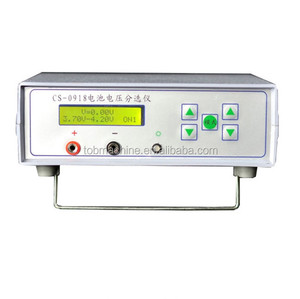
Multi-channel precision capacity testing system optimized for high-throughput Li-ion cell validation, featuring real-time voltage/current monitoring and automated cycle testing.
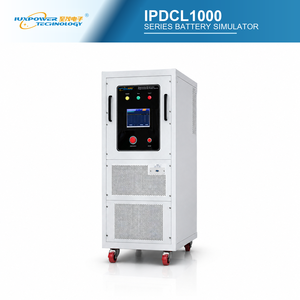
Constant power testing unit engineered with dynamic transient response capabilities, mimicking real-world battery impedance profiles for converter and ATE integration.
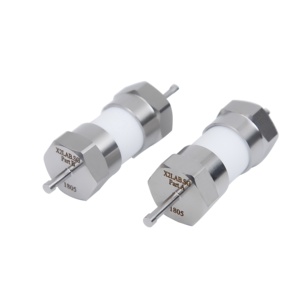
Ultra-low noise DC source designed specifically for micro-power characterization, coin cell electrochemistry research, and low-drift IoT sensor battery emulation.
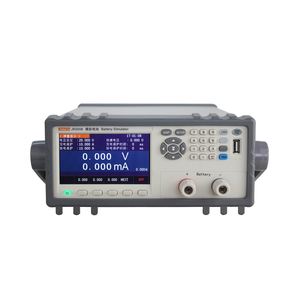
High-density channel simulator providing individual cell emulation, fault injection, and active SOC balancing verification for modern Battery Management Systems (BMS).
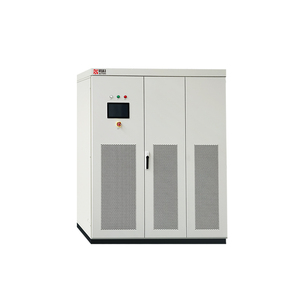
Megawatt-class bidirectional DC power simulator tailored for heavy EV powertrain, electric vehicle traction inverter, and grid-scale energy storage testing.
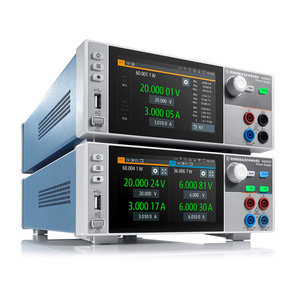
Seamless two-quadrant sourcing and sinking operation with fast voltage recovery times, perfect for testing sensitive semiconductor components and automotive electronics.
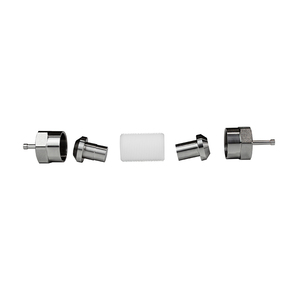
Specialized laboratory-grade simulator offering high precision micro-amp current measurement resolutions for academic and enterprise research facilities.
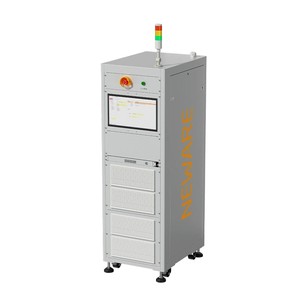
Full-stack BMS verification tool simulating cell imbalance, wire-break faults, temperature sensor outputs, and dynamic state-of-charge (SOC) profile curves.
The industrial landscape of Greater Chicago and the broader Midwest industrial corridor is undergoing a massive transformation. From the advanced energy research complexes surrounding Argonne National Laboratory and Fermilab to the heavy automated manufacturing plants in Cook, DuPage, and Will counties, the demand for stable, high-efficiency, fully programmable DC power processing has reached unprecedented levels. Modern testing regimes require power architectures capable of executing bidirectional power flows, dynamic step-load transients, microsecond-level fault recoveries, and precise battery cell impedance emulation.
Traditional industrial DC power supplies frequently utilize voltage-fed power converter topologies. While acceptable for basic resistive loads, voltage-fed architectures rely heavily on large capacitive filter banks across their output terminals. When subjected to dynamic short circuits, rapid arc discharges (common in industrial plasma and continuous welding processes), or highly inductive loads (such as particle accelerator steering magnets), these capacitors discharge violently, causing excessive peak currents, contact erosion, and operational trips.
Our engineered solutions leverage a rugged current-fed topology. In this design, a high-frequency inductor serves as the primary energy storage element on the intermediate DC bus. This fundamentally alters the power instrument's behavior into reactive or short-circuit loads:
As Chicago solidifies its position as a Midwestern hub for electric vehicle (EV) supply chain development and clean technology incubation, battery system testing has transitioned from simple charge/discharge cycling to full-envelope hardware-in-the-loop (HIL) simulation. A physical battery cell or module exhibits non-linear voltage variations influenced by state-of-charge (SOC), temperature, age, and instantaneous C-rate discharge pulses.
Using real battery packs for inverter R&D presents severe thermal, safety, and repeatability hazards. Our IPDCL1000 Series and 24-Channel Cell Simulator platforms resolve these operational bottlenecks by emulating the exact electrical response of chemical cells electronically:
| Emulation Parameter | Standard DC Power Source | Programmable Battery Simulator | Chicago Lab Benefit |
|---|---|---|---|
| Internal Resistance ($R_i$) Emulation | Fixed/Static Output Resistance | Dynamic Programmable $R_i$ (0 to 1000 mΩ) | Accurate voltage drop modeling during high-current EV acceleration pulses. |
| Transient Slew Rate | Slow (>50 ms voltage recovery) | Ultra-Fast (<1 ms response time) | Evaluates SiC/GaN motor inverter switching transients without bus collapse. |
| Bi-Directional Sinking | Requires external diode/load bank | Integrated Two-Quadrant Sinking | Absorbs regenerative braking energy safely during drive cycle emulation. |
| Channel Isolation | Common Ground Reference | Galvanic Isolation up to 1000V DC | Allows series stacking to simulate 800V EV traction battery strings safely. |
By simulating fault injection conditions—such as individual cell over-voltage, thermal runaway resistance shifts, wire disconnection, and internal cell shorting—engineering teams across Illinois can validate complex BMS safety algorithms weeks before physical prototype fabrication.
Delivering specialized power electronics and test instruments built to thrive in the Midwest’s key technology corridors.
Chicago and surrounding manufacturing zones (including nearby assembly corridors in Belvidere and Normal) rely on our 150kW–1000kW high-dynamic battery simulators to test traction inverters, DC fast-charging station interoperability, and heavy fleet electrification drive units under harsh dynamic loads.
Renewable energy integrators deploying solar-plus-storage projects throughout Northern Illinois utilize our current-fed DC supplies to perform MPPT software verification, microgrid simulation, and anti-islanding compliance tests in alignment with IEEE 1547 and UL 1741 standards.
Supporting particle accelerators, synchrotron beamlines, and electrochemistry initiatives at institutions like Argonne National Laboratory and Fermilab. Our ultra-stable DBx low-drift modules deliver magnet current regulation with stability measured in parts-per-million (PPM).
How regional policy shifts, supply chain localization, and technological advancements are shaping procurement demands.
Driven by next-generation EV platforms and heavy industrial machinery electrification, local Midwest OEMs are moving away from traditional 400V DC buses. Our factory-configured power supplies support output voltages exceeding 1500V DC, allowing testing facilities to scale without upgrading complete cabinet infrastructure.
Procurement mandates under the US Inflation Reduction Act (IRA) prioritize domestically sourced equipment. Backed by our vertically integrated manufacturing facility in Flemington, NJ, Chicago buyers gain audited USA-made manufacturing, domestic component traceability, and rapid 4–6 week delivery schedules.
Floorspace in Chicago industrial parks—from Elk Grove Village to the Fulton Market tech hub—commands a premium price. Transitioning from bulky legacy transformer supplies to our 1U SLx and 2U XR series yields up to 10 kW per unit rack height, drastically increasing power density per square foot.
Unlike distributors who rebadge imported OEM chassis, our enterprise architecture controls every step of instrument creation under one roof. From raw sheet metal punch-pressing and CNC machining to transformer magnetics winding, surface-mount PCB assembly, and 100% full-power burn-in testing, vertical integration delivers uncompromised quality.
Custom chassis fabrication and custom-wound inductive components enable rapid prototype modifications and unmatched thermal dissipation efficiency.
Standardized SCPI command architecture, LabVIEW/Python drivers, and Ethernet/LXI interfaces allow seamless scale from 1.5 kW benchtop units to multi-megawatt systems.
Access direct engineering advice—speak directly with power system designers rather than outsourced call centers for technical guidance and custom quotes.
Addressing common logistics, technical specification, and utility compliance questions for Illinois enterprise clients.
Consult with our dedicated power electronics applications team today. Receive tailored model recommendations, comprehensive technical datasheets, and immediate custom price quotes.