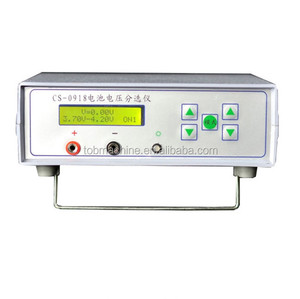

Engineered for defense contractors, radar integration laboratories, and industrial testing facilities across Milan and Northern Italy. Optimized for T/R module testing, pulse load handling, and auxiliary micro-grid validation.
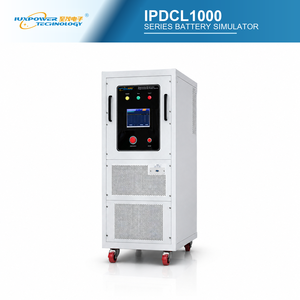
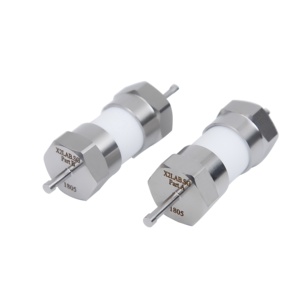
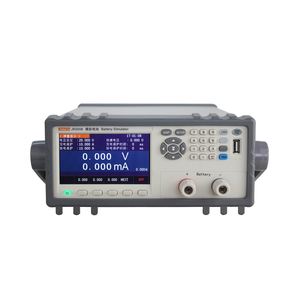
An engineering analysis of high-density pulsed power requirements, dynamic transient stability, and current-fed topologies for modern radar transmitter manufacturing.
The greater Milan metropolitan area—alongside the broader Lombardy industrial corridor stretching toward Varese, Brescia, and the Ligurian defense border—stands as one of Europe’s premier hubs for aerospace, naval, and ground radar system integration. Major prime defense contractors, specialized avionics manufacturers, and research centers such as Politecnico di Milano continuously push the boundaries of Active Electronically Scanned Array (AESA) radar, pulse-Doppler surveillance, and satellite tracking installations.
Modern radar architectures have evolved dramatically from vacuum-tube systems (magnetrons and klystrons) to high-efficiency Solid-State Power Amplifiers (SSPAs) powered by Gallium Nitride (GaN) and Silicon Carbide (SiC) semiconductor technologies. While GaN amplifiers deliver unmatched power density and wide bandwidth, they present severe challenges to power supply networks: extreme pulse load transients, rapid Duty Cycle fluctuations, high peak-to-average power ratios (PAPR), and sensitive electromagnetic immunity constraints. Standard off-the-shelf voltage-fed DC supplies frequently fail under these condition, suffering from output voltage drooping, thermal stress, or catastrophic over-current shutdowns. High-performance radar systems serving defense and civil aviation require specialized programmable DC power supplies and battery simulators engineered explicitly for dynamic transient recovery, low EMI ripple, and continuous rugged operation.
Why inductive energy storage is critical for pulsed radar loads and RF transmitter survivability.
Unlike standard power supplies that store energy in large output capacitor banks, our current-fed architecture utilizes an input inductor to store energy on the DC bus. This provides natural immunity against load short-circuits, micro-arcing in microwave tubes, and rapid load steps common in pulsed AESA radar arrays.
Equipped with high slew rate output stages and digital DSP control loops (MagnaLINK™ architecture), these DC supplies recover from 10% to 90% step load pulses in under 1 millisecond. This prevents phase jitter and power output dropouts in transmit/receive (T/R) modules during burst transmissions.
Designed with stringent electromagnetic compatibility in mind, our system designs integrate internal input/output filter networks to satisfy MIL-STD-461G (CE102, CS101) and EN 55011 Class A standards, protecting sensitive digital beamforming networks from electrical noise.
Selecting the ideal power topology for laboratory R&D, production test stations, or deployed shelter systems.
| Series Category | Power Output | Form Factor | Cooling Mode | Target Radar Application |
|---|---|---|---|---|
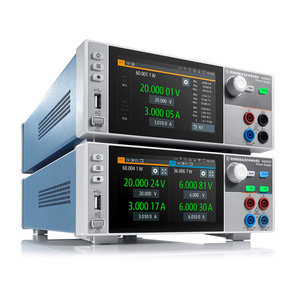
| SLx / SL Series | 1.5 kW – 10 kW | 1U Rack-Mount | Forced Air | T/R Module Bench Testing, ATE Automated Test Systems, Gallium Nitride (GaN) Driver Bias |
| XR Series | 2 kW – 10 kW | 2U Rack-Mount | Forced Air | High Voltage DC Bus Supplies, Airborne Radar Subsystem Emulation, Microwave Tube Testing |
| TS Series | 5 kW – 100 kW | 3U – 16U Rack | Forced Air | Medium-Range Ground Radar Transmitters, Naval Phased Array Testing, Active Load Simulation |
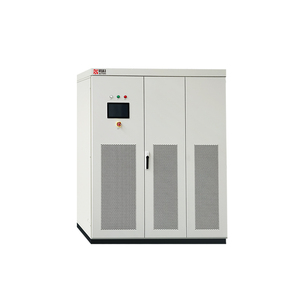
| MT Series | 150 kW – 3 MW | Cabinet Integration | Air / Water Hybrid | Long-Range Ballistic Missile Defense Radar, Heavy Industrial RF Arc Heaters, Microgrid Integration |
| ML Series | 500 kW – 10 MW | Modular Cabinets | Closed-Loop Liquid | Multi-Megawatt Naval Phased Array Radar Systems, High-Energy Physics & Hypersonic Facilities |
Tailored power integration solutions addressing specific operational challenges faced by Milanese defense integrators.
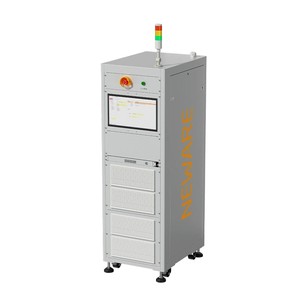
Production lines near Varese and Milan require multi-channel DC bias supplies for simultaneously stress-testing thousands of GaN/SiC Transmit/Receive modules under thermal burn-in conditions. Multi-channel battery simulators like the 24-Channel Cell Simulator ensure accurate voltage balancing and SOC management.
Shipbuilding defense corridors connecting Milan to Ligurian ports demand liquid-cooled, high-power DC systems (ML Series) that operate quietly in enclosed combat management rooms, resisting salt spray environment effects via hermetically isolated cooling paths.
Deployable ground radar units (C-band and X-band) rely on compact 1U/2U programmable power units capable of accepting wide 3-phase European grid power (400VAC, 50Hz) or diesel generator outputs while delivering pristine current regulation.
Flight test laboratories around Milan Malpensa airport utilize programmable DC electronic loads and battery simulators to replicate transient flight bus conditions (28V DC / 270V DC standards under MIL-STD-704F) for weather avoidance radar certification.
Insights into regulatory shifts, technological transitions, and procurement trends across European defense supply chains.
To reduce cable weight and copper losses in multi-megawatt radar installations, the European defense ecosystem is transitioning from 28V/48V distribution to 600V–1000V HVDC buses. This migration requires testing equipment with programmable over-voltage protection, low-capacitance outputs, and bidirectional battery simulation capabilities up to 1000kW.
Lombardy-based suppliers participating in joint European defense initiatives must meet strict NATO STANAG standards and CE regulatory directives (RoHS 3, REACH, Low Voltage Directive 2014/35/EU). Factory automation via SCPI commands over Ethernet/LXI, Python SDKs, and LabVIEW drivers is now a mandatory requirement for automated verification suites.
Why top-tier aerospace engineers trust our state-of-the-art production facility.
From custom planar magnetic winding and sheet metal CNC machining to surface-mount PCB assembly, all hardware stages are produced under one roof. This internal synergy guarantees unmatched quality control and accelerated 4–6 week delivery times.
Every single power instrument undergoes rigorous full-load thermal burn-in testing prior to dispatch. Comprehensive calibration data traceable to international standards (NIST / ISO 17025) is furnished with every unit shipped to Italy.
For specialized radar applications requiring extreme magnetic steering accuracy or ultra-stable RF local oscillator bias, our optional DBx modules provide low-drift current stability measured in parts per million (PPM).
Addressing common technical, logistical, and compliance inquiries from engineering leads in Italy.
Whether you require precise T/R module bias supplies, multi-megawatt pulsed power simulation, or battery cell emulators for radar microgrids in Milan, our application engineers are ready to review your parameters.
Inquire Now