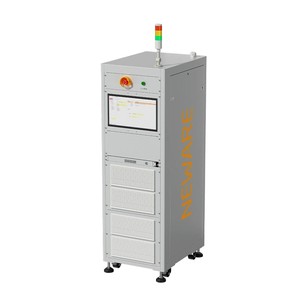

High-Precision Test & Emulation Hardware

Power Electronics Supplier & Suppliers Serving Germany

Engineering next-generation programmable DC power supplies, bipolar battery simulators, and linear electronic loads optimized for DACH automotive R&D, industrial automation, and renewable grid validation.

Precision Equipment Catalog

Advanced Battery Simulators & DC Power Testing Systems

Explore our industrial-grade power electronics portfolio designed for high-dynamic load testing, cell-level BMS validation, and pack-scale hardware-in-the-loop (HIL) simulation in compliance with German industry standards.
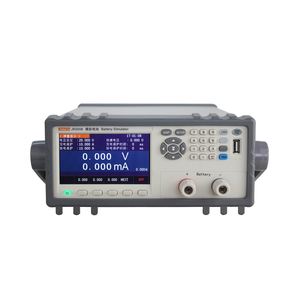
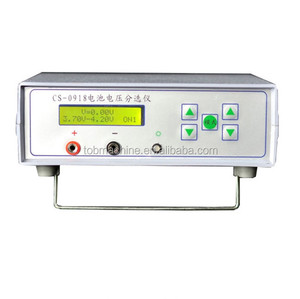
Lithium Ion Battery Voltage Current Capacity Tester

Lithium Ion Battery Voltage Current Capacity Tester

Get a Quote
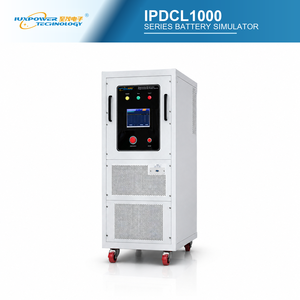
IPDCL1000 Series 220V 1KW High-Precision Battery Simulator Constant Power Function Testing Equipment

IPDCL1000 Series 220V 1KW High-Precision Battery Simulator Constant Power Function Testing Equipment

Get a Quote
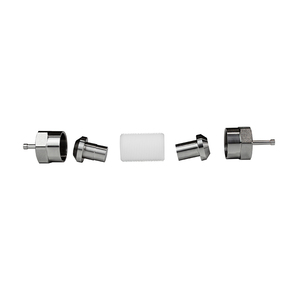
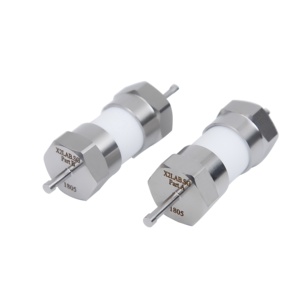
Removable Coin Battery Simulator for Coin Battery test Coin Cells Simulator

Removable Coin Battery Simulator for Coin Battery test Coin Cells Simulator

Get a Quote
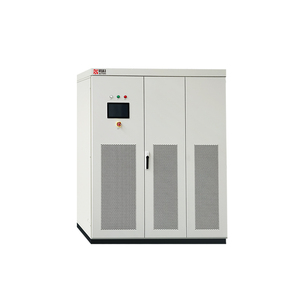
Power Aikesaibo ABS High-precision, High-dynamic Battery Simulator With Universal Programmable Functions 150-1000KW

Power Aikesaibo ABS High-precision, High-dynamic Battery Simulator With Universal Programmable Functions 150-1000KW

Get a Quote
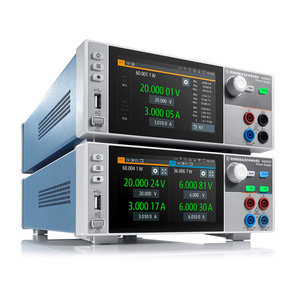
Rohde & Schwarz NGM201-NGM202 Industrial DC Power Bipolar Battery Simulator with 100-240V AC Input

Rohde & Schwarz NGM201-NGM202 Industrial DC Power Bipolar Battery Simulator with 100-240V AC Input

Get a Quote
Coin Cell Simulator Battery Simulator for Coin Cell Cr2032/2016 Commonly Used in Electrochemical Laboratories

Coin Cell Simulator Battery Simulator for Coin Cell Cr2032/2016 Commonly Used in Electrochemical Laboratories

Get a Quote
24-Channel Battery Cell Simulator for BMS Validation SOC Estimation and Balance Strategy Testing

24-Channel Battery Cell Simulator for BMS Validation SOC Estimation and Balance Strategy Testing

Get a Quote
1.5kW-10MW DC Power Range
400k+ Orderable Configurations
4-6 Wks Precision Lead Time
100% Vertically Integrated
Engineering Whitepaper

Architectural Superiority in High-Density Power Electronics

Modern power electronics testing requires unprecedented dynamic speed, minimal phase noise, and extreme thermal resilience. When evaluating high-power testing equipment for heavy industrial, automotive, and grid tie applications in Germany, traditional voltage-fed inverter topologies frequently fall short. Their reliance on large electrolytic output capacitance banks creates inherent vulnerability to output short circuits and introduces slow voltage dynamic recovery times during step-load changes.

Our power supplies and battery simulation systems leverage an advanced current-fed power processing architecture. By replacing heavy bulk capacitance with an energy-storing series inductor on the DC intermediate bus, our systems achieve natural current limiting under dead-short conditions without electronic shutdown trips. This delivers continuous, uncompromised stability across reactive, regenerative, and highly inductive loads typical of EV traction motors, hydrogen electrolysers, and plasma deposition systems.

  • Current-Fed Energy Processing

    Inductive energy storage prevents current spikes during sudden low-impedance faults, ensuring robust operation during destructive unit-under-test (UUT) failures.

  • Bipolar Sinking & Linear MOSFET Stages

    Sub-millisecond seamlessly smooth transition between sourcing current to battery packs and sinking current during regenerative braking emulation without mechanical relay chatter.

  • Ultra-Low Ripple & Zero-Drift Regulation

    Optional DBx ultra-stable calibration modules deliver current regulation down to single-digit parts-per-million (ppm), engineered specifically for high-precision particle accelerator magnets and metrology labs.

Technical Information Gain: Sourcing vs. Sinking Dynamics in German EV Powertrain Validation

In traction inverter testing under ISO 26262 safety protocols, transient voltage spikes from SiC (Silicon Carbide) high-frequency switching can destroy standard programmable DC sources. Our current-fed DC supplies incorporate built-in reverse energy blocking diodes and ultra-fast active over-voltage clamps, absorbing inductive feedback surges without injecting switching noise into sensitive CAN-bus measurement systems.

Local German Ecosystem Alignment

Power Electronics Applications in Germany’s Industrial Strategy

As Germany accelerates its Energiewende transition and advances Industrie 4.0 manufacturing automation, demand for localized high-performance power test infrastructure has expanded dramatically across regional industrial hubs.

Baden-Württemberg & Bavaria

Automotive Electrification & SiC Inverter Testing

The electrification of Germany's automotive core requires rugged battery pack simulators capable of supplying continuous high power (up to 1000 kW) with fast dynamic response times. Our IPDCL1000 and ABS series battery simulators allow test engineers in Stuttgart and Munich to emulate complex driving cycles (WLTP, FTP-75), internal resistance variations (ESR), and real-time state-of-charge (SOC) balance curves on high-voltage 800V EV architectures.

Saxony & North Rhine-Westphalia

Battery Cell Manufacturing & BMS Hardware-in-the-Loop

Inside "Silicon Saxony" and the battery technology institutes of Aachen and Münster, cell-level validation demands extreme isolation and fine voltage granularity. Our 24-Channel Battery Cell Simulator enables automated BMS verification by simulating cell imbalance, open-circuit faults, and thermal runaway triggers with 0.01% programming accuracy.

Northern Germany & Baltic Offshore

Hydrogen Electrolyser & Renewable Grid Integration

Green hydrogen initiatives across Schleswig-Holstein and Lower Saxony rely on heavy megawatt-class DC power conversion. Our water-cooled ML Series systems (scalable up to 10 MW) supply high-current, low-ripple continuous DC power for PEM and alkaline water electrolysis stacks, fully compliant with German grid connection guidelines (VDE-AR-N 4105 / DIN EN 50549).

Vertical Integration Advantage

Why German Test Facilities Rely on Our Power Processing Equipment

Outsourcing component sub-assemblies to unverified supply chains introduces quality variance and unacceptable lead time volatility. We maintain complete vertical integration within our ISO 9001:2015 certified production facility. Every element of our hardware—from precision magnetics winding and sheet metal enclosure fabrication to automated surface-mount PCB assembly—is designed, manufactured, and stress-tested under one roof.

This rigorous manufacturing model guarantees that German industrial buyers receive instruments engineered for decades of 24/7 continuous operation. Before export, 100% of manufactured power units undergo full-power burn-in at elevated ambient temperatures under dynamic load stress profiles, ensuring zero dead-on-arrival (DOA) rates.

Unified Control & Software Integration

Hardware versatility is matched by standard programming interfaces. Whether utilizing our compact 1U rack-mount SLx Series or a multi-megawatt MT Series installation, system software remains 100% backward compatible.

  • Standard native Ethernet/LXI, USB, and RS-232 interfaces with optional IEEE-488 (GPIB) and Modbus TCP.
  • Comprehensive SCPI command set compliance for rapid implementation into NI LabVIEW, Python, MATLAB, and C++ automated test environments.
  • PPPE Photovoltaic Power Profile Emulation software for automated solar array curve tracing under varying weather conditions.
  • Full compliance with European CE Mark, Low Voltage Directive (LVD 2014/35/EU), and EMC Directive (2014/30/EU).
Technical Procurement Support

Frequently Asked Questions by German Engineering Teams

Clear, direct technical answers regarding electrical compatibility, standards compliance, and international logistics for customers across Germany and the DACH region.

How do your power supplies accommodate German 400V / 480V 3-phase grid standards?
All our industrial high-power DC supplies and battery simulators offer wide 3-phase AC input options engineered specifically for European grid standards. Standard input configurations support 380V, 400V, 415V, and 480V AC 50/60Hz without requiring external step-down transformers. Active power factor correction (PFC > 0.98) ensures low harmonic distortion (THD), meeting strict VDE and DIN EN grid feedback guidelines.
What certifications are provided for equipment imported into Germany?
Every shipment sent to Germany comes complete with official CE Declarations of Conformity covering both Electrical Safety (EN 61010-1) and Electromagnetic Compatibility (EN 61326-1 Class A). Calibration documentation is fully traceable to international NIST / DKD standards, ensuring immediate acceptance during internal ISO/IEC 17025 laboratory audits.
How fast can the battery simulators cycle between Sourcing and Sinking modes?
Our high-dynamic bipolar battery simulator series features sub-millisecond dynamic transition times between current sourcing (charging simulation) and current sinking (discharging simulation). The digital control loop operates with low output capacitance, eliminating voltage overshoots during fast torque reversals on connected traction motor drives.
Can these battery simulators be integrated into existing Hardware-in-the-Loop (HIL) setups?
Yes. With high-speed Ethernet/LXI interfaces and real-time command processing times under 1 millisecond, our units integrate directly into Vector CANoe, dSPACE, NI VeriStand, and Opal-RT simulation frameworks. The high channel density of our 24-channel battery cell simulator makes it optimal for localized cell-balancing HIL tests.
What localized support and warranty options are offered for DACH customers?
Equipment comes standard with a comprehensive factory warranty covering parts and labor. We operate dedicated European technical service hubs providing regional warranty support, repair services, replacement parts delivery, and factory recalibration to minimize downtime for industrial facilities across Germany, Austria, and Switzerland.
What is the typical lead time for custom high-power (>100 kW) installations?
Thanks to our unified modular assembly architecture and vertically integrated manufacturing facility, typical made-to-order lead times range from 4 to 6 weeks. Common configurations and benchtop units (such as coin cell simulators and 1U/2U DC power supplies) are frequently maintained in ready-to-ship stock for urgent project requirements.
Direct Technical Consultation

Request a Custom Power Electronics Quote for Germany

Speak directly with our senior application engineers. We will analyze your voltage envelope, current ripple tolerances, dynamic duty cycles, and interface specifications to configure the precise hardware solution for your facility.