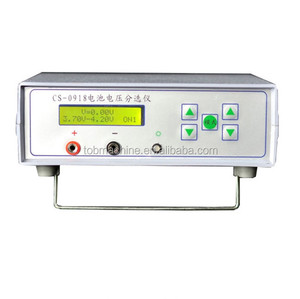
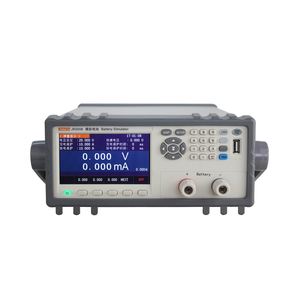
Precision-engineered programmable DC power supplies, linear MOSFET electronic loads, and high-dynamic battery simulators designed to handle extreme ambient conditions in Oman.
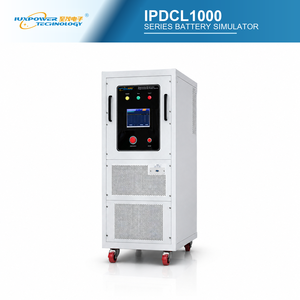
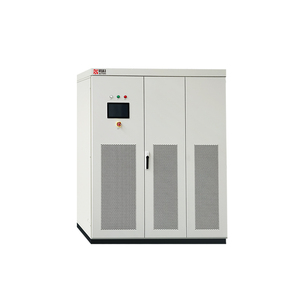
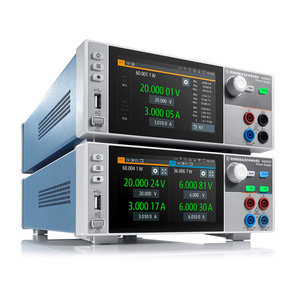
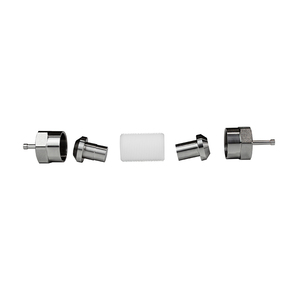
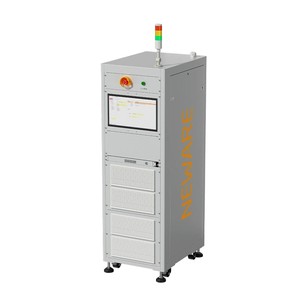
As the Sultanate of Oman executes its ambitious Oman Vision 2040 and works toward Net-Zero greenhouse gas emissions by 2050, the electrification of heavy industrial haulage, public transit systems, maritime logistics, and petroleum extraction infrastructure has shifted from an emerging concept to a core operational mandate. Heavy industrial operations in regions like Muscat, Sohar Freezone, Duqm Port, and Salalah require highly specialized testing instruments to validate electric traction drives, battery management systems (BMS), high-voltage DC architectures, and energy storage integrations under harsh environmental stress.
A Traction Tester—comprising high-dynamic battery simulators, bidirectional DC power supplies, active linear MOSFET loads, and BMS hardware-in-the-loop (HIL) emulators—is the central validation standard for traction motors, inverter drives, heavy vehicle battery packs, and solar-coupled charging hubs. Standard bench power supplies fail to handle the rapid step-load responses, regenerative back-EMF spikes, and extreme thermal ambient derating demands unique to Middle Eastern operational theaters. This comprehensive document outlines the architectural advantages, engineering customization options (OEM/ODM), localized deployment scenarios, and regulatory compliance considerations for specifying traction testing systems in Oman.
Conventional switched-mode DC power supplies utilize voltage-fed topologies reliant on large parallel output filter capacitors. While effective for static resistive loads, voltage-fed architectures exhibit critical vulnerabilities when coupled with dynamic electric vehicle (EV) traction inverters or high-inductance electric motor windings. Dynamic braking generates massive reverse voltage transients (regenerative back-feed) that over-voltage the output bus, causing emergency safety trips or catastrophic switch damage.
Our OEM/ODM traction testing systems utilize a proprietary Current-Fed Switching Topology. By placing a heavy energy-storing inductor on the DC primary side before the high-frequency inverter stage, energy storage occurs predominantly in the magnetic field rather than an electrostatic capacitive field. This fundamental distinction delivers four critical technical advantages for traction testing engineers in Oman:
Tailored engineering configurations designed to solve specific operational challenges in Oman’s rugged desert environments and industrial corridors.
Oilfield logistics in the interior deserts (Nimr, Marmul, Fahud) require electrifying heavy haulage trucks and wellhead servicing rigs. OEM/ODM traction motor test benches test 400kW-1MW traction drives under simulated peak torque hill-climbs, ambient temperatures up to 55°C, and heavy dust conditions using NEMA 4/IP54 climate-sealed power cabinets.
Sohar’s port operations are transitioning automated guided vehicles (AGVs), rubber-tyred gantry (RTG) cranes, and yard tractors to electric traction power. Custom multi-channel battery cell simulators validate high-rate lithium-titanate (LTO) and LFP battery management systems, simulating rapid high-current charging pulses from megawatt port fast-chargers.
Mwasalat municipal bus fleets and commercial urban delivery vans running through Greater Muscat require strict battery pack health verification. High-dynamic 150kW-1000kW battery simulators execute hardware-in-the-loop drive cycle profiles (such as WLTP and custom stop-and-go Muscat transit routes) under extreme summer HVAC cooling loads.
With Green Hydrogen projects expanding in Oman (Hydrom initiatives in Salalah & Duqm), heavy hydrogen fuel cell trucks require hybrid traction testing. Low-noise linear MOSFET electronic loads sink continuous power during fuel cell electrochemical impedance spectroscopy (EIS) and transient power step tests without introducing switching noise interference.
Remote mining and industrial facilities in Oman utilize utility-scale solar PV microgrids paired with stationary battery energy storage. Our programmable traction testing systems emulate solar array I-V curves under sandstorm irradiance attenuation while stress-testing bidirectional microgrid inverter traction tie-ins.
Macro-economic and technological vectors shaping procurement needs for electrical test equipment across the Sultanate.
National strategic mandates prioritize industrial diversification, local manufacturing value addition (ICV), and technological self-reliance. Importers and local assemblers demand modular OEM test platforms that scale seamlessly from small lab prototypes to multi-megawatt factory acceptance testing (FAT).
Industrial zones often face line voltage sags, localized harmonics, and extreme thermal ambient swings up to 55°C. Test instrumentation must feature active power factor correction (PFC > 0.99), robust input isolation transformers, and conservative thermal de-rating margins.
The Authority for Public Services Regulation (APSR) and Oman Power and Water Procurement Company (OPWP) strictly regulate grid-tied power electronics. Testing equipment must incorporate low total harmonic distortion (THD < 3%) and robust grid-disconnection interlocks.
Omani engineering procurement teams favor global suppliers capable of delivering fast OEM custom modifications, localized calibration support, spare parts availability, and SCPI software driver compatibility (LabVIEW, Python, MATLAB).
Four decades of vertically integrated manufacturing authority, custom engineering flexibility, and field-proven reliability.
All sheet metal fabrication, transformer magnetics winding, PCB surface-mount assembly, final system integration, and full-load burn-in testing take place under one roof in our state-of-the-art facility, guaranteeing 4 to 6-week build lead times.
We provide tailored voltage/current output profiles (up to 2000V DC and 10,000A), custom liquid-cooling quick-connect manifolds, integrated blocking diodes for reverse voltage protection, and specialized Modbus TCP/CANbus firmware customization.
Every traction tester unit undergoes rigorous 100% full-power thermal burn-in under maximum continuous ambient stress before shipment. Comprehensive factory test documentation and traceable calibration certificates accompany every unit.
Extensive experience exporting industrial test power systems directly to Oman (Port Sohar, Muscat Seeb Airport, Salalah). Handled via CIF, DDP, or FOB terms with complete customs, Certificate of Origin (COO), and SASO/G-Mark technical documentation support.
Compare engineering platform parameters across our rack-mount and industrial cabinet configurations.
| System Platform | Power Rating | Voltage Range | Dynamic Response | Cooling Topology | Primary Industrial Application |
|---|---|---|---|---|---|
| SLx / SL Series | 1.5 kW – 10 kW (1U) | 0 – 1000 VDC | < 2 ms Step Time | Forced Air (Speed-Controlled) | Benchtop BMS HIL & Module Validation |
| TS Series | 5 kW – 100 kW (3U-16U) | 0 – 1500 VDC | < 1.5 ms Step Time | High-CFM Forced Air | Traction Inverter & EV Pack Testing |
| MT Series | 150 kW – 3 MW (Cabinet) | 0 – 2000 VDC | < 1.0 ms Step Time | Industrial Air Cooled | Heavy Haulage Motor Drives & Mining AGVs |
| ML Series | 500 kW – 10 MW+ | 0 – 2000 VDC | Sub-millisecond | Closed-Loop Water/Glycol | Megawatt Grid-Tied Traction & Marine Drive FAT |
| ALx Series (Load) | 1.25 kW – 20 kW+ | 0 – 1000 VDC | Linear Speed (No Switching) | Low-Noise Linear MOSFET Stage | Fuel Cell EIS & Battery Discharge Cycling |
Addressing key questions on grid compatibility, thermal ambient derating, lead times, and customs clearance in Oman.
Need a customized high-dynamic traction tester, battery simulator, or heavy-duty electronic load for your facility in Oman? Contact our engineering team today to review your voltage, current, dynamic response, and environmental specifications.
Inquire Now