How current-fed topology, sub-ppm current regulation, and solid-state power conversion are accelerating Poland's transition into Central Europe's high-tech manufacturing power house.
When driving high-inductance electromagnetic loads—such as steering dipoles in particle accelerators, plasma containment coils, nuclear magnetic resonance (NMR) diagnostics, or heavy industrial lifting magnets—traditional voltage-fed switch-mode power supplies face severe stability challenges. Inductive energy storage ($L \cdot i^2 / 2$) causes rapid voltage spikes during transient switching, placing immense stress on primary MOSFET/IGBT stages and risking catastrophic breakdown.
Our advanced magnet power supply architectures utilize a rugged current-fed power conversion topology. By placing an energy-storing inductor on the DC bus upstream of the inverter stage, current-fed converters naturally limit fault currents and short-circuit conditions. For research institutions and OEMs across Poland—from Silesian heavy industrial plants to high-energy physics laboratories in Warsaw and Kraków—this topology provides inherent arc immunity, tolerance to extreme inductive kickback, and continuous full-power operation across a wide operating envelope rather than a restrictive single nominal point.
Electromagnets deployed in particle synchrotrons, electron microscopes, and precision medical beamlines demand extreme magnetic field constancy. Micro-ampere variations in magnet coil current induce beam orbit distortion, energy spread, and resolution degradation. Achieving sub-ppm (parts per million) stability over 8-to-24-hour operational cycles requires ultra-low thermal coefficient sensing circuits and active temperature stabilization.
Integrated with zero-flux DC current transducers (DCCT) and precision temperature-compensated reference voltages, our magnet power supplies outfitted with the DBx High-Stability Option deliver less than 10 ppm stability over 8 hours (with custom sub-ppm configurations available). The architecture eliminates low-frequency mains ripple (50 Hz/100 Hz grid harmonics prevalent in Polish industrial distribution grids) while maintaining high dynamic bandwidth for fast magnet ramping.
Below is a matrix comparing current-fed programmable DC supplies and linear electronic load platforms deployed across European research and industrial facilities:
| Series Platform | Power Output Range | Form Factor / Mounting | Cooling Topology | Current Ripple & Drift | Primary Application in Poland |
|---|---|---|---|---|---|
| SLx / SL Series | 1.5 kW – 10 kW | 1U Rack-Mount | Forced Air Cooling | < 0.05% RMS | Automotive ATE Racks, University Physics Labs |
| XR Series | 2 kW – 10 kW | 2U Rack-Mount | Forced Air Cooling | < 0.04% RMS | SiC/GaN Double-Pulse DC Bus, Aerospace Test |
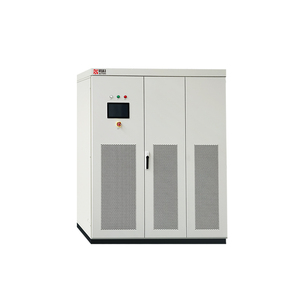
| TS Series | 5 kW – 100 kW | 3U – 16U Floor Cabinet | Smart Airflow Management | Sub-10 ppm with DBx | Electromagnet Steering, Battery Pack Testing |
| MT Series | 150 kW – 3 MW | Modular Cabinet Array | Air Cooled / Ductable | Low-Harmonic Phase Control | Hypersonic Wind Tunnels, Industrial Plasma |
| ML Series | 500 kW – 10 MW+ | Custom Water-Cooled Bay | Closed-Loop Chiller / Liquid | High-Efficiency Megawatt Duty | Green Hydrogen Electrolysis, Heavy Metallurgy |
| ALx Series (Loads) | 1.25 kW – 20 kW+ | Rack-Mount / Cabinet | Linear MOSFET Sinking | Zero Switching Noise | Fuel Cell Characterization, Battery Discharging |
Tailored power electronics engineering addressing the specific industrial hubs, scientific facilities, and renewable infrastructure projects in Poland.
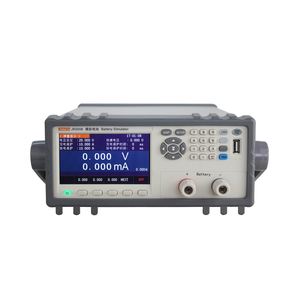
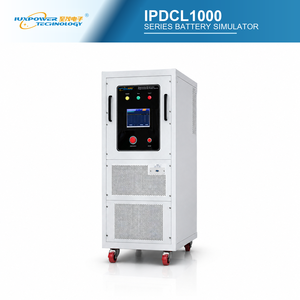
Poland is Europe's largest manufacturer of lithium-ion battery packs and components. In the Wrocław and Lower Silesia industrial zone, high-power battery simulators (150 kW to 1000 kW) and multi-channel BMS validation systems (e.g., 24-channel cell simulators) are mandatory for End-of-Line (EOL) testing, hardware-in-the-loop (HIL) simulation, and traction inverter stress testing under real-world vehicle thermal profiles.
At research centers such as the National Synchrotron Radiation Centre SOLARIS in Kraków and the National Centre for Nuclear Research (NCBJ) in Świerk near Warsaw, magnet power supplies drive focusing quadrupoles, dipole bending magnets, and beam steering correctors. The DBx sub-ppm precision supply ensures beam alignment without drift across long experimental run cycles.
Upper Silesia's steel production, mining, and heavy machinery OEM plants require industrial-grade DC magnet power supplies for heavy lifting solenoids, magnetic separators, and arc furnace controls. Rugged current-fed power processing tolerates repetitive heavy inductive discharge, high line ambient temperatures, and dust-laden industrial environments.
As Poland expands offshore wind power development in the Baltic Sea and scales green hydrogen initiatives, water-cooled ML Series megawatt DC power supplies (500 kW to 10 MW) provide continuous DC energy for industrial PEM and alkaline electrolyzers, solar array simulation (via PPPE software), and HVDC grid converter testing.
Understanding the macro-economic and technical shifts impacting Polish engineers, procurement managers, and plant directors.
Polish automotive suppliers are rapidly transitioning from legacy 400V electric vehicle powertrains to 800V SiC-based architectures. This transition demands DC power supplies and battery simulators capable of delivering high voltage output (up to 1000V–1500V DC) with rapid voltage slew rates and low parasitic capacitance to test wide-bandgap inverters safely.
Smart factories across Warsaw, Poznań, and Katowice require seamless automated test equipment (ATE) integration. Modern power supplies must offer native Ethernet/LXI, Modbus TCP, Python libraries, and IVI-COM drivers to stream telemetry, diagnostic logs, and energy consumption metrics directly into factory MES and SCADA systems.
Compliance with EU Low Voltage Directive (LVD 2014/35/EU) and Electromagnetic Compatibility (EMC 2014/30/EU) under EN 61000-6-2 / EN 61000-6-4 is non-negotiable for equipment imported into Poland. Power supplies must feature integrated active power factor correction (PFC > 0.99) to minimize harmonics on the 400V 50Hz Polish national grid (PSE).
From precision copper winding to 100% full-power burn-in testing, our single-facility manufacturing model gives Polish buyers complete quality control and direct engineering support.
We design, wind, and vacuum-impregnate all primary power transformers and current-fed bus inductors internally, guaranteeing exact performance matching and long-term thermal endurance.
The standard SCPI command architecture, MagnaCTRL GUI, and LabVIEW drivers are identical whether operating a 1.5 kW benchtop unit or a 2 MW water-cooled industrial system.
Every instrument undergoes intensive full-load thermal burn-in and multi-point automated calibration prior to dispatch, eliminating early-life component mortality.
Our vertical manufacturing model reduces reliance on third-party supply chain bottlenecks, yielding industry-leading 4 to 6 week build times for made-to-order high-power units.
Clear technical and commercial answers regarding compliance, grid compatibility, logistics, and customized power configurations for Poland.
Speak directly with our senior application engineers to define voltage/current profiles, current stability parameters, interface options, and delivery schedules for your project in Poland.