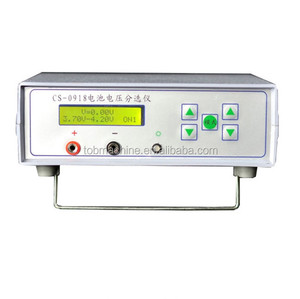
Lithium Ion Battery Voltage Current Capacity Tester
High-accuracy cell capacity analyzer designed for lithium-ion validation. Features automated constant-current/constant-voltage discharge profiling, impedance measurement, and cycle-life logging.

Engineered for low-noise dissipation, ultra-fast dynamic transient response, and high-density power testing. Explore our standardized and modular test systems optimized for industrial deployment in Greece and across the Mediterranean region.
High-accuracy cell capacity analyzer designed for lithium-ion validation. Features automated constant-current/constant-voltage discharge profiling, impedance measurement, and cycle-life logging.
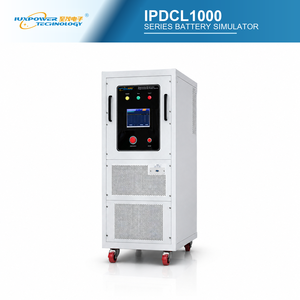
Precision programmable linear-mode DC equipment featuring bidirectional sinking/sourcing. Emulates dynamic internal battery resistance ($R_{i}$) curves for inverter and converter testing.
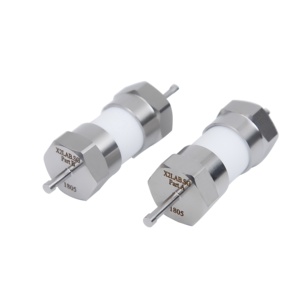
Compact low-noise linear load module tailored for electrochemical research, micro-electronic wearable testing, and coin-cell discharge simulation under controlled thermal conditions.
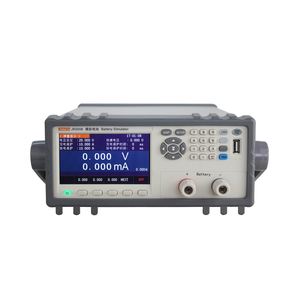
Integrated multi-channel linear DC test unit engineered for consumer electronics hardware testing, delivering instantaneous current response without transient switching artifacts.
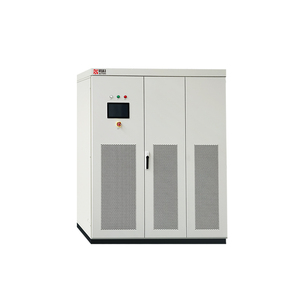
Industrial-scale power processing topology providing continuous linear loading and battery emulation. Built for heavy EV drivetrain testing, grid storage, and marine propulsion validation.
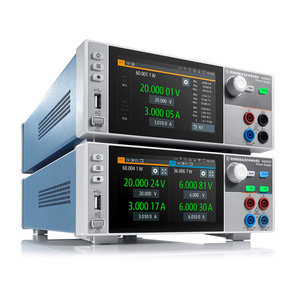
Ultra-low ripple bipolar power processing instrument allowing smooth four-quadrant transitions between sinking and sourcing. Ideal for sensitive semiconductor and sensor testing.
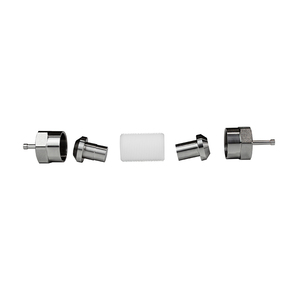
Specialized lab-grade electronic load emulator with sub-milliamp resolution, tailored for university research facilities and electrochemical impedance spectroscopy (EIS).
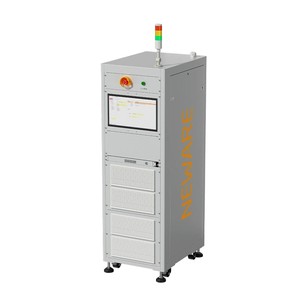
Comprehensive Hardware-in-the-Loop (HIL) battery management system validation rack. Simulates cell imbalance, faults, temperature drift, and active balancing strategies.
Understanding why linear DC electronic loads remain indispensable for precision measurement, microgrid inverter validation, and wide-bandgap (SiC/GaN) power electronics testing.
Unlike switch-mode loads that utilize Pulse Width Modulation (PWM) and introduce high-frequency high-voltage ripple back into the Device Under Test (DUT), linear loads operate solid-state MOSFETs in their active linear region ($V_{ds} \times I_d$). This produces pure DC sinking with zero EMI noise emission.
Linear loading topologies achieve current rise times exceeding 10 A/µs with minimal overshoot. This fast dynamic bandwidth allows accurate characterization of transient load spikes, pulsed radar power supplies, and fuel cell response curves without filter inductance delays.
Incorporating heavy-duty energy-storing inductors on the DC bus rather than standard capacitor banks provides inherent protection against sudden output short-circuits, voltage transients, back-EMF spikes from inductive motors, and localized grid disturbances.
The primary design challenge of a high-power linear electronic load is managing massive heat dissipation across the silicon junctions of power MOSFETs operating in their linear ohmic zone. In conventional switch-mode systems, thermal losses are low because transistors operate strictly in fully ON or fully OFF states. In contrast, linear loads continuously convert electrical power ($P = V \times I$) directly into thermal energy across the semiconductor channel.
Our direct factory-manufactured linear loads overcome thermal runaway through proprietary water-cooled copper cold-plates, low thermal-resistance ceramic insulators ($R_{th,j-c} < 0.15^{\circ}\text{C/W}$), and distributed DSP digital loop controls. By continuously sensing individual die junction temperatures, the controller dynamically rebalances current sharing across parallel MOSFET blocks in under 100 microseconds—ensuring maximum MTBF even during continuous full-power operational testing in high ambient temperature environments such as Greek summer field sites.
Analyzing the macroeconomic drivers, regulatory standards (IPTO/ADMIE), and renewable energy expansion reshaping the requirement for linear load equipment in Greece.
Under Greece's National Energy and Climate Plan (NECP), the Independent Power Transmission Operator (ADMIE / ΑΔΜΗΕ) is rapidly executing the multi-phase electrical interconnection of the Cyclades, Dodecanese, and Crete with the mainland grid. As non-interconnected island diesel power plants are decommissioned, hybrid microgrids featuring utility-scale solar photovoltaic (PV) array installations and Battery Energy Storage Systems (BESS) are proliferating.
Testing Requirement: Linear loads and high-power battery simulators are vital for validating microgrid central inverters under rapid solar cloud transients, maintaining grid stability and zero power quality degradation across sensitive island nodes.
Greece owns the world's largest commercial shipping fleet, and Greek ports—including Piraeus (PPA), Thessaloniki (ThPA), and Elefsina—are at the forefront of implementing cold-ironing shore power systems and green maritime electrification mandates. Short-sea shipping ferries operating across the Saronic Gulf are transitioning toward hybrid-electric and fully electric propulsion units.
Testing Requirement: Shipboard DC distribution networks demand heavy-duty water-cooled linear electronic loads capable of simulating marine motor starting transients, regenerative breaking feedback, and battery discharge performance under strict maritime Bureau Veritas / DNV guidelines.
The Greek public e-mobility infrastructure is expanding rapidly along the E75 / A1 Motorway (connecting Athens, Larissa, and Thessaloniki) alongside urban municipal EV fleets supported by Public Power Corporation (PPC / ΔΕΗ). This expansion requires local assembly plants, charging network operators, and testing labs to validate ultra-fast DC Chargers (150kW to 350kW+).
Testing Requirement: Programmable linear electronic loads and multi-channel battery simulators emulate fluctuating vehicle SOC (State of Charge), hardware-in-the-loop BMS safety trips, and peak dynamic power draw without creating power quality distortion on local commercial distribution lines.
Leading Greek academic institutions—such as the National Technical University of Athens (NTUA), the Aristotle University of Thessaloniki (AUTH), and the Center for Research and Technology-Hellas (CERTH)—along with aerospace defense facilities in Central Greece, require military-grade instrumentation for wide-bandgap (SiC/GaN) semiconductor development and radar DC power testing.
Testing Requirement: Ultra-low noise linear electronic loads with isolated analog programming and high voltage capability (up to 1200V DC) are specified to evaluate converter efficiency without switching artifact contamination.
From core transformer magnetics winding to automated final full-power burn-in, our fully integrated manufacturing model ensures unyielding reliability and customization for Greek procurement partners.
Every linear electronic load chassis, power inductor, planar magnetics structure, and printed circuit assembly is designed, machined, populated, and tested within our state-of-the-art production facility. This eliminates sub-supplier component bottlenecks.
While industry standard lead times for custom power supplies often exceed 20–30 weeks, our streamlined supply chain management allows custom and modular linear load orders shipped to Piraeus or Thessaloniki ports within 4 to 6 weeks from approval.
No instrument leaves our factory without undergoing mandatory 100% full-power thermal burn-in testing under full load current conditions. Comprehensive test certificates and NIST-traceable calibration documentation are supplied with every unit.
Our instruments feature standard SCPI digital command structures over Ethernet/LXI, USB, and RS-232, with optional IEEE-488 (GPIB) and Modbus TCP. Software written for a 1.25 kW bench instrument scales seamlessly up to a 1 MW multi-cabinet installation.
Specially customized for warm Mediterranean climates, our air-cooled and liquid-cooled linear loads are rated for full continuous operational power at ambient temperatures up to 50°C without premature power derating.
Easily expand your testing capacity over time. Master/Slave paralleling interfaces allow multiple linear load frames to act as a single high-power sinking system with synchronized dynamic current control.
Compare key performance characteristics across our primary product platforms to identify the right model for your operational requirements in Greece.
| Series Category | Power Range | Voltage Range | Cooling Mode | Dynamic Slew Rate | Primary Industrial Application |
|---|---|---|---|---|---|
| ALx Linear Loads | 1.25 kW – 20 kW+ | 0 – 1000 VDC | Air-Cooled / Internal Fans | > 10 A/µs | Low-noise fuel cell testing, solar PV string sinking, sensor calibration |
| IPDCL Simulator | 1 kW – 10 kW | 220 VDC Nominal | Forced Air | < 50 µs step time | Automotive DC-DC converter validation, laboratory automated test racks |
| Multi-Channel BMS HIL | Cell-Level (24 Ch) | 0 – 6 VDC per Channel | Convection / Compact Air | Micro-amperage drift | BMS firmware validation, active balancing algorithm evaluation |
| High-Power MegaLoad | 150 kW – 1000 kW+ | 100 – 1200 VDC | Liquid / Water-Cooled | Fast Dynamic Closed-Loop | Marine electric propulsion, megawatt EV charger testing, grid energy storage |
Addressing regulatory compliance, shipping logistics to Greek ports, grid voltage compatibility, and warranty service across Greece.
Consult with our senior application engineers today to select the optimal linear electronic load, battery simulator, or programmable DC system customized for your voltage, current, dynamic bandwidth, and cooling requirements.