
Industrial power processing solutions tailored for BMS validation, inverter compliance, microgrids, and battery testing in Costa Rica.
Costa Rica stands as a global vanguard in renewable energy adoption, generating over 99% of its annual electricity from green resources—primarily hydroelectric, geothermal, wind, and rapidly scaling utility solar PV installations. However, this high-penetration renewable architecture introduces severe grid stability challenges: dynamic frequency fluctuations, sudden phase shifts due to tropical weather shifts, high voltage transient spikes, and bidirectional power flow friction under the National Decarbonization Plan 2018–2050 (Plan Nacional de Descarbonización). For original equipment manufacturers (OEMs), utility contractors, Free Trade Zone (FTZ) electronics developers, and research institutions operating under the standards of the Instituto Costarricense de Electricidad (ICE) and the regulatory guidelines of ARESEP, validating grid-tied power electronics is no longer optional—it is a critical operational imperative.
As a premier grid simulator manufacturer and direct supplier serving Costa Rica, our high-dynamic, programmable AC/DC grid simulation systems provide the foundational testing infrastructure necessary to recreate complex microgrid dynamics, high-penetration photovoltaic inverter behavior, dynamic battery energy storage system (BESS) loading, and stringent islanding detection protocols in controlled laboratory environments.
Conventional programmable power supplies historically relied on voltage-fed switch-mode topologies utilizing large capacitive banks across the output bus. While adequate for standard DC power requirements, voltage-fed architectures present inherent structural vulnerabilities when subjected to violent load changes, reverse electromotive force (EMF), electrical arcing, or severe short-circuit testing mandated by utility interconnections.
Our industrial grid simulators employ advanced Current-Fed Power Processing Topologies. By placing a primary energy storage inductor prior to the main power inverter stage, current spikes are naturally limited at the magnetic level. This delivers superior resilience into reactive, non-linear, and regenerative grid-tied devices under test (DUT):
Inductive energy storage prevents semiconductor destruction during destructive zero-voltage grid dip tests, low-voltage ride-through (LVRT) sequences, and direct short-circuit fault testing.
Fast dynamic voltage tracking (<100 µs response time) allows real-time reproduction of transient lightning strikes, line-to-ground faults, and rapid transformer switching events common in rural Costa Rican distribution lines.
Bi-directional active front-end power electronics return up to 92%+ of absorbed energy back to the local facility 60Hz utility line, drastically reducing thermal heating and operational HVAC expenses in tropical climates.
To assist procurement managers and lead test engineers across Costa Rica's technological corridors (such as Coyol Free Zone, America Free Zone, and Global Park), the following matrix outlines our standardized grid simulation platforms:
| Series Platform | Power Density Range | Voltage Envelope | Cooling Architecture | Primary Application Target |
|---|---|---|---|---|
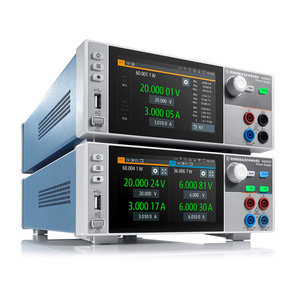
| SLx / SL Series | 1.5 kW – 10 kW (1U Rack) | Up to 1500 VDC / 520 VAC | Forced Air Cooling | ATE Benchtop Testing, Low-Power Inverters, R&D Labs |
| TS Series | 5 kW – 100 kW (3U–16U) | 0 – 1000 V / High Current | Variable Fan Intelligent Air | Industrial Motor Drives, Solar Inverter Grid-Tie Compliance |
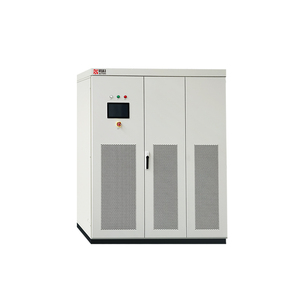
| MT Series | 150 kW – 3 MW+ | Cabinet Parallel System | Redundant Air Cooling | Utility-Scale BESS, Heavy EV Powertrain, Substation HIL |
| ML Series | 500 kW – 10 MW | Multi-Cabinet Array | Closed-Loop Water Cooled | High-Enthalpy Research, Continuous Megawatt Grid Stressing |
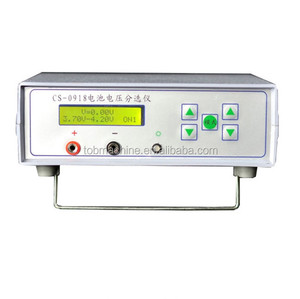
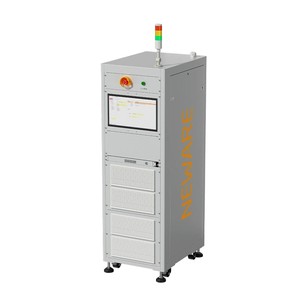
| BMS-24 / Cell-Sim | Multi-Channel Cell Emulation | 0 – 6 V per Channel (Isolated) | Convection / Fan | Battery Management System (BMS) Hardware Validation |
Scenario A: Utility-Scale Solar & Wind Inverter Interconnection Testing (Guanacaste & Central Valley)
In regions like Guanacaste, solar irradiance profiles experience sudden drops due to cloud cover transitions, causing solar grid-tie inverters to destabilize local feeders. Utilizing our 4-quadrant programmable AC grid simulators combined with Photovoltaic Power Profile Emulation (PPPE) software, local utility contractors can replicate dynamic I-V curves, irradiance ramps, and rapid temperature sweeps. This validates Maximum Power Point Tracking (MPPT) efficiency and enforces compliance with IEEE 1547 and IEC 62116 anti-islanding standards mandated by ICE.
Scenario B: Medical Device & Advanced Manufacturing in Free Trade Zones (Zonas Francas)
Costa Rica’s Free Trade Zones in Alajuela, Heredia, and Cartago house major international medical device OEMs and microelectronics facilities. These cleanroom environments require absolute power reliability. Our high-precision DC power supplies and grid simulators serve as golden calibration sources for testing automated diagnostic equipment, high-frequency surgical tools, and power supply modules against international mains disturbance standards (IEC 61000-4-11, IEC 61000-4-14, and IEC 61000-4-28 voltage sag/swell tolerance).
Scenario C: Electric Vehicle (EV) Infrastructure & Transport Electrification
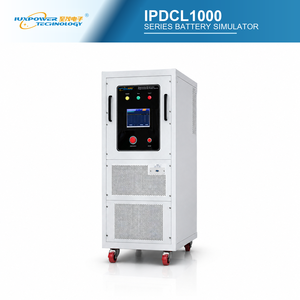
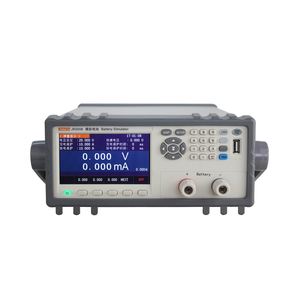
Under Costa Rica’s Law 9518 (Incentives and Support for Electric Transportation), public and private fleets are undergoing rapid electrification. Our high-power battery simulators (150 kW to 1 MW) allow EV charging station manufacturers (EVSE) and electric bus fleet integration engineers to simulate high-voltage traction pack behavior (Lithium Iron Phosphate, NMC) across changing States of Charge (SOC), internal resistance escalation, and thermal runaways without relying on real physical high-voltage batteries during development.
Scenario D: Isolated Microgrid & Eco-Resort Hybrid Power Systems
Remote eco-resorts and Agritech operations in Osa Peninsula and Monteverde frequently rely on hybrid microgrids combining micro-hydro, solar PV, diesel backup, and battery storage. Our grid simulators allow systems integrators to test microgrid controllers (dSPACE, Opal-RT, or Typhoon HIL environments) against seamless grid-to-island transitions, voltage imbalances, and phase angle jumps under zero-risk simulated laboratory conditions.
The Costa Rican electrical equipment procurement market is experiencing a profound paradigm shift driven by legislative mandates, global supply chain nearshoring, and grid modernization strategies:
Global electronics manufacturers are expanding manufacturing operations in Costa Rica to serve North and South American markets. Local R&D labs demand SCPI-compliant, automated test equipment (ATE) with fast delivery lead times.
ICE's national grid operator (CENSE) has increased compliance enforcement regarding Total Harmonic Distortion (THD < 3%), power factor correction, and dynamic reactive power compensation for grid interconnections.
The push to electrify industrial process heating, agricultural processing (coffee/pineapple facilities), and commercial transport increases demand for high-power megawatt-level grid simulation up to 10 MW.
Furthermore, tropical environmental factors in Central America—such as ambient humidity averaging above 85% and elevated ambient temperatures in coastal industrial parks—require grid simulation hardware featuring tropicalized conformal-coated printed circuit boards (PCBs), ruggedized thermal management, and isolated control communications (Ethernet/LXI, USB, RS-232, IEEE-488 GPIB, and Modbus TCP).
Our programmable grid simulators and DC electronic supplies support all standard line voltages utilized in Costa Rican commercial and industrial facilities. This includes 120V/240V single-phase, 208V 3-phase, 480V 3-phase, and medium-voltage industrial feeds (60 Hz nominal frequency), with soft-start contactors to prevent facility breaker tripping during turn-on.
We work directly with logistics channels serving San José (SJO - Juan Santamaría International Airport) and major ports (Puerto Caldera and Moín). For companies operating under Ley 7210 (Free Trade Zone Regime), we provide full commercial invoicing, HS code classification (8504.40 / 9030.89), certificate of origin documentation, and tax-exempt shipping compliance support.
Yes. Our AC grid simulators provide continuous frequency synthesis from 45 Hz up to 500 Hz (with extended options up to 1000 Hz). Engineers in Costa Rica can easily emulate European (50Hz), North American (60Hz), or aerospace (400Hz) electrical grids for exported finished products.
Every unit ships standard with SCPI command sets over Ethernet/LXI, USB, and RS-232, along with isolated 37-pin analog/digital user I/O. Native LabVIEW, IVI, MATLAB, and Python drivers are provided free of charge, enabling rapid integration into automated test environments (ATE) and dSPACE/Opal-RT Hardware-In-The-Loop (HIL) systems.
Thanks to our vertically integrated factory model—where metal fabrication, magnetic winding, PCB assembly, and burn-in testing occur under one roof—our typical build times range from 4 to 6 weeks for standard rack-mount systems and 6 to 8 weeks for custom megawatt cabinet installations, significantly faster than the industry average of 16–24 weeks.
All instruments are covered by a standard factory warranty. Remote engineering support, firmware diagnostics, and modular board-replacement programs allow local maintenance engineers in Costa Rica to perform fast turn-around servicing. Direct factory calibration traceable to NIST standards is supported via international RMA channels or certified regional partners.
With over four decades of dedicated power electronics design, our direct factory-to-enterprise engineering approach delivers tangible technical and financial advantages over distributor brokers:
From sheet metal fabrication and magnetic transformer core winding to final high-power burn-in, every assembly step is performed in-house. This ensures strict quality control and predictable parts availability for decades.
Easily expand your testing capabilities as power demands grow. Our plug-and-play master/slave control bus allows multiple units to parallel seamlessly up to 10 MW without control loop degradation or current sharing imbalance.
Power semiconductors and magnetic elements are sized with generous thermal margins, ensuring continuous 24/7 full-load operation in ambient laboratory conditions up to 50°C without nuisance thermal trips.
Ready to specify a grid simulator, battery emulator, or high-power DC load for your project in Costa Rica? Send us your technical voltage, current, dynamic slew rate, and software control requirements today.
Get Catalog