
Engineered for automotive OEMs, battery module assemblers, fast-charging infrastructure operators, and research institutes across Azerbaijan and the South Caucasus region.
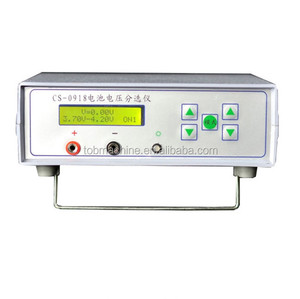
Multi-channel high-accuracy capacity validation, internal resistance analysis, and charge/discharge profiling.
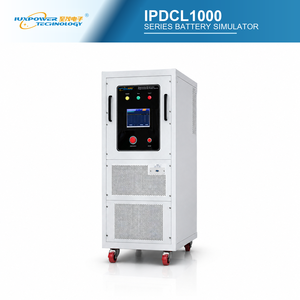
High-precision constant power testing system designed for real-time load emulation and DC-DC converter verification.
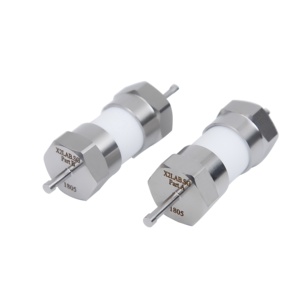
Modular testing hardware optimized for low-power IoT, coin cell characterization, and electrochemical sensor labs.
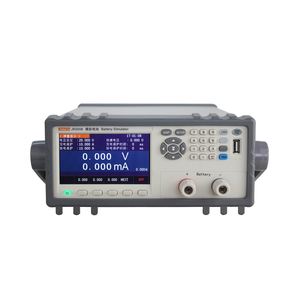
Multi-range voltage output and fast dynamic response for portable electronics and BMS functional test stations.
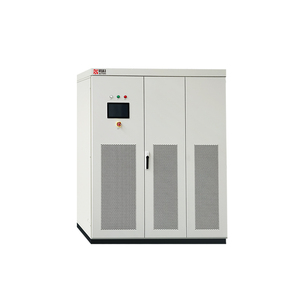
Megawatt-class bidirectional test platform tailored for EV powertrain, electric bus packs, and heavy industrial vehicle testing.
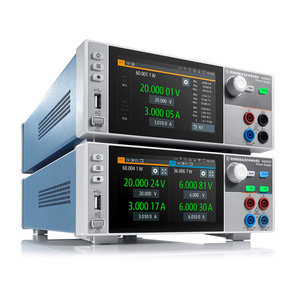
Ultra-low ripple, dual-quadrant operation with 100-240V AC universal input for precise micro-amp leakage analysis.
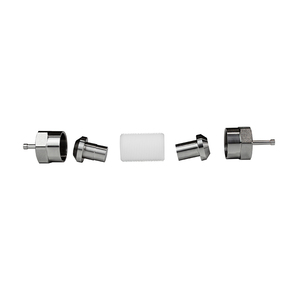
Dedicated laboratory emulator for coin cell life-cycle assessment, impedance analysis, and material research.
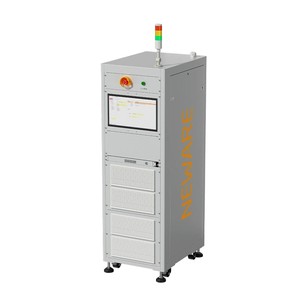
Isolated multi-cell simulator designed for hardware-in-the-loop (HIL) BMS testing, SOC estimation, and active balancing verification.
As the Republic of Azerbaijan accelerates its national strategic roadmap toward green energy integration—amplified by global climate initiatives such as COP29 in Baku—the demand for robust, highly reliable Electric Vehicle (EV) testing hardware has reached an unprecedented peak. Transitioning public transit fleets in Baku to fully electric buses, expanding intercity charging corridors connecting Ganja, Sumqayit, and Alyat Free Economic Zone (AFEZ), and establishing regional battery servicing facilities require test equipment that performs flawlessly under rigorous industrial environments.
Deploying EV testing equipment in the Caucasus geography presents unique engineering challenges. Grid voltage fluctuations, ambient temperature variations ranging from hot Absheron summers to freezing high-altitude winter conditions, and strict international compliance standards require test instruments built with robust architecture. Modern EV testing goes far beyond static load banks; it demands current-fed dynamic battery simulation, linear MOSFET sinking, microsecond response times for hardware-in-the-loop (HIL) Battery Management System (BMS) validation, and seamless software integration.
Tailored hardware and software configurations built specifically for industrial, municipal, and educational projects throughout Azerbaijan.
Municipal electrification projects in Azerbaijan require high-capacity pack testing. Our 150kW to 1000kW dynamic battery simulators replicate real-world transit duty cycles under heavy load conditions, evaluating thermal dissipation, regenerative braking power acceptance, and DC fast-charge acceptance without risking physical battery pack degradation.
For research laboratories at Azerbaijan Technical University and regional automotive diagnostic centers, our 24-channel cell simulators deliver high-precision cell voltage emulate routines. Engineers can validate State of Charge (SOC) estimation algorithms, active/passive balancing logic, and fault injection reactions (over-voltage, short circuit, wire cut) safely in real-time.
As charging infrastructure expands across national highways from Baku to Kazakh and Lankaran, verifying EVSE compliance with ISO 15118 and DIN 70121 standards is vital. Our bidirectional electronic loads and battery simulators sink dynamic current up to 1000V DC, verifying station safety interlocks, ripple voltage immunity, and meter billing accuracy.
Built upon four decades of vertically integrated power electronics manufacturing standards, ensuring long-term precision and rugged reliability.
Unlike standard voltage-fed power supplies that rely on large capacitive output banks, our current-fed topology utilizes inductive energy storage on the internal DC bus. This provides natural immunity to load short circuits, arcs, and severe voltage spikes common in dynamic motor drive testing.
For low-power micro-amp resolution testing (such as coin cell characterization and quiet BMS monitoring), our linear MOSFET electronic loads eliminate switching noise, ensuring pristine measurement fidelity across wide bandwidths.
Every system, from 1kW benchtop simulators to 1MW cabinet platforms, shares a unified control architecture. Test engineers in Azerbaijan can write automated Python or NI LabVIEW scripts once and scale them across all power levels.
From internal magnetics winding and precision sheet metal fabrication to surface-mount PCB assembly and 100% full-power burn-in testing, every unit is built under strict ISO 9001 and CE quality standards prior to international dispatch.
Understanding the architectural differences between traditional test instruments and advanced current-fed battery simulators.
| Performance Feature | Current-Fed Programmable Simulator | Standard Switching DC Supply | Conventional Resistance Load Bank |
|---|---|---|---|
| Short-Circuit Protection | Inherent Natural Tolerance (Inductive Bus) | Electronic Trip (Risk of Fuse Shutdown) | None (Thermal Hazard) |
| Dynamic Load Response | < 1 ms High Slew Rate | 10 ms – 50 ms Slow Response | N/A (Static Sinking Only) |
| Constant Power Envelope | Wide Voltage / Current Operating Range | Fixed Single-Point Peak Output | Derates linearly with Voltage |
| BMS HIL Integration | Isolated Multi-Channel Cell Emulation | Requires external resistor networks | Not Supported |
| Control Interface Protocols | LXI Ethernet, USB, RS232, Modbus, SCPI | Basic Analog / RS232 | Manual Switches / Knobs |
Addressing local procurement, electrical grid compatibility, customs clearance, and technical support services in Azerbaijan.
Speak directly with our senior application engineers to specify voltage envelopes, dynamic load profiles, and lead times tailored to your project goals.