
Engineered for high $di/dt$ transient response, stiff voltage regulation, low electromagnetic interference (EMI), and continuous heavy-duty operation under high ambient temperature conditions.
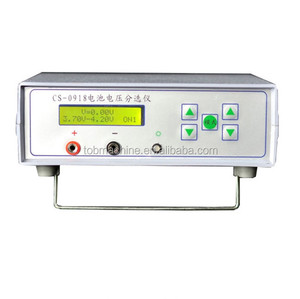
High-precision pulse current logging and automated capacity evaluation system.
Send an Inquiry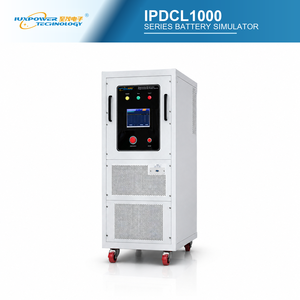
Constant power programmable DC testing equipment with fast transient dynamic recovery.
Send an Inquiry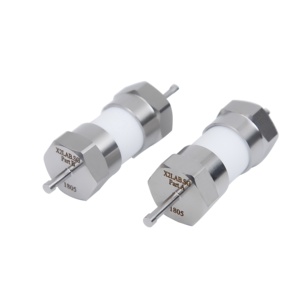
Ultra-low current noise output designed for precision coin cell dynamic emulation.
Send an Inquiry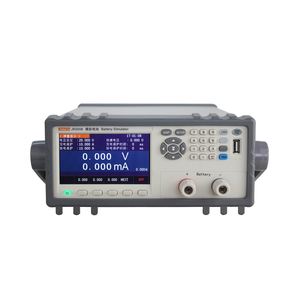
Programmable multi-channel power supply for portable device power profiling.
Send an Inquiry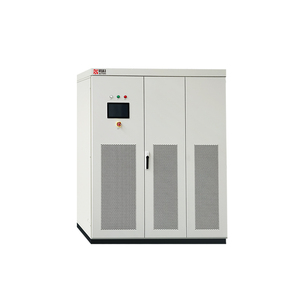
Megawatt-class high-voltage DC power supply for electric vehicle and industrial inverter testing.
Send an Inquiry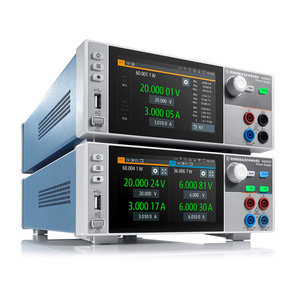
Industrial dual-quadrant DC power unit with universal 100-240V AC wide input range.
Send an Inquiry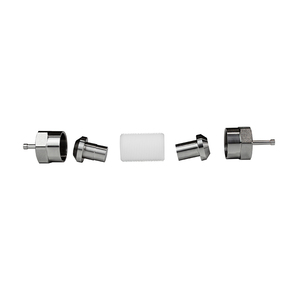
Electrochemical laboratory test instrument with micro-ampere resolution sensing.
Send an Inquiry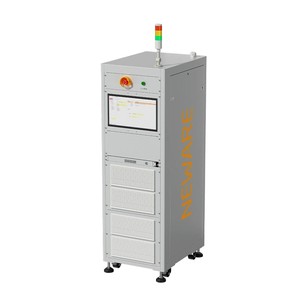
Multi-channel active cell balancing test system for State-of-Charge (SOC) estimation.
Send an InquiryUnderstanding the critical role of programmable DC power supplies in evaluating Silicon Carbide (SiC) MOSFETs, Gallium Nitride (GaN) HEMTs, and IGBT power modules.
Double Pulse Testing (DPT) has established itself as the gold-standard characterization method for evaluating the dynamic switching behavior of power semiconductor switches under controlled voltage and current conditions. As power electronics systems migrate from legacy Silicon (Si) IGBTs to Wide-Bandgap (WBG) materials such as Silicon Carbide (SiC) and Gallium Nitride (GaN), the demands placed on the primary DC power supply feeding the test rig have intensified exponentially.
In a standard double-pulse setup, the power supply charges the high-voltage DC bus capacitors while an inductive load is switched sequentially by two gate pulses. The first pulse establishes the desired inductor current to replicate full-load operational current ($I_D$ or $I_C$). The second pulse captures the critical turn-on and turn-off transients under real dynamic stresses.
Standard switched-mode DC power supplies often exhibit significant voltage droop, high internal equivalent series resistance (ESR), and severe voltage ringing during high $di/dt$ switching (>50 A/ns). Without robust current-fed architecture and low-inductance bus integration, voltage instability invalidates switching loss measurements ($E_{on}$ and $E_{off}$) and risks destructive over-voltage breakdown due to stray inductance inductance kickback ($V = L \cdot di/dt$).
Accelerating off-grid solar deployment, mini-grid electrification, industrial automation, and local power hardware repair hubs across West Africa.
Driven by the Nigeria Energy Transition Plan (ETP) and rural electrification initiatives, local assemblers and EPCs in Lagos, Abuja, and Kano require heavy-duty DC test equipment to validate multi-kilowatt hybrid solar inverters and MPPT charge controllers under severe tropical heat.
Nigerian industrial facilities face daily grid frequency drift and voltage sags on the 415V/230V commercial grid. Power electronic converters operating in Nigerian factories must undergo rigorous surge, double pulse, and thermal limit stress testing before deployment.
Oil & Gas operations in Port Harcourt and the Niger Delta rely heavily on megawatt-class Variable Frequency Drives (VFDs). High-power DC supplies with pulse testing capabilities allow local engineers to verify repaired IGBT power modules prior to field installation.
As sub-Saharan Africa's largest economy, Nigeria is undergoing a fundamental energy shift. The rapid decentralization of power generation has led to an influx of renewable energy equipment, lithium-ion battery storage systems (BESS), and power conversion hardware. To ensure long-term reliability in harsh sub-Saharan ambient environments—where ambient laboratory temperatures frequently exceed 40°C—manufacturers, government testing agencies (such as SON and NEMSA), and academic engineering departments are upgrading their test bays with enterprise-grade programmable DC power supplies.
How our DC power supplies and battery simulators solve real-world engineering challenges in Lagos, Port Harcourt, Abuja, and Ogun State industrial zones.
Challenge: Local inverter assemblers must test high-power 10kW to 100kW off-grid solar inverters under dynamic DC input conditions that simulate unstable PV array voltages.
Solution: Utilizing MagnaDC TS and SLx Series programmable power supplies paired with PPPE Photovoltaic Power Profile Emulation software, engineers recreate real-world solar irradiance transients, validating MPPT tracking accuracy and inverter dynamic response.
Challenge: Off-shore and refinery motor drive failures cause costly operational downtime. Maintenance teams require double pulse test equipment to evaluate replacement SiC/IGBT power switches under full current loads.
Solution: Current-fed programmable DC power supplies deliver stable, low-ripple high-voltage DC bus supply (up to 1000V DC) that tolerates short-circuit desaturation events during double pulse dynamic testing without damaging sensitive telemetry.
Challenge: Mobile network operators in Nigeria deploy massive remote telecom towers backed by lithium-ion battery banks. BMS controllers require multi-channel cell voltage simulation to test balancing algorithms.
Solution: Deploying the 24-Channel Battery Cell Simulator enables automated Over-Voltage (OV), Under-Voltage (UV), and passive/active cell balancing validation for cellular infrastructure power nodes.
Match your specific voltage, current, and dynamic switching testing requirements to the ideal hardware platform.
| Series Platform | Power Output Range | Voltage Range | Current Range | Topology Architecture | Ideal Application in Nigeria |
|---|---|---|---|---|---|
| SLx Series | 1.5 kW – 10 kW | 0 – 1000 VDC | 0 – 250 ADC | Current-Fed 1U Rack-Mount | Benchtop SiC/GaN Double Pulse Testing & University Labs |
| XR Series | 2 kW – 10 kW | 0 – 2000 VDC | 0 – 600 ADC | Current-Fed 2U Rack-Mount | High Voltage Component Testing & Solar MPPT Calibration |
| TS Series | 5 kW – 100 kW | 0 – 4000 VDC | 0 – 2700 ADC | Current-Fed 3U–16U Heavy Duty | Industrial Motor Drive Repair, Traction Inverter Testing |
| MT Series | 150 kW – 3 MW+ | 0 – 4000 VDC | 0 – 24,000 ADC | Current-Fed Air-Cooled Cabinet | Megawatt Grid Inverter Validation & Sub-Station Emulation |
| ML Series | 500 kW – 10 MW+ | 0 – 4000 VDC | 0 – 40,000 ADC | Liquid-Cooled Current-Fed Cabinet | Continuous High-Ambient Megawatt Industrial Stress Testing |
Combining current-fed topological robustness with automated software control for uncompromised reliability.
Unlike fragile voltage-fed supplies, our current-fed power architecture utilizes a inductor-based energy storage bus. This delivers short-circuit tolerance, graceful behavior into dynamic capacitive loads, and immune operation against high-frequency voltage spikes generated during double pulse switching.
All series feature native SCPI command sets over Ethernet/LXI, USB, RS-232, and optional Modbus TCP / IEEE-488 GPIB interfaces. Easily automate double pulse test execution via Python, NI LabVIEW, MATLAB, or custom C++ ATE software suites.
Every instrument undergoes 100% full-power burn-in under elevated thermal stress prior to shipment. ISO 9001 certified manufacturing ensures long-term operational stability for overseas industrial deployments in sub-Saharan Africa.
Addressing import compliance, power network compatibility, thermal management, and technical support.
Contact our application engineering team today to specify custom output voltages, peak surge current limits, or request a technical quote for your facility.