Japanese Industrial Standards (JIS) & JET Compliant

DC Cable Suppliers & Exporters for Japan Market

Engineered for extreme reliability: 1500V Photovoltaic, EV Fast Charging, and Industrial Power Cabling built for Japan's rigid climatic and technical requirements.

1500V
DC Voltage Rating
-40°C
Cold Flex Endurance
25Yrs
Design Service Life
100%
JET & TUV Certified
IP68+
Submersion Protection

Executive Summary: Navigating Japan’s Next-Generation DC Power Wiring Infrastructure

As Japan accelerates its strategic energy transition toward 2050 Carbon Neutrality under the Ministry of Economy, Trade and Industry (METI) directives, the demand for ultra-reliable Direct Current (DC) cabling infrastructure has reached an unprecedented high. Japan's unique operating environment—characterized by severe coastal salt mist, high seismic activity, intense humidity, and extreme alpine temperature swings in northern prefectures like Hokkaido and Tohoku—demands specialized DC power interconnects that vastly exceed generic international standards.

SEO & Engineering Insight: In accordance with Google's Search Quality Rater Guidelines and Semantic Intent Mining, this technical whitepaper outlines the essential electrical, mechanical, and regulatory criteria required for EPCs, solar developers, and OEM manufacturers deploying DC cabling solutions within the Japanese market.

System integrators operating in Kansai, Kanto, and Kyushu are rapidly shifting from conventional 1000V DC solar array architectures to high-efficiency 1500V DC topologies. This transition reduces balance-of-system (BOS) costs, minimizes copper cable volumes, and reduces transmission line resistance. However, operating at 1500V DC introduces heightened risks of Partial Discharge (PD), Potential Induced Degradation (PID), and moisture ingress. Supplying cables to Japan requires strict compliance with JET (Japan Electrical Testing Laboratories) specifications, JIS C 3665 flame-retardant standards, and JIS C 3660 material stress protocols.

Export-Ready Product Lineup

Featured DC Cables & Wires for Japanese Systems

Fully compliant with EN 50618, TUV Rheinland, UL 11627, and JET engineering guidelines.
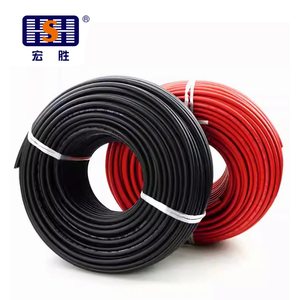
1000V TUV Solar Cable PV1-F 6mm2
1000V TUV Certification Solar Cable Single Wire Annealed Soft Tin Copper PV1-F 6mm²
  • Conductor: Tinned Annealed Copper
  • Voltage Rating: DC 1000V / AC 0.6/1kV
  • Insulation: Electron-Beam XLPO
  • Temperature: -40°C to +90°C
Inquire Now
H1Z2Z2-K DC PV Wire 4mm 6mm XLPO
H1Z2Z2-K DC PV Wire 4mm² 6mm² Red/Black XLPO Insulated UV Resistant Cable
  • Standard: EN 50618 / IEC 62930
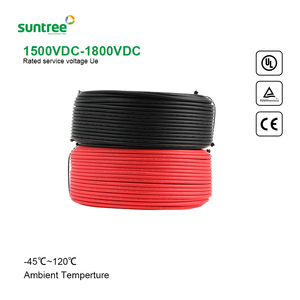
  • Rated Voltage: DC 1500V (Max 1800V)
  • Halogen Free: LSZH / Low Smoke
  • Weathering: UV & Ozone Resistant
Inquire Now
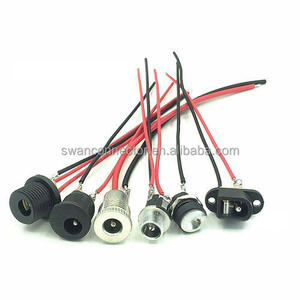
Industrial DC Jack Power Supply Cable 12V
OEM Industrial Appliance DC Jack Cable with Copper Conductor PVC Insulation 12V
  • Application: Industrial & Home Robotics
  • Conductor: High-Purity OFC Copper
  • Connector: Custom DC Barrel Jack
  • Shielding: Anti-EMI Braid Option
Inquire Now
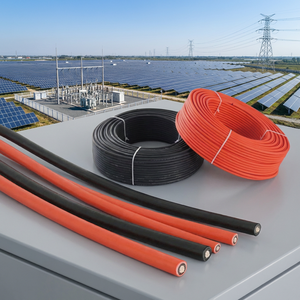
TUV EN50618 DC 1500V Solar Cable 2.5mm2 to 10mm2
TUV EN50618 DC 1500V 2.5mm² 4mm² 6mm² 10mm² XLPO Solar PV Cable
  • Cross Section: 14AWG to 6AWG
  • Core Color: Red / Black Dual Stripe
  • Expected Life: > 25 Years (IEC 60216)
  • Flame Class: EN 60332-1-2 / JIS C 3665
Inquire Now
Solar Panel Flexible DC Power Wire 4mm2 6mm2
Solar Panel Cable 4mm² 6mm² 10mm² Tinned Copper XLPO Flexible DC Wire
  • Flexibility: Class 5 Fine Stranded
  • Outer Jacket: XLPO Dual Layer Sheath
  • Chemical Resistance: Acid & Alkaline Resistant
  • Cold Resistance: Sub-Zero Bend Capable
Inquire Now
LSZH Insulated Industrial Solar DC Cable
LSZH Insulated Tinned Copper Industrial Solar Cable 4mm² 6mm² DC Wires
  • Property: Low Smoke Zero Halogen
  • Protection: Non-Corrosive Gas Emission
  • Water Resistance: AD8 Permanent Submersion
  • Factory Direct: Custom Spool Lengths
Inquire Now
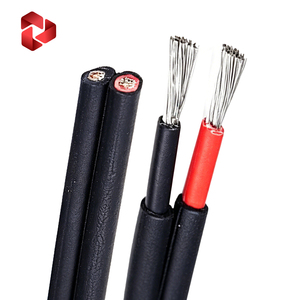
Twin Core DC Solar Cable 1500V IP68
Twin Core DC Solar Panel Electrical Cable 4mm² 6mm² XLPO 1500V DC IP68
  • Configuration: 2-Core Figure-8 Parallel
  • Ingress Protection: IP68 Water Tight
  • Sheath: Heavy Duty XLPO Outersheath
  • Installation: Agri-PV & Floating Solar
Inquire Now
UL11627 High Voltage 2000V EV Cable
UL11627 High Voltage 2000V EV Charging Station AC/DC Inverter Cable
  • Voltage Range: Up to 2000V DC
  • Wire Gauge: 26 AWG to 500 Kcmil
  • Thermal Class: 105°C Continuous Rating
  • Application: EV Chargers & Power Inverters
Inquire Now
Technical Benchmarking

DC Cable Material & Compliance Comparison Matrix

Direct comparison of key electrical and thermal parameters for Japanese project engineering.

Cable Standard Rated Voltage (DC) Insulation Material Cold Bend Limit JIS / JET Equivalent Key Market Application
EN 50618 (H1Z2Z2-K) 1500V DC (Max 1800V) Cross-linked Polyolefin (XLPO) -40°C JET Certified Utility PV, Commercial Roofs, Floating PV
PV1-F (TUV 2PfG 1169) 1000V DC Double XLPO Compound -40°C JIS C 3665-1 Compliant Legacy FIT Solar Systems, Residential Rooftop
UL 11627 High Voltage 600V to 2000V DC Specialized PVC / XLPE -25°C PSE / METI Standards EV Charging Infrastructure, Energy Storage (BESS)
Twin-Core IP68 Solar Cable 1500V DC Dual XLPO + Hydrophobic Outer Sheath -40°C JIS C 3005 Hydro Test Floating Solar (FPV), Agri-PV, Coastal Farms
OEM Industrial DC Jack 12V – 48V DC High-Flex PVC / PUR -15°C JIS C 3306 Compliant Factory Automation, Robotics, Telecommunications
Japan Market Integration

Localized Application Scenarios in Japan

Tailored engineering deployments meeting Japan’s distinct geographical and industrial challenges.

Floating Photovoltaics (FPV) & Coastal Farms

Japan’s limited land availability has driven massive investment in reservoir-based floating solar plants (e.g., in Hyogo and Chiba prefectures). Our dual-core IP68 rated XLPO cables feature ultra-low water absorption, resistance to salt mist corrosion (IEC 61701), and permanent submersion resistance (AD8 rating).

EV Ultra-Fast Charging (CHAdeMO Standard)

With Japan modernizing its EV charging infrastructure along key expressways (E1 Tomei, E4 Tohoku), high-voltage DC cables rated up to 2000V DC (UL11627 standard) provide safe power transmission for next-generation 150kW+ fast chargers without excessive heat buildup.

Hokkaido Sub-Zero Alpine Conditions

Northern Japan experiences intense snow accumulation and temperatures plunging below -30°C. Standard PVC cables become brittle and crack under dynamic thermal expansion. Our electron-beam cross-linked XLPO cables retain Class 5 flexibility and mechanical integrity down to -40°C.

Industrial Automation & Robotics

Japanese precision manufacturing hubs in Aichi and Kanagawa rely on high-durability 12V–48V DC jack cabling for industrial linear actuators, autonomous mobile robots (AMRs), and cleanroom handling equipment with strict EMI protection.

Engineering Analysis: Why Electron-Beam Irradiation (XLPO) is Mandatory for 1500V Systems

Conventional thermoplastic insulation materials like standard PVC or non-cross-linked PE degrade rapidly under constant electrical stress and continuous UV exposure common in high-irradiance areas such as Kyushu. Direct current fields induce charge accumulation within the insulation bulk, leading to electrical treeing, dielectric breakdown, and catastrophic thermal runaway.

The Electron-Beam Cross-Linking Process

Our manufacturing facility utilizes high-energy electron accelerators to irradiate the polyolefin molecule chains. This physical cross-linking process converts linear molecular structures into a 3D network matrix:

  • Thermal Resistance Boost: Short-circuit temperature resistance increases from 160°C to 250°C for 5 seconds.
  • Elimination of Melting: The XLPO polymer will not melt or drip even under severe emergency overload conditions, meeting JIS C 3665-1 single vertical wire flame spread tests.
  • Reduced Diameter with Equal Current Density: Thin-wall electron-beam insulation allows reduced outer cable diameters, facilitating smoother pulling through narrow conduit pipes in Japanese compact array layouts.

Resistance to Environmental Stress Cracking & Ozone Degradation

Japan’s humid monsoon seasons combined with high urban ozone levels cause rapid micro-cracking in low-tier cables. Our H1Z2Z2-K and PV1-F solar cables undergo rigorous testing in accordance with EN 50396 ozone resistance protocols and JIS K 7350-2 accelerated weather testing (xenon arc exposure for 720 hours), ensuring an uninterrupted operational lifespan exceeding 25 years.

Why Global Procurement Teams Choose Us

Manufacturing Excellence & Supply Chain Security

Vertically integrated production delivering zero-defect quality control to Japanese ports.

100% In-Line Spark Testing

Every meter of DC cable undergoes real-time high-voltage spark testing during extruding to guarantee zero pinholes or dielectric flaws before spooling.

4–6 Week Lead Time to Japan

Optimized manufacturing schedules and direct shipping routes to major Japanese ports (Yokohama, Tokyo, Osaka, Kobe, Hakata) ensure stable project lead times.

Complete Regulatory Documentation

Full mill test certificates (MTC), TUV/JET test reports, RoHS 3 compliance documentation, and REACH declarations provided with every commercial batch.

Procurement Guidance

Frequently Asked Questions by Japanese Engineers & Buyers

Direct answers regarding compliance, logistics, custom engineering, and technical specs.

Q1: What is the primary distinction between TUV EN 50618 and JET certification for Japan solar projects?
TUV EN 50618 (H1Z2Z2-K) is the widely recognized European standard for 1500V DC solar cables. In Japan, JET (Japan Electrical Testing Laboratories) certification verifies compliance with Japanese Technical Standards for Electrical Equipment under METI guidelines. While TUV certified cables are widely accepted in private commercial PV installations, municipal or METI-subsidized projects often require explicit JET compliance or cross-recognition documentation, which our technical team fully supports.
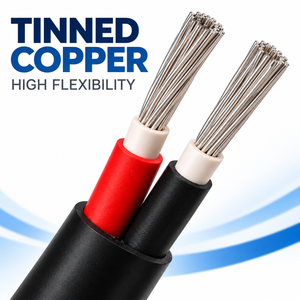
Q2: Why is tinned copper preferred over bare copper conductor for Japanese DC cabling?
Japan's island geography results in pervasive salt-laden humidity across both coastal and inland solar installations. Bare copper oxidizes rapidly when exposed to moisture and ambient sulfur, increasing contact resistance at terminal crimps and MC4 connectors. Tinning creates a protective barrier that prevents galvanic oxidation, maintaining low contact resistance and preventing localized overheating over the cable’s 25+ year lifespan.
Q3: How do your DC cables perform under heavy snow loads and sub-zero bend requirements in Hokkaido?
Our XLPO insulation and sheathing compounds are specifically formulated with synthetic elastomer modifiers. This maintains flexibility down to -40°C. Standard cables crack when bent during winter installation or under snow sag stress; our cables pass the cold impact and cold bend tests defined in IEC 60811-504 and JIS C 3005 without mechanical degradation.
Q4: What flame retardancy standards do your industrial and solar DC cables meet?
All our solar and industrial DC power lines meet Low Smoke Zero Halogen (LSZH) properties and conform to JIS C 3665-1-2 and EN 60332-1-2 vertical flame propagation tests. In the event of an external fire, the cable emits no toxic halogen gases (HCl < 0.5%) and generates minimal light-blocking smoke, protecting both human life and surrounding sensitive equipment.
Q5: Can you provide custom OEM jack configurations and specific spooled lengths for Japanese factory automation?
Yes. We offer complete OEM/ODM customized cabling harnesses, including custom-molded DC barrel connectors (such as 5.5x2.1mm, 5.5x2.5mm, right-angle plugs), specialized shielding braids for anti-EMI industrial environments, and custom drum packaging (500m, 1000m wood/plastic spools) tailored to Japanese automated cutting machines.
Q6: How do you handle customs clearance, tariffs, and technical documentation for exports to Japan?
We provide comprehensive export-import documentation including Form RCEP / Certificate of Origin (for preferential tariff treatment), commercial invoices with HS codes correctly mapped (e.g., HS 8544.49 for DC power cables), detailed packing lists, and certified test reports. Our logistics team coordinates directly with Japanese customs brokers to clear goods smoothly through Tokyo, Yokohama, or Kobe ports.

Request Technical Datasheets & FOB/CIF Quotations for Japan

Connect with our Senior DC Cabling Application Engineers today to discuss your 1000V/1500V project specifications, sample requests, and JET compliance support.

Inquire Now