
Engineered to deliver exceptional current-fed dynamic stability, wide operating envelopes, and robust performance across Pakistan’s industrial and research sectors.
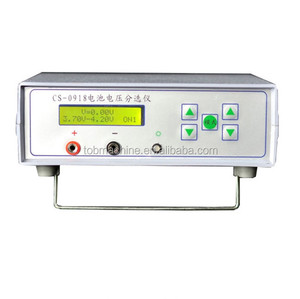
Designed for automated cell characterization, lifecycle degradation analysis, and BMS safety protocol testing in renewable energy storage facilities.
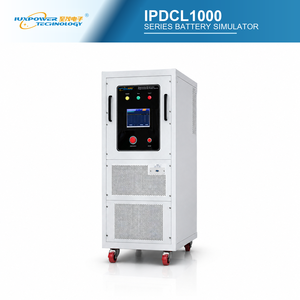
High-dynamic battery emulator capable of real-time internal resistance modeling and transient step-load simulation for EV component testing.
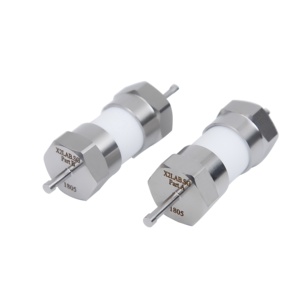
Ultra-low noise linear power sink and source tailored for micro-power IoT sensors, medical devices, and university electrochemistry research labs.
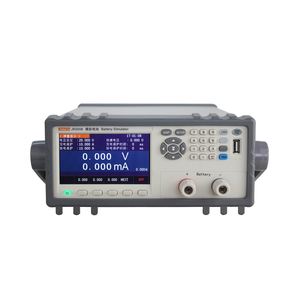
Precision multi-cell simulation platform for verifying Battery Management System (BMS) balancing algorithms, cell over-voltage, and fault detection.
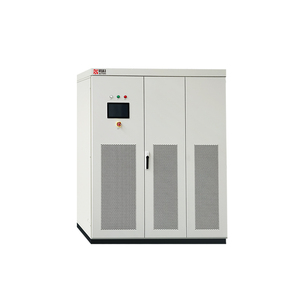
Megawatt-class heavy-duty electronic load and battery simulator built for heavy industrial drives, grid-scale solar inverter testing, and EV traction bus stress-testing.
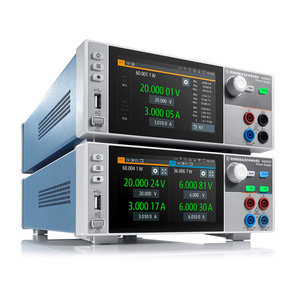
Ultra-fast two-quadrant bipolar power supply and load, ideal for semiconductor parameter testing, wireless device power profiling, and aerospace electronics testing.
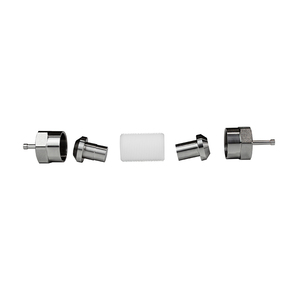
Dedicated high-stability emulator for micro-battery research, material science validation, and low-power wearable device development.
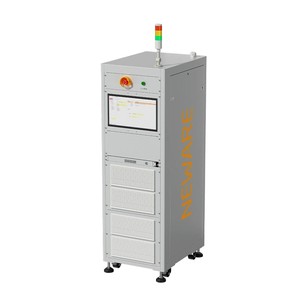
Comprehensive 24-channel emulator for battery management system validation, state-of-charge (SOC) algorithm estimation, and active cell balancing strategy verification.
Pakistan’s industrial infrastructure is undergoing a massive transformation driven by rapid solarization under NEPRA’s net-metering framework, the rise of domestic 2-wheeler and 3-wheeler Electric Vehicle (EV) assembly lines under the National Electric Vehicle Policy (NEVP), and the expansion of heavy telecom backup micro-grids across Sindh, Punjab, Khyber Pakhtunkhwa, and Balochistan. Modern test bays, research laboratories (such as those at NUST, PIEAS, and PCSIR), and industrial production plants require custom OEM DC electronic loads capable of delivering unflinching accuracy under tough power grid dynamics, high ambient operating temperatures, and severe line transients.
Technical Insight: Traditional switch-mode electronic loads often exhibit switching noise injection and stability loss during steep line-voltage sags or sudden load shedding transitions. Our custom OEM current-fed linear MOSFET and programmable DC electronic load topologies store energy in input inductors rather than sensitive capacitor banks, ensuring intrinsic immunity against short circuits and continuous operations even when subjected to harsh South Asian grid irregularities.
When evaluating high-power electronic loads for continuous-duty testing of solar inverters, traction batteries, or industrial uninterruptible power supplies (UPS), the internal energy storage architecture dictates long-term reliability. Conventional voltage-fed load banks rely on massive electrolytic input capacitors. Under elevated ambient temperatures—frequently exceeding 45°C in regions like Multan, Faisalabad, or Sukkur—these electrolytic capacitors suffer from rapid ESR (Equivalent Series Resistance) degradation, leading to premature instrument failure.
Our OEM DC electronic loads utilize advanced current-fed topology combined with linear MOSFET power sinking stages. An internal inductor acts as the primary energy-buffering element, restricting peak fault currents and eliminating high surge currents during rapid voltage steps. This topology allows test engineers to execute low-voltage high-current testing down to sub-1V levels without experiencing voltage foldback or load oscillation.
A detailed engineering assessment comparing linear MOSFET sinking, conventional switch-mode loads, and current-fed architectures.
| Electrical Parameter | Linear MOSFET Architecture (ALx Series) | Switch-Mode DC Electronic Load | Magna-Power Current-Fed DC Platform |
|---|---|---|---|
| Switching Noise (RIPPLE) | Ultra-Low (< 5 mVrms) | Moderate to High (50-200 mVrms) | Controlled Inductive Ripple (< 15 mVrms) |
| Low-Voltage Operation | Full Current down to 0.2V | Requires Derating below 1.5V | Full Constant Power Window |
| Thermal Derating Threshold | 50°C Continuous Ambient | 40°C Standard Limit | 50°C Heavy Industrial Air/Water Cooled |
| Short-Circuit Tolerant | Intrinsic Linear Protection | Fusable Switch Protection | Inherent Inductive Limitation |
| Programming Slew Rate | Up to 10 A/µs (Linear Control) | 1 - 2.5 A/µs Max | Programmable High Dynamic Slew Rate |
| Control Interface | DSP MagnaLINK™ / SCPI / LXI | Standard RS232 / USB | Ethernet LXI, USB, Isolated Analog, Modbus |
Tailored test solutions for localized industrial challenges, energy transition mandates, and defense-grade engineering standards.
With Pakistan adding gigawatts of solar power to its national grid, solar inverter manufacturers in Karachi, Lahore, and Islamabad rely on our high-voltage electronic loads paired with PPPE (Photovoltaic Power Profile Emulation) software to validate Maximum Power Point Tracking (MPPT) under simulated cloud passage and grid voltage fluctuations.
Local assembly plants producing electric 2-wheelers and 3-wheelers (rickshaws) require multi-channel electronic loads to stress-test Lithium Iron Phosphate (LFP) battery packs, BMS balance strategies, and motor drive inverters against aggressive urban drive cycles and extreme thermal load conditions.
Major telecom operators (such as Jazz, Zong, Telenor, and PTCL) manage thousands of remote towers operating on deep-cycle battery storage. Our automated DC load testers perform multi-cycle capacity validation and health diagnostic profiling under fluctuating mains AC input voltages.
Strategic engineering facilities and research institutions in Kamra, Rawalpindi, and Taxila demand ultra-stable, high-voltage DC load banks equipped with isolated analog control and SCPI interfaces for specialized radar power supplies, particle accelerator magnets, and custom pulse-power test rigs.
The demand for high-reliability, custom OEM programmable DC power equipment in Pakistan is accelerating due to three main structural shifts in the country's economic and energy policy landscape:
Commercial facilities, textile mills in Faisalabad, and pharmaceutical units in Hattar are increasingly off-grid or hybrid-grid aligned due to high utility tariff structures. The installation of industrial megawatt-scale battery energy storage systems (BESS) requires heavy-duty DC electronic loads ranging from 150 kW to over 1 MW to perform continuous burn-in, round-trip efficiency measurements, and thermal safety certifications before commission.
Under the guidance of the Engineering Development Board (EDB), domestic manufacturers are transitioning from simple CKD (Completely Knocked Down) assembly to local manufacturing of DC-DC converters, motor controllers, and smart chargers. Custom OEM electronic loads with high-speed analog programming inputs allow engineers to simulate real-world regenerative braking energy spikes and transient dynamic load steps with sub-millisecond fidelity.
Equipment imported into Pakistan must withstand high humidity during the monsoon season and ambient temperatures reaching up to 50°C in southern inland regions. Off-the-shelf test instruments rated strictly for 25°C laboratory environments frequently trip thermal protection circuits. Our OEM manufacturing process incorporates oversized heatsink profiles, heavy copper busbar assemblies, and intelligent variable-speed cooling fans to maintain continuous full-rated power sinking without thermal shutdown.
Vertically integrated design control, custom electrical architecture, and world-class quality assurance from factory floor to end installation.
From sheet metal enclosure fabrication and precision magnetic winding to SMT PCB assembly and high-power system integration, all operations occur under one roof. This ensures complete control over component quality and shortens custom OEM delivery schedules to just 4 to 6 weeks.
Our distributed DSP architecture provides unified command structures across all product lines. Whether operating a 1U 1.5kW bench unit or a 10MW water-cooled container system, your test scripts (LabVIEW, Python, SCPI, or MATLAB) remain 100% compatible without code refactoring.
Every custom OEM unit undergoes full-load continuous thermal burn-in and strict NIST-traceable calibration before dispatch. We supply comprehensive factory test reports, schematic sets, and spare parts support to guarantee decades of field operation.
Essential technical, commercial, and logistical details for engineering procurement teams in South Asia.
Our instruments are designed with conservative thermal safety margins and heavy-duty heatsink assemblies rated for continuous operation at ambient temperatures up to 50°C. Variable-speed cooling fans adjust dynamically based on internal temperature sensors, preventing thermal tripping even during intense summer operations in regions like Multan or Lahore.
We offer custom voltage/current matrix tailoring, specialized input terminal positioning (front vs. rear busbars), water-cooled enclosure integration for dust-heavy environments, integrated reverse polarity blocking diodes, high slew-rate output stages, and custom SCPI command mapping for legacy test bench compatibility.
Yes. Utilizing Constant Current (CC), Constant Voltage (CV), Constant Resistance (CR), and Constant Power (CP) sinking modes—along with user-definable profile tables—our loads accurately reproduce complex battery discharge curves, internal resistance shifts, dynamic motor drive acceleration loads, and solar PV array profiles.
Standard custom OEM build time is 4 to 6 weeks from technical freeze. We regularly ship via sea freight (Karachi Port / Port Qasim) and air freight (Karachi KHI, Lahore LHE, Islamabad ISB airports) under CIF or CIP incoterms, providing complete HS Code documentation (typically 9030.84) and Form E compliance support for State Bank of Pakistan (SBP) Letter of Credit (LC) opening.
Yes. All instruments feature standard Ethernet/LXI, USB, and RS-232 interfaces with standard SCPI syntax. We provide certified National Instruments LabVIEW drivers, IVI drivers, and open Python documentation, allowing quick integration into automated production test stations.
All products are covered by a standard factory warranty. Remote diagnostic support is available via direct connection to our factory application engineers. Replacement sub-assemblies (such as control boards or power modules) are modular and easy to service in the field. Recalibration procedures are fully documented and compatible with local ISO/IEC 17025 accredited calibration laboratories across Pakistan.
Need custom voltage/current envelopes, localized technical specs, or a formal quote for your test facility in Pakistan? Speak directly to our technical team today.