Precision-engineered hardware tailored for high-dynamic load testing, cell characterization, and power device parametric analysis.
The global transition toward electrified mobility, wide-bandgap (WBG) power semiconductors, and high-density energy storage has created unprecedented measurement challenges for test engineers. As the industrial epicenter of Japan's automotive, aerospace, and advanced manufacturing sectors, the Greater Nagoya region (including Aichi, Gifu, and Mie prefectures) demands ultra-precise, highly reliable power device characterization infrastructure. This whitepaper analyzes the technical architecture of state-of-the-art curve tracers and battery simulators, detailing their application across vehicle traction inverters, battery management system (BMS) Hardware-in-the-Loop (HIL) testing, and wide-bandgap device (SiC/GaN) qualification.
Traditional voltage-fed power conversion systems rely heavily on large capacitive output banks to stabilize voltage rails. While adequate for legacy static loads, voltage-fed architectures exhibit critical limitations during high-power semiconductor breakdown testing and fast-transient battery emulation. When a Silicon Carbide (SiC) MOSFET or Gallium Nitride (GaN) HEMT experiences localized avalanche breakdown during I-V curve tracing, the stored energy in a capacitive output stage dumps instantaneously into the Device Under Test (DUT), causing catastrophic destruction of the crystal lattice and obscuring true parametric behavior.
Our industrial-grade curve tracers and high-dynamic battery simulators utilize a proprietary current-fed power processing topology. By employing a primary inductive storage element on the DC bus rather than a high-capacitance filter bank, current-fed systems exhibit inherent short-circuit tolerance and instantaneous current limiting capabilities. The operational dynamics are defined by the fundamental magnetic relation:
V_L = L · (di/dt)
Because the inductor limits the rate of change of current, the instrument can sweep high-voltage static curves (up to 10 kV) and high-current pulsed curves (up to several thousand amperes) without catastrophic energy release during avalanche breakdown, forward transfer knee point identification, or reverse recovery measurements.
Battery simulators must do more than simply supply variable DC voltage; they must accurately model the internal impedance ($R_i$), State of Charge (SOC), open-circuit voltage ($V_{oc}$), thermal coefficients, and transient response curves of diverse electrochemical chemistries (including LFP, NMC, Solid-State, and sodium-ion cells). Modern automotive BMS ECU algorithms require real-time hardware emulation to validate active balancing strategies, overvoltage protection trips, and cell-voltage estimation routines.
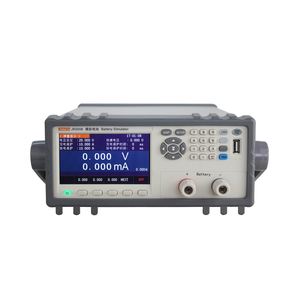
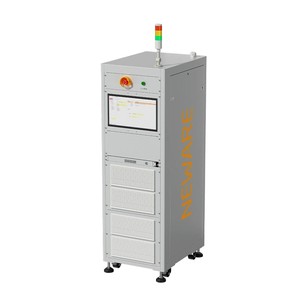
Our 24-channel and modular high-power battery simulators incorporate high-speed bipolar linear MOSFET output stages combined with FPGA-driven digital signal processors (DSP). This architecture achieves seamless sink/source transition (four-quadrant operation) in microsecond timeframes, enabling exact physical simulation of cell behavior during aggressive regenerative braking pulses and rapid load acceptance.
Below is a comparative breakdown of output control modes, dynamic performance parameters, and measurement boundaries across our curve tracing and battery simulation platforms:
| Platform Series | Voltage / Current Range | Dynamic Response | Primary Control Modes | Target Application in Greater Nagoya |
|---|---|---|---|---|
| SLx / SL High-Voltage Series | 0 to 1500V / 0 to 600A | < 1 ms (High Slew Option) | CV, CC, CP, Pulsed I-V Sweeps | SiC / GaN Module Characterization & Bus Supply |
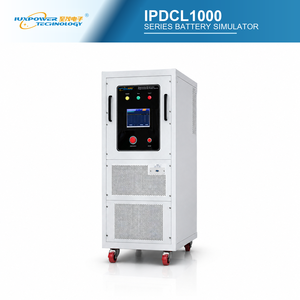
| IPDCL1000 High-Precision Series | 220V / 1kW (Constant Power) | < 50 µs Response | Bipolar CV/CC, Battery Emulation | Automotive ECU Subsystem & Auxiliary Testing |
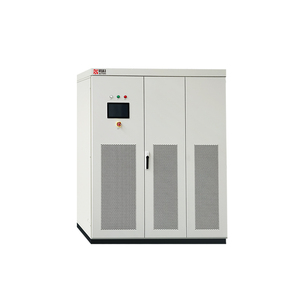
| ABS High-Dynamic Battery Simulators | 150kW to 1000kW (Scalable) | < 10 µs Sink/Source Shift | Dynamic $R_i$ Emulation, HIL, Real-Time SOC | EV Traction Inverter & Pack-Level Validation |
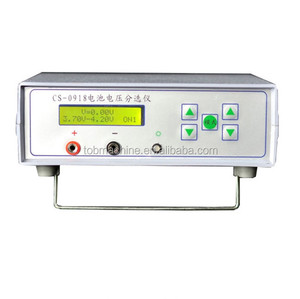
| 24-Channel BMS Cell Simulator | 0 to 6V per Cell / 5A Sink-Source | Sub-millivolt Precision | Independent Cell Control, Fault Injection | BMS Firmware Testing, Active Balancing HIL |
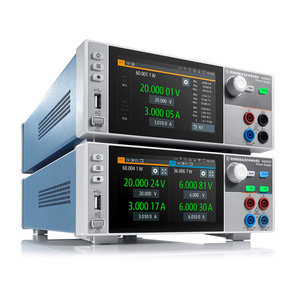
| R&S NGM200 Bipolar Series | 0 to 32V / Up to 6A per ch | < 30 µs Transient Sinks | Ultra-Low Noise Ripple, High Resolution | Electrochemical Cell R&D & IoT Battery Profiling |
Enables sub-microsecond pulse widths to capture pulsed $I_D-V_{DS}$ curves, $V_{GS(th)}$ threshold shifts, and $R_{DS(on)}$ state resistance without thermal self-heating corruption of SiC/GaN dies.
Integrates advanced grid-tied inversion modules that feed load energy back to the AC utility at >95% efficiency, reducing cooling costs during long-term battery burn-in and cycling endurance tests.
Scalable digital MagnaLINK™ communications bus permits up to 10 MW total combined output across multiple paralleled cabinets with unified control and balanced current sharing.
Nagoya and the surrounding Aichi prefecture represent the highest concentration of automotive original equipment manufacturers (OEMs), Tier-1 automotive component suppliers, and precision robotics integrators in East Asia. As the local industry pivots aggressively toward 800V electric vehicle architectures, hydrogen fuel cells, and next-generation solid-state batteries, testing demands have shifted from static DC power supplies to highly dynamic, programmatically defined curve tracing and cell simulation systems.
Automotive powertrain engineers in Kariya and Toyota City require low-inductance, stiff high-voltage DC supplies for double-pulse testing (DPT) of 800V SiC traction inverters. Standard power supplies suffer from high output capacitance, which alters switching loss ($E_{on} / E_{off}$) measurements during ultra-fast $di/dt$ and $dv/dt$ transients (exceeding 50 V/ns).
Our custom curve tracers and SLx-series power units provide dedicated high-slew output stages and optional integrated reverse-blocking diodes. By controlling output inductance and reducing parasitic capacitance to sub-nanofarad levels, test benches obtain true device switching loss profiles, breakdown voltages ($V_{BR}$), and reverse recovery parameters without ringing or signal corruption.
Tier-1 automotive electronics manufacturers operating in Nagoya’s science parks utilize our 24-channel battery cell simulators to execute complete automated validation of battery management system (BMS) control units. Each simulator channel independently mimics cell voltage (0-6V) with micro-volt resolution, simulating thermal runaway, open-circuit faults, short-circuit conditions, and cell capacity imbalances.
Through high-speed CANbus, EtherCAT, or LXI Ethernet commands, real-time HIL hardware simulates full automotive drive cycles (WLTP, EPA Class 3) across 100+ series-connected virtual battery cells, evaluating BMS balancing currents and safety shutdown protocols under rigorous, repeatable lab conditions.
Research facilities in the Chubu region focusing on coin-cell solid-state electrolyte formulation and micro-battery characterization utilize our precision coin cell simulators and Rohde & Schwarz NGM series bipolar supplies. Featuring sub-nanoamp current measurement resolution and double-quadrant operation, these systems capture minute leak currents, SEI layer growth impedance changes, and micro-charge/discharge profiles without thermal drift.
The regional transition from 400V to 800V/1200V EV architectures requires curve tracers capable of testing device insulation breakdown and high-voltage dynamic insulation resistance ($R_{iso}$) under severe environmental stress.
High-volume manufacturing plants require automated parametric curve tracers capable of interfacing directly with wafer probers via SCPI and LabVIEW/Python drivers, performing 100% device sorting at speeds under 50 milliseconds per die.
All sheet metal fabrication, transformer magnetics winding, PCB assembly, and high-power burn-in testing take place within one fully integrated facility, ensuring total quality control and stable lead times.
Export configurations are optimized for Japanese utility standards (200V / 400V 3-phase AC 50Hz/60Hz inputs) with full CE, UL, and PSE compliant safety interlock topologies.
Supported by dedicated regional service specialists and authorized calibration channels across Japan, ensuring immediate technical assistance and rapid spare parts availability.
Consult with our application engineering team to configure the ideal curve tracing or battery simulation platform for your testing facility in Nagoya, Toyota City, or the broader Chubu region.