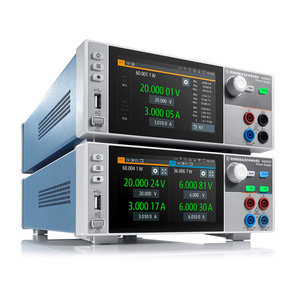
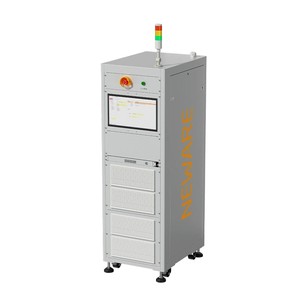
Explore our full line of current-fed DC power systems, battery pack simulators, BMS validation modules, and precision electrochemical test instruments deployed across Singapore hubs.
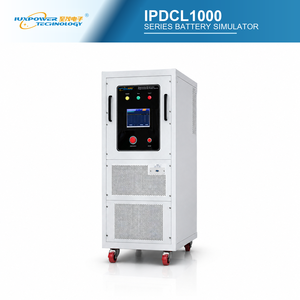
Why mission-critical testing laboratories in Singapore rely on current-fed DC architectures over traditional voltage-fed switch-mode power supplies.
In high-power industrial power conversion, the fundamental architecture determines long-term stress tolerance, electromagnetic compatibility (EMC), and operational safety. Traditional programmable DC power supplies rely heavily on voltage-fed power topologies. In a voltage-fed system, a large electrolytic capacitor bank sits directly across the primary DC link. While straightforward to manufacture, voltage-fed supplies exhibit an inherent weakness: severe susceptibility to output short-circuits, high peak current transients, and accelerated capacitor degradation under continuous cyclic thermal stress.
Conversely, Current-Fed Power Topologies invert this energy storage paradigm by placing a high-Q energy-storage inductor between the primary rectifier stage and the high-frequency inverter bridge. The current-fed inductor acts as a natural constant-current source fed into the switching matrix. This structural distinction delivers game-changing operational advantages for rigorous industrial and R&D applications across Singapore's advanced manufacturing landscape:
| Architecture Feature | Current-Fed Power Topology (Magna-Power Standard) | Conventional Voltage-Fed Topology |
|---|---|---|
| Primary Energy Storage | Series Inductor (Magnetic Field) | Capacitor Bank (Electrostatic Field) |
| Short-Circuit Behavior | Inherently immune; inductor limits instantaneous di/dt | Destructive surge risk; relies on high-speed electronic trips |
| Output Bus Capacitance | Extremely low output capacitance (<10% of voltage-fed) | High output capacitance (stores significant capacitive energy) |
| Reflected Input EMI / RFI | Smooth continuous input current wave; minimal filter footprint | Pulsed discontinuous current draw; heavy filtering required |
| Reactive & Regenerative Loads | Graceful energy absorption without DC bus overvoltage spikes | Requires external snubber or braking resistor to prevent trip |
| Component Thermal Life | Solid-state magnetics; eliminated high-failure electrolytic caps | Electrolytic capacitors dry out under humid tropical conditions |
By eliminating bulky electrolytic capacitors on the internal high-voltage bus, current-fed supplies achieve unmatched thermal resilience—a critical consideration for Singapore's tropical, high-humidity ambient environment. Furthermore, because energy is stored magnetically rather than electrostatically, an output short-circuit condition results in a controlled, predictable current ramp rather than an explosive capacitive discharge. This makes current-fed architectures the gold standard for testing wide-bandgap semiconductors (SiC/GaN), electric vehicle (EV) battery packs, electrolysers, and high-energy arc systems.
How our current-fed programmable supplies and linear MOSFET electronic loads deliver superior lifetime value for Singaporean engineering enterprises.
Every magnetics component, sheet metal enclosure, PCB assembly, and final burn-in test is executed under one roof. This strict vertical integration eliminates supply chain friction, ensuring consistent build quality and fast 4-to-6 week delivery schedules to Singapore ports.
Unlike rigid fixed-range switchers, our current-fed DC supplies feature a flexible full-power operating envelope. A single 10 kW module can supply high voltage at low current or maximum current at reduced voltage, eliminating the need to purchase multiple power supplies.
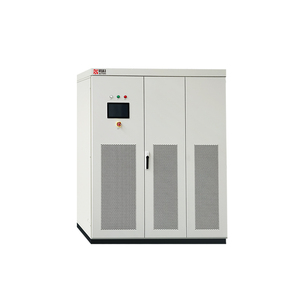
Whether operating a 1.5 kW 1U rack-mount SLx Series unit or a 3 MW water-cooled ML Series cabinet, the digital controller, SCPI command syntax, Ethernet/LXI interfaces, and isolated analog control pinouts remain 100% uniform across your facility.
Designed to withstand demanding industrial cleanrooms and non-climate-controlled testing bays in Southeast Asia. Internal boards feature conformal coating against humidity, salt air, and airborne particulate contamination common in coastal maritime regions.
Our MagnaLOAD electronic load family incorporates pure linear MOSFET dissipation stages governed by high-speed DSPs. This eliminates switching frequency ripple when characterizing delicate fuel cells, coin cells, and satellite power distribution systems.
Need megawatt capability? Seamlessly parallel multiple power modules using our digital control bus. The integrated master automatically balances phase current and output power across all slave units without analog tuning or external add-ons.
From A*STAR research centers in One-North to heavy industrial yards in Jurong Island and Tuas Port, our power topologies drive Singapore's technology roadmaps.
Located near Science Park and Kallang industrial clusters, semiconductor fabs utilize our low-capacitance current-fed DC supplies for double-pulse testing of SiC MOSFETs and GaN HEMTs. Low stored energy prevents catastrophic device destruction during breakdown voltage stress testing.
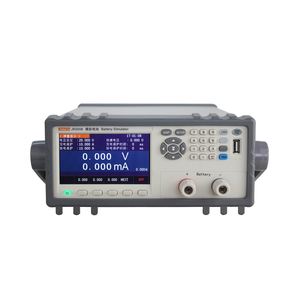
Automotive R&D labs in Jurong Innovation District deploy our 24-channel battery cell simulators and high-power battery pack emulators (150kW-1000kW). Hardware-in-the-loop (HIL) setups accurately evaluate BMS SOC estimation, active cell balancing, and fault protection protocols under Singapore's road conditions.
With Maritime and Port Authority of Singapore (MPA) requiring all new harbor craft to be fully electric or zero-emission by 2030, Tuas shipyard integration facilities require megawatt-scale, water-cooled DC power systems for testing marine traction drives, heavy-duty DC fast chargers, and energy storage systems (ESS).
Singapore's solar initiatives—such as the Tengeh Reservoir floating solar farm—require specialized testing equipment. Combined with PPPE (Photovoltaic Power Profile Emulation) software, our supplies simulate real-world irradiance drops, cloud shading, and high-temperature thermal coefficients for grid-tied central inverters.
How national initiatives like the Singapore Green Plan 2030 and AI Data Center Energy Standards shape the demand for high-efficiency power infrastructure.
1. Singapore Green Plan 2030 & Grid Decarbonization: Singapore’s target to deploy at least 2 Gigawatt-peak (GWp) of solar energy by 2030 has accelerated the deployment of industrial Battery Energy Storage Systems (BESS). Testing these high-voltage battery arrays demands bidirectional DC power sources with current-fed reliability to handle rapid charge-to-discharge transient shifts without causing grid voltage flicker or harmonics.
2. High-Density AI Data Centers & 48V/380V DC Architecture: As Singapore lifts its data center moratorium with strict PUE (Power Usage Effectiveness) standards, leading data center operators in Loyang and Tanjong Kling are transitioning from AC distribution to direct 380V DC microgrids. Our high-efficiency DC power supplies and linear electronic loads serve as critical test benches for validating next-generation AI server power supply units (PSUs) and direct-to-chip liquid cooling power distribution blocks.
3. Strict Local Standards Compliance (SS IEC & Enterprise Singapore): Test facilities operating in Singapore must adhere to stringent national safety standards, including SS IEC 62619 for industrial lithium batteries and SS 667 for energy storage systems safety. Using programmable simulators with galvanically isolated analog/digital telemetry guarantees compliant, repeatable safety verification for audit readiness.
Common questions regarding mains voltage compatibility, tropical environmental protection, logistics, and local service support in Singapore.
Send us your voltage, current, power envelope, and application requirements. Our senior application specialists will evaluate your setup and recommend the optimal current-fed DC power supply or battery simulator for your Singapore facility.