
Our export-grade manufacturing platform delivers robust, low-noise, and dynamically responsive DC power instruments configured specifically for 230V/400V 50Hz New Zealand operational environments.
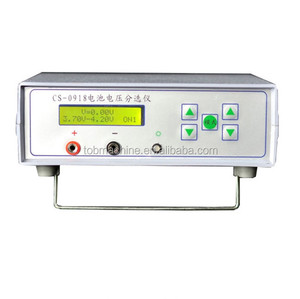
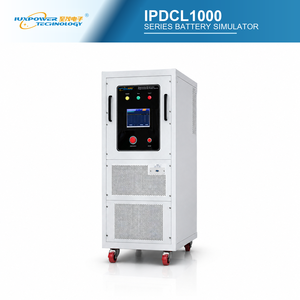
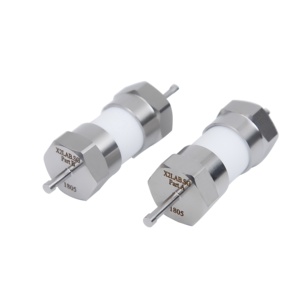
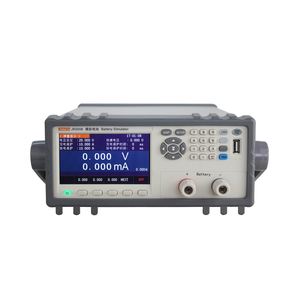
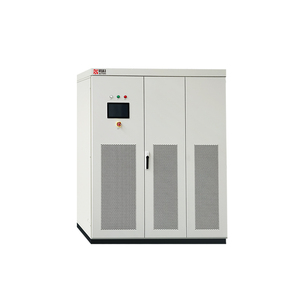
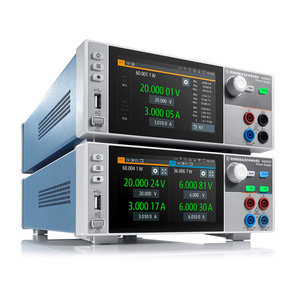
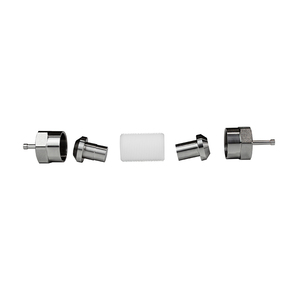
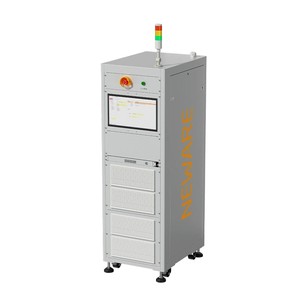
In modern industrial test environments, the demand for stable, dynamically responsive, and high-precision DC voltage sources has evolved far beyond traditional linear power supplies. Whether validating battery management systems (BMS), evaluating wide-bandgap (SiC/GaN) semiconductor switching performance, or emulating utility-scale renewable storage, precision power electronics serve as the foundational backbone of reliable testing.
As premier OEM manufacturers operating from advanced production facilities in China, our engineering teams focus on solving the critical challenges faced by test engineers: thermal dissipation bottlenecks, dynamic load regulation, line impedance compensation, and low-drift voltage stability over extended operational cycles.
Unlike standard voltage-fed topologies that rely heavily on large output capacitive banks, our high-power DC voltage sources utilize current-fed power processing topologies. An inductive storage element on the DC bus inherently limits short-circuit surge currents, providing immune operation against arcing, reactive kickback, and aggressive regenerative energy spikes.
Equipped with high-bandwidth control loops and fast-switching IGBT/MOSFET output stages, our battery simulators achieve rapid voltage recovery (<30µs to 1ms) during 10% to 90% step load transitions. This ensures precise emulation of real-world battery impedance under rapid throttle inputs or pulse loads.
All instruments share a standardized SCPI (Standard Commands for Programmable Instruments) command structure over Ethernet/LXI, USB, and RS485. Engineers can seamlessly translate test scripts from low-power 1U benchtop units to multi-megawatt cabinet systems without modifying automated test system code.
New Zealand’s unique geographical topology, commitment to 100% renewable energy generation, and booming electrification initiatives demand specialized testing equipment configured for local infrastructure requirements.
With Auckland Council and regional operators transitioning passenger ferries to full-electric and hybrid power systems, marine engineers require megawatt-class DC voltage sources (such as the 150kW-1000kW ABS Series) to simulate high-voltage battery banks. Our equipment enables rig-level Hardware-in-the-Loop (HIL) testing of electric pod drives and DC bus distribution systems under simulated rough-sea load profiles without risking expensive physical lithium battery packs.
Agri-tech innovation in Christchurch, Hamilton, and Palmerston North relies heavily on autonomous electric farm vehicles, automated milking systems, and off-grid solar microgrids. Our multi-channel battery cell simulators (JK5506 and 24-Channel BMS Testers) allow agricultural equipment manufacturers to test battery management balance strategies, state-of-charge (SOC) estimation accuracy, and fault safety protocols under harsh environmental charge-discharge cycles.
As grid operators like Transpower and energy generators (Mercury, Contact Energy, Meridian) deploy Battery Energy Storage Systems (BESS) for frequency regulation and solar/wind smoothing, our high-power bi-directional DC sources simulate dynamic battery behavior. The equipment supports testing inverter dynamic voltage ride-through (VRT) and reactive power injection under AS/NZS grid connection standards.
Leading electrochemical laboratories and power engineering research centers rely on our low-noise benchtop battery simulators (such as the Rohde & Schwarz NGM series and Coin Cell Simulators). Researchers conduct ultra-precise impedance measurement, second-life EV battery characterization, and next-generation solid-state cell testing with micro-amp resolution.
Navigating the electrical equipment market in New Zealand requires strict adherence to national electrical safety standards, grid interconnection directives, and environmental directives. China’s top-tier power equipment factories have upgraded manufacturing workflows to deliver fully compliant, turn-key solutions directly to New Zealand ports.
| Regulatory Framework / Trend | New Zealand Standard / Directive | Factory Technical Integration Solution |
|---|---|---|
| Electrical Equipment Safety | AS/NZS 3820 / Electricity (Safety) Regulations | Reinforced insulation, protective earthing barriers, CE compliance, and WorkSafe NZ compliant safety documentation. |
| Electromagnetic Compatibility | AS/NZS 61000.6.2 / AS/NZS 61000.6.4 (RCM) | Integrated EMC mains filter stages suppressing conducted and radiated emissions to meet RCM compliance for industrial zones. |
| Grid Inverter Interconnection | AS/NZS 4777.2:2020 Grid Connection Standard | Programmable over/under voltage, frequency trip curves, and anti-islanding emulation built into software profiles. |
| AC Grid Supply Input | 230V Single-Phase / 400V 3-Phase 50Hz Grid | Native factory configuration for 400V RMS ±10% 50Hz input with active power factor correction (PFC > 0.98). |
| Zero Carbon Act 2050 Mandate | Climate Change Response Amendment Act | Regenerative power sinking topology (>92% efficiency back to AC grid) reducing lab HVAC load and carbon emissions. |
By establishing direct engineering channels between Chinese manufacturing plants and New Zealand project sites, we eliminate intermediary technical disconnects. Our equipment ships pre-calibrated to ISO/IEC 17025 standards with full international traceability (CNAS/ILAC/NIST), ensuring instant acceptance by New Zealand laboratory auditors and WorkSafe inspectors.
We combine decades of specialized power electronics production experience with agile supply chain integration, offering unparalleled performance-to-cost ratios for New Zealand enterprises.
From internal high-frequency magnetic transformer winding and CNC sheet-metal enclosure fabrication to SMT surface-mount PCB assembly and final chassis wiring, every stage occurs under one roof in our certified ISO 9001 factory. This eliminates sub-supplier bottlenecks and ensures rigorous quality control.
Prior to sea or air dispatch to Auckland or Lyttelton, every DC power supply and battery simulator undergoes 48 hours of continuous, full-load burn-in at elevated ambient temperatures (45°C). Dynamic step-response tests and insulation dielectric withstand tests are documented in a comprehensive factory inspection report shipped with the unit.
We partner with leading global freight forwarders to provide seamless DDP (Delivered Duty Paid) shipping options direct to your laboratory or factory in Auckland, Wellington, Christchurch, or Dunedin. Our dedicated international technical support team operates across overlapping time zones (NZST / UTC+12) to provide rapid remote diagnostic support.
Answers to common engineering, compliance, and logistics questions when sourcing DC voltage sources and battery simulators from China.
Yes, absolutely. Standard production models destined for the New Zealand market are factory-configured for 3-Phase 400V AC (line-to-line) ±10% at 50Hz, or Single-Phase 230V AC 50Hz depending on the power rating. Units above 5kW feature active power factor correction (PFC ≥ 0.98) to meet local power quality regulations enforced by vectoring networks and regional electricity distributors across NZ.
All exported units comply with AS/NZS 3820 (Essential Safety Requirements for Electrical Equipment) and hold formal CE / IEC 61010-1 safety test reports. Additionally, electromagnetic compatibility (EMC) testing reports according to EN 61000-6-2 / EN 61000-6-4 are supplied, enabling New Zealand importers or end-users to apply the Regulatory Compliance Mark (RCM) with complete compliance audit assurance.
Our programmable battery simulators feature high-dynamic bipolar output stages with fast inner current control loops. When an electric drive inverter imposes a 0 to 100% torque step, the simulator dynamically maintains programmed terminal voltage with transient recovery times under 1ms. The bi-directional models smoothly switch between sourcing current and absorbing regenerative braking energy without output voltage dropouts or over-voltage trips.
Yes. Every instrument includes standard Ethernet (LXI-compliant), USB, and RS485 interfaces. We provide full SCPI reference programming manuals, native National Instruments LabVIEW VI drivers, IVI-COM/IVI-C drivers, and Python API wrappers. Remote control setup typically requires less than 30 minutes of integration time in standard ATE environments.
Standard lead times for made-to-order high-power systems (150kW to 1MW) range from 4 to 6 weeks for manufacturing, assembly, and 100% full-power burn-in testing. Fast-track air freight to Auckland (AKL) or Christchurch (CHC) takes 5 to 7 days, while standard ocean freight to Auckland, Tauranga, or Lyttelton ports takes approximately 14 to 20 days.
We provide a standard 2-Year Enterprise Factory Warranty with optional extensions up to 5 years. In the event of a component issue, our modular internal architecture allows for quick field-replaceable sub-assembly swaps. We ship replacement PCB modules via express DHL/FedEx directly to your NZ site, supported by video guidance and remote engineer diagnostics over Microsoft Teams or Zoom during NZ business hours.
Speak directly with our senior power electronics applications engineers. We will analyze your voltage, current, dynamic slew rate, and grid compliance requirements to provide a detailed technical proposal and factory-direct quotation.