
Precision-engineered, rack-mountable programmable DC power supplies and bi-directional battery cell simulators deployed across leading research laboratories, industrial plants, and ATE integration setups in Brazil.
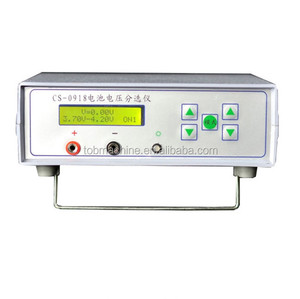
High-accuracy multivariable tester for lithium-ion packs and cells. Features automated charge/discharge cycling curves, voltage ripple monitoring, and real-time internal resistance computation for laboratory QA.
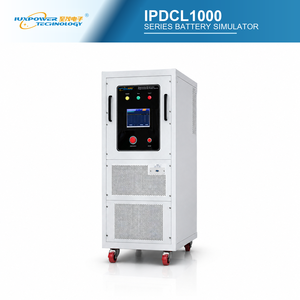
1U rack-mount high-precision battery emulator with constant power function testing equipment. Ideal for BMS firmware validation, hardware-in-the-loop (HIL) simulation, and low-noise DC bus testing.
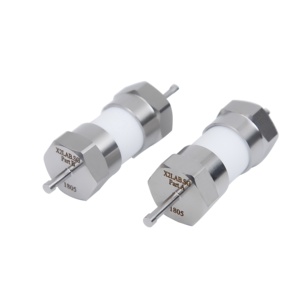
Modular micro-power battery emulator designed for IoT sensors, medical wearables, and electrochemical coin cell battery testing. Provides micro-amp resolution and programmable SOC degradation profiling.
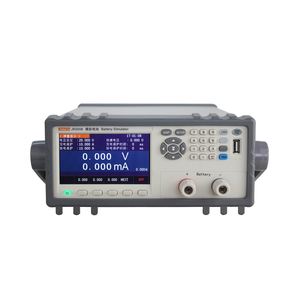
Multi-channel isolated DC source simulator engineered for automotive BMS balancing strategy test systems. Offers bi-directional sinking and sourcing with comprehensive hardware over-voltage protection.
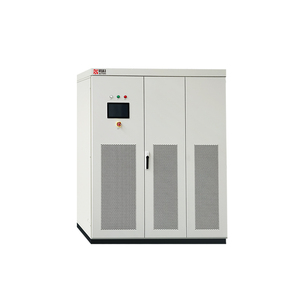
Heavy-duty industrial cabinet power system for EV traction motor drive testing, solar inverter testing, and microgrid energy storage. Features master-slave paralleling capability up to multi-megawatts.
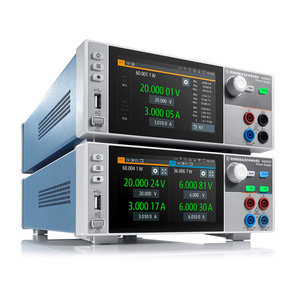
Precision two-quadrant bipolar power supply capable of seamless transitions between source and sink modes. Universal AC mains input, ultra-fast transient response time (<100 µs), and low output noise.
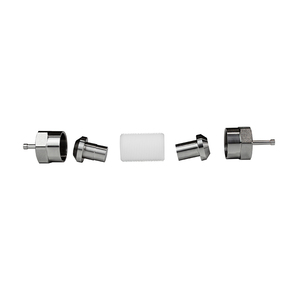
Compact benchtop/rack-mount battery emulator dedicated to electrochemistry and coin cell validation. Provides exact internal resistance (Rint) matching and automated pulse load simulation routines.
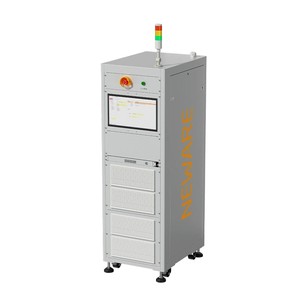
High-density 24-channel rack simulator for active battery management system (BMS) verification, state-of-charge (SOC) estimation tuning, and passive/active cell balance testing protocols.
As South America's industrial powerhouse, Brazil is experiencing a monumental transformation across its manufacturing, automotive electrification, renewable energy, and telecommunications matrix. The expansion of electric vehicle (EV) assembly lines in São Paulo, the massive deployment of utility-scale solar photovoltaic plants in the Northeast region (Bahia, Piauí, Ceará), and the upgrading of 5G telecom towers across metropolitan hubs require unyielding, highly efficient, and certified DC power testing infrastructure.
Modern automated test equipment (ATE) and industrial R&D laboratories can no longer rely on conventional voltage-fed power conversion topologies. When subjecting high-voltage battery packs, wide-bandgap (SiC/GaN) traction inverters, or DC microgrids to continuous burn-in or dynamic load transients, power supplies built with conventional topologies present significant thermal and electrical failure risks. This technical report outlines the engineering principles, compliance standards, and information gain metrics driving the selection of CE-certified rack-mount DC power supplies and battery simulators for Brazilian enterprises.
Utilizes inductive energy storage on the DC link rather than massive capacitive banks. Provides inherent short-circuit immunity, eliminating destructive current spikes into low-impedance battery loads.
Delivers full rated wattage across an extended voltage and current range. A single 10 kW rack unit operates as both a high-voltage low-current source and a low-voltage high-current driver.
Fully compliant with European Low Voltage Directive (LVD 2014/35/EU) and Electromagnetic Compatibility (EMC 2014/30/EU), easing Brazilian INMETRO and NR-10 facility approvals.
The foundational difference between industrial-grade programmable DC power supplies lies in the primary power stage topology. Standard off-the-shelf laboratory power supplies employ a voltage-fed topology, relying on large electrolytic capacitors across the output terminals to stabilize voltage regulation. While acceptable for static resistive loads, voltage-fed supplies exhibit catastrophic drawbacks when interfacing with dynamic inductive loads, electrochemistry cells, or motor drives:
Conversely, our Current-Fed Inverter Topology incorporates a high-frequency link inductor on the primary side. This architecture inherently limits current slew rate ($\frac{di}{dt}$), rendering the power supply immune to output short circuits, rapid arcs, and reverse electromagnetic force (EMF) generated by industrial electric motors. For test engineers in Brazil operating under unstable grid conditions or harsh industrial environments, current-fed supplies guarantee uninterrupted multi-year performance.
Selecting the optimal power supply or battery simulator requires evaluating rack footprint (U-height), output power density, thermal cooling mechanisms, and command programming interfaces. The table below outlines our standard platform configurations delivered to Brazilian industrial facilities:
| Series Platform | Power Range | Voltage Envelope | Form Factor | Cooling Mode | Primary Brazilian Industry Application |
|---|---|---|---|---|---|
| SLx Series | 1.5 kW – 10 kW | 0 – 1000 VDC | 1U Rack-Mount | Forced Air (Front-to-Rear) | ATE Test Bench, Telecom Rectifier Validation, Lab R&D |
| XR Series | 2.0 kW – 10 kW | 0 – 1500 VDC | 2U Rack-Mount | High-Velocity Air | Solar PV Inverter Emulation, High-Voltage Capacitor Burn-in |
| TS Series | 5.0 kW – 100 kW | 0 – 2000 VDC | 3U – 16U Floor Rack | Redundant Fan Array | EV Traction Battery Sinking/Sourcing, Heavy Machinery HIL |
| ML Series | 150 kW – 1 MW+ | 0 – 1500 VDC | Integrated Cabinet | Deionized Water-Cooled | Green Hydrogen Electrolyser Testing, Megawatt Substation Test |
| BMS-Sim Series | Multi-Channel | 0 – 6 VDC / Cell | 3U Rack Chassis | Precision Air Flow | Automotive BMS SOC Balancing, Cell Degradation Profiling |
Deploying high-power electrical equipment in South America requires acute awareness of regional grid characteristics, environmental stressors, and localized regulatory compliance. Below are five real-world engineering deployment profiles illustrating how our CE-certified rack-mount DC power supplies solve complex challenges across Brazilian industrial ecosystems.
The state of São Paulo (ABCD region, Campinas, and Sorocaba) hosts the core of Brazil's automotive manufacturing hubs. As global automakers transition toward flex-hybrid and pure battery electric vehicles (BEVs), engineering test bays require high-dynamic power supplies to emulate lithium-ion pack behavior under real-world driving conditions (WLTP and local Brazilian urban driving cycles).
The Solution: Deploying our TS Series 50 kW 3U Rack-Mount DC Power Supplies integrated with multi-channel cell simulators. By utilizing hardware-in-the-loop (HIL) automation driven via Python and SCPI scripts over Ethernet/LXI interfaces, test engineers recreate rapid discharge current steps up to 1000 A/ms without output over-shoot. The integrated active power factor correction (PFC > 0.99) minimizes harmonic distortion injected into facility AC power grids.
Brazil’s Northeast region boasts world-class solar irradiance, attracting gigawatt-scale solar farm investments. Central string inverters and hybrid storage systems undergoing qualification testing at local certification facilities require precise Photovoltaic Array Simulation (SAS).
The Solution: Utilizing our XR Series High-Voltage DC Supplies equipped with Photovoltaic Power Profile Emulation software. The system models nonlinear I-V curves under rapidly changing cloud cover, ambient temperature fluctuations, and partial shading effects. With output voltages extending to 1500 VDC, engineers systematically measure Maximum Power Point Tracking (MPPT) efficiency compliance according to IEC 62891 standards.
Telecommunications operators and hyper-scale data center facilities across metro regions require robust 48 VDC and 380 VDC nominal power distribution architectures. Equipment must operate continuously through severe thunderstorms and grid frequency anomalies typical of tropical climate zones.
The Solution: Our SLx Series 1U Rack-Mount Supplies serve as primary DC bus emulators for high-reliability stress testing. The compact 1U form factor optimizes space inside standard 19-inch Server and Telecom Racks. Advanced thermal design prevents thermal throttling even under 45°C ambient laboratory conditions, ensuring continuous operation during extreme climate events.
Brazil is a pioneer in biofuels and advanced materials research. Leading institutions such as the State University of Campinas (UNICAMP) and the University of São Paulo (USP) conduct groundbreaking research on next-generation solid-state batteries, lithium-sulfur cells, and bio-ethanol fuel cell hybrid systems.
The Solution: The Removable Coin Battery & Coin Cell Simulator Platform offers micro-amp current resolution and software-configurable internal resistance ($R_{int}$ from 0 to 10 $\Omega$). Researchers simulate battery state-of-health (SOH) degradation over thousands of micro-cycles without waiting months for chemical degradation, accelerating academic publishing and patent filings.
The Polo Industrial de Manaus (PIM) in the Amazon basin demands ruggedized industrial power supplies. Electronics manufacturers operating in hot, high-humidity tropical environments require power hardware designed with heavy-duty conformal coated internal PCBs and sealed magnetic assemblies.
The Solution: Our factory provides tailored Tropicalization Packages for all TS and ML Series power supplies destined for northern Brazil. Conformal coating shields sensitive SMD control logic against moisture condensation and airborne contaminants, preventing trace corrosion and premature insulation failure.
The demand for high-power DC test equipment in Brazil is expanding at an unprecedented compound annual growth rate (CAGR). Key market forces driving this demand include:
Brazilian OEM assembly plants are adopting 800V BEV platform architectures to enable 15-minute ultra-fast DC charging, necessitating 1000V+ test supplies.
Northeast Brazil ports (Pecém and Suape) are developing green hydrogen export hubs, driving demand for megawatt-scale DC electrolyser power test systems.
Regional supply chain localization in South America requires certified, factory-direct test equipment compliant with Mercosur electrical safety frameworks.
Below are authoritative answers to common inquiries regarding certification, grid voltage adaptation, customs import processes, and technical support for shipping DC power supplies to Brazil.
Building world-class programmable power supplies requires complete control over every stage of the manufacturing process. Rather than outsourcing sub-assemblies to third-party vendors, our facility maintains rigorous vertical integration. Engineering offices are situated directly above the production floor, establishing an instantaneous feedback loop between R&D design and physical assembly.
Custom-engineered high-frequency inductors, planar transformers, and chokes wound in-house to guarantee optimal thermal coupling and minimal parasitic inductance.
Every manufactured power supply undergoes rigorous 100% full-power stress burn-in testing under elevated ambient temperatures prior to final QA calibration approval.
Heavy-gauge aluminum and steel chassis laser cut, bent, and powder coated internally, yielding superior structural integrity and EMI shielding performance.
Contact our application engineering team today for technical consultation, custom voltage/current matrix configurations, and official factory price quotations for delivery to Brazil.