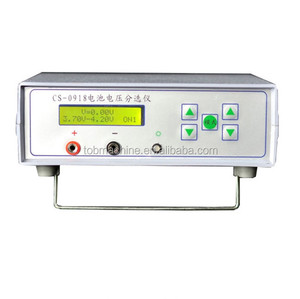

Featured test solutions designed for high-dynamic performance, BMS testing, cell balancing, and high-density DC power emulation.
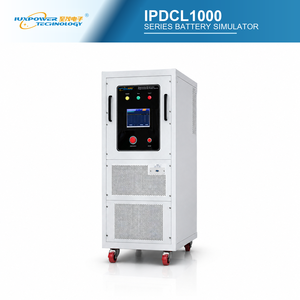
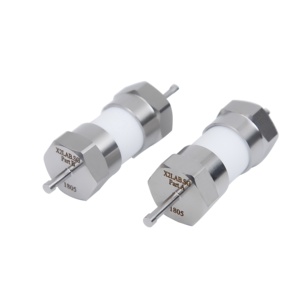
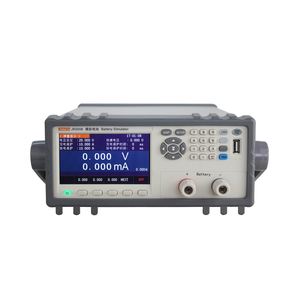
A comprehensive whitepaper on dynamic DC sinking, linear MOSFET precision, and regulatory CE compliance tailored to the Netherlands' advanced power electronics ecosystem.
As the Netherlands accelerates towards complete grid decarbonization under the Dutch Climate Agreement (Klimaatakkoord), power conversion systems encounter unprecedented stress. From EV fast-charging hubs in Eindhoven to large-scale Battery Energy Storage Systems (BESS) along the Port of Rotterdam, testing facilities require electronic loads that guarantee absolute ripple control, high dynamic transient responses, and seamless energy regeneration.
Deploying power electronics equipment within the European Union mandates rigorous safety and electromagnetic compatibility compliance. Our programmable DC electronic loads hold comprehensive CE certification adhering directly to the Low Voltage Directive (LVD 2014/35/EU) and Electromagnetic Compatibility Directive (EMC 2014/30/EU), fulfilling safety standard NEN-EN-IEC 61010-1 required across Dutch research and industrial facilities.
For sensitive DUTs (Devices Under Test)—such as microgrid battery management systems (BMS), hydrogen fuel cell stacks, and semiconductor power stages—high-frequency switching noise can invalidate telemetry data. Our linear MOSFET electronic loads provide low-noise, smooth sinking capabilities with virtually zero switching ripple, preserving total signal integrity for critical metrology.
Tailored power sinking and emulation solutions addressing specific technological demands across Dutch key economic zones.
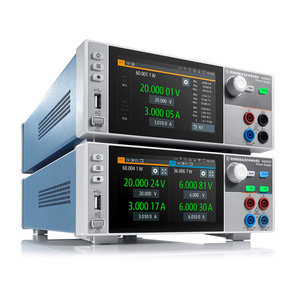
The Brainport Eindhoven region leads global semiconductor lithography and mechatronics innovation. Our high-precision DC electronic loads deliver micro-ampere resolution, transient load stepping under 50 µs, and high-stability programmable profiles. This enables equipment manufacturers to test multi-rail DC power distribution units (PDUs) with exact reproducibility and zero electromagnetic interference.
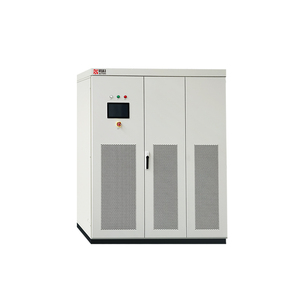
The Netherlands possesses one of Europe's densest EV charging network infrastructures. At testing centers like the Automotive Campus in Helmond, engineers utilize our high-power regenerative electronic loads (capable of up to 1000 kW in parallel) to simulate high-voltage EV battery pack dynamics. This validates CCS2 and Megawatt Charging System (MCS) protocols under full bidirectional power flow.
To combat grid congestion (netcongestie) across the Dutch electrical grid, industrial operators are installing large-scale Battery Energy Storage Systems (BESS). Our CE-certified multi-channel electronic loads and battery simulators empower Dutch system integrators to execute full SOC burn-in, cell balancing verification, and thermal run-away stress testing prior to field commissioning.
With major hydrogen initiatives underway in Groningen and Delfzijl, precision characterization of proton exchange membrane (PEM) and alkaline electrolyzers is imperative. Our electronic loads support Constant Current (CC), Constant Voltage (CV), Constant Power (CP), and Constant Resistance (CR) modes, allowing precise polar curve mapping without disturbing sensitive gas-flow meters.
Dutch agricultural innovation relies heavily on automated LED lighting and rooftop/floating PV systems. Our programmable DC loads simulate non-linear solar array I-V curves, enabling solar inverter manufacturers in Wageningen and Westland to test Maximum Power Point Tracking (MPPT) performance under rapid illumination fluctuations.
Understanding regulatory shifts, grid constraints, and technology standards influencing Dutch power engineering.
Grid bottlenecks across TenneT and regional DSOs (Enexis, Liander, Stedin) prohibit excessive resistive heat dissipation in testing bays. Dutch test facilities are rapidly replacing traditional dissipative loads with Regenerative DC Electronic Loads, which feed back up to 96% of absorbed power directly into the local 400V/480V AC building grid, reducing operational energy costs and cooling infrastructure demand.
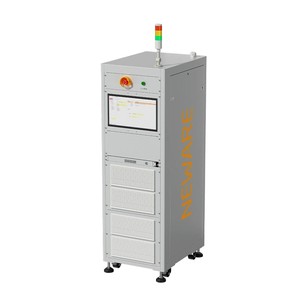
The updated EU Battery Regulation enforces strict carbon footprint transparency, performance metrics, and durability benchmarks. Dutch battery pack manufacturers use our 24-Channel Cell Simulators and high-dynamic loads to track State of Charge (SOC), State of Health (SOH), and automated cell-balancing responses down to ±0.1mV measurement accuracy.
| Series Family | Operating Power Range | Cooling Topology | Dynamic Slew Rate | Primary Dutch Application |
|---|---|---|---|---|
| Precision Linear Series | 1.25 kW – 20 kW+ | Forced Air / Low Noise | > 10 A/µs (ultra-fast) | Semiconductor PDUs, Medical Power Supplies, Telecom DC-DC |
| High-Density Modular Series | 5 kW – 100 kW | Air-Cooled Rackmount | Programmable Ramp | BMS Burn-In, Automated Test Equipment (ATE) Racks |
| Industrial Megawatt Series | 150 kW – 1000 kW+ | Water-Cooled Closed Loop | Controlled Dynamic | EV Traction Inverter, Megawatt Charging (MCS), BESS Grid Testing |
| Multi-Channel Cell Simulator | 24 Channel Isolation | Precision Conduction | Instantaneous Voltage Shift | BMS Validation, SOC/SOH Algorithm Calibration, R&D Labs |
Clear answers regarding CE documentation, Dutch electrical safety standards (NEN 1010), delivery logistics, and system integration.
All our programmable electronic loads and battery simulators ship with an official EU Declaration of Conformity. They fully meet the Low Voltage Directive (LVD 2014/35/EU) under EN 61010-1 safety requirements and the EMC Directive (2014/30/EU) under EN 61000-6-2 (Industrial Immunity) and EN 61000-6-4 (Emissions). Complete CE technical documentation files (TDF) are provided for seamless internal compliance auditing across Dutch industrial plants.
Yes. Our equipment is engineered with double-insulated protective earth grounding terminals, over-voltage category (OVC II/III) isolation, and emergency interlock shut-off circuits. This allows seamless integration into electrical systems installed in accordance with NEN 1010 regulations in the Netherlands.
Given the severe grid congestion (netcongestie) in provinces like Noord-Brabant, Gelderland, and Utrecht, power allocation for test facilities is tightly capped. Regenerative electronic loads convert absorbed DC power back into clean AC synchronization with the internal facility grid (with < 3% THD), eliminating the need for extra grid capacity and reducing heat dissipation into local HVAC systems by up to 90%.
Our instruments standardly feature Ethernet/LXI, USB, RS-232, and isolated analog control interfaces, with optional Modbus TCP and CANbus cards. Standard SCPI syntax is used, accompanied by native LabVIEW, IVI-COM, and Python drivers for effortless integration into automated test environments (ATE) used in Dutch high-tech R&D.
We work directly with established logistical hubs in Schiphol and Rotterdam to ensure door-to-door DDP (Delivered Duty Paid) or DAP delivery across the Netherlands. Standardized configurations ship within 4 to 6 weeks, packaged in ISPM-15 compliant export crates with comprehensive calibration reports traceable to international NIST/ISO 17025 standards.
Absolutely. Our low-inductance linear electronic loads and high-voltage DC bus simulators accommodate extremely high dV/dt and dI/dt dynamic load profiles, preventing inductive voltage spikes and ringing during Silicon Carbide (SiC) and Gallium Nitride (GaN) power device characterization.
Vertical manufacturing integration, rigorous quality control, and decades of power electronics expertise.
From precision sheet metal enclosure fabrication and transformer magnetics winding to surface-mount SMT PCB assembly and final chassis integration, every step occurs within our centralized ISO 9001 certified manufacturing plant. This guarantees strict supply chain control, short lead times, and uncompromised build quality.
Every single electronic load unit undergoes 100% full-load stress testing and thermal soak burn-in prior to final factory gate sign-off. Individual calibration certificates detailing voltage, current, and power sinking accuracy across the entire operational envelope are shipped standard with every instrument.
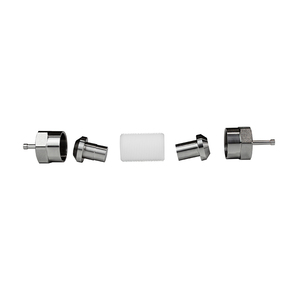
Whether your test facility requires tailored liquid cooling manifold connectors, high-voltage busbar extensions, customized rack-mount handles, or specific SCPI command set emulation, our factory application engineers provide rapid design customization to match your operational requirements.
Consult with our senior application engineers to select the exact programmable DC electronic load, battery simulator, or multi-channel testing platform for your Netherlands facility.
Get Catalog