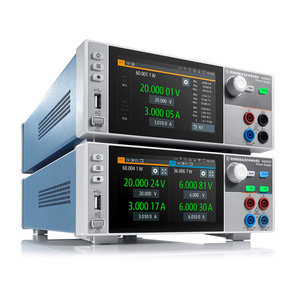
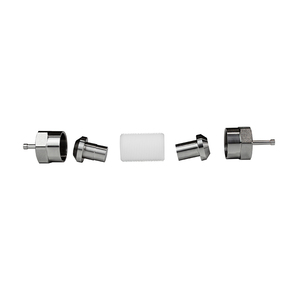
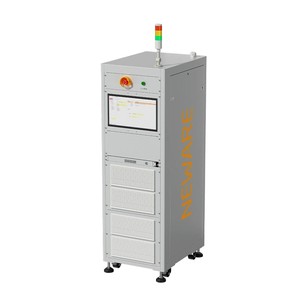
Explore our industrial-grade bidirectional power supplies, battery simulators, and high-precision testing hardware optimized for Russian manufacturing, automotive, and energy labs.
The modern industrial and energy infrastructure across Russia and the Eurasian Economic Union (EAEU) is undergoing a massive electrification transition. From the heavy electric mining haulers operating in Siberia and the Far East to urban electric transport projects in Moscow and Saint Petersburg, the demand for high-reliability, heavy-duty bidirectional DC power supplies and precision battery simulators has reached an unprecedented high.
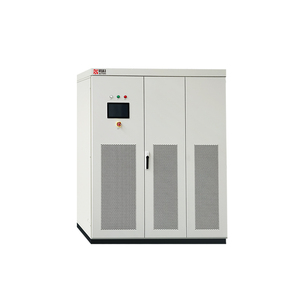
Unlike standard unidirectional DC power supplies that can only source energy, bidirectional DC systems seamlessly integrate a two-quadrant (or four-quadrant) power architecture. They operate as a precision programmable DC source while simultaneously functioning as a regenerative DC electronic load. When testing energy storage systems (ESS), traction inverters, or battery management systems (BMS), energy absorbed from the unit under test (UUT) during braking or discharge phases is clean-inverted and fed back into the local 380V/400V 50Hz industrial grid with efficiency exceeding 96%. This capability dramatically lowers thermal dissipation requirements and operational electricity expenses in continuous industrial burn-in environments.
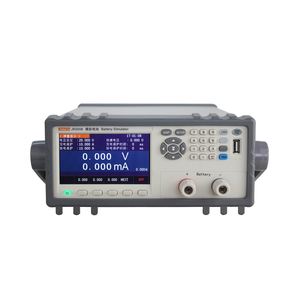
Testing high-voltage physical lithium-ion battery packs introduces severe safety hazards, chemical degradation variables, thermal management complexities, and extended testing downtime due to recharge cycles. Engineering laboratories and automotive OEMs in Russia are increasingly replacing physical battery arrays with programmable bipolar multi-channel battery cell simulators.
By executing real-time equivalent circuit models (ECM), these simulators enable test engineers to dynamically alter State of Charge (SOC), State of Health (SOH), Internal Resistance (R_int), temperature coefficients, and output voltage curves on the fly. This allows rigorous validation of BMS cell balancing algorithms, over-charge/over-discharge fault protection, and SOC estimation accuracy under extreme thermal profiles representative of harsh Russian climatic conditions.
Built upon robust current-fed conversion topologies and linear MOSFET sinking technologies, our equipment provides unmatched durability against short-circuit faults and dynamic load transients.
Utilizes inductive DC bus energy storage rather than vulnerable capacitive banks. This inherently limits short-circuit fault currents, delivering immunity against load arcing and back-EMF spikes common in heavy inductive motor testing.
Achieves sub-millisecond (+to-) current switching transition speeds without zero-cross dead zones. Crucial for evaluating dynamic motor regeneration, dynamic drive cycles, and microgrid frequency regulation devices.
Full rated kilowatts or megawatts are delivered across an expansive voltage and current range rather than a single nominal operating point, enabling a single supply to cover broad battery pack voltage spans (0V to 1500V DC).
Integrated linear MOSFET sinking stages eliminate high-frequency switching noise, offering ultra-clean noise floors essential for electrochemical research, coin-cell impedance spectroscopy, and precision BMS calibration.
Available in flexible 1U-2U rack-mount formats up to heavy industrial liquid-cooled megawatt cabinets. Sealed internal airflow paths protect sensitive controller optics from conductive dust and industrial pollutants.
Native support for SCPI command sets, Ethernet/LXI, RS-485 Modbus RTU/TCP, CAN bus, LabVIEW, Python, and MATLAB interfaces for standard automated test equipment (ATE) integration.
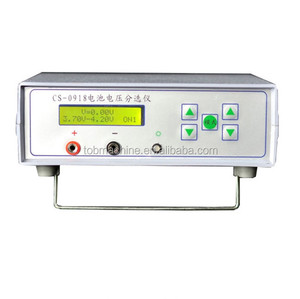
The following performance matrix illustrates the comparative parameters across our primary high-power bidirectional power supply series and multi-channel battery cell simulators designed for industrial deployment.
| System Platform | Power Output Range | Voltage Range (DC) | Current Dynamic Response | Cooling Method | Target Local Application |
|---|---|---|---|---|---|
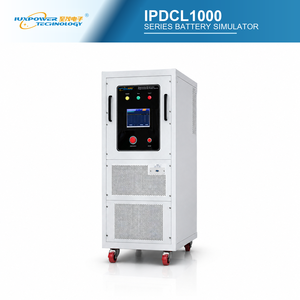
| IPDCL1000 Bench Series | 1 kW - 5 kW | 0 - 300 V | < 500 µs | Forced Air | Electrochemical Labs, Coin Cell R&D |
| TS / SL High-Power Series | 5 kW - 100 kW | 0 - 1000 V | < 1 ms | Intelligent Airflow | EV On-Board Charger (OBC) Test, ATE Racks |
| ABS High-Dynamic Series | 150 kW - 1000 kW | 0 - 1200 V | < 2 ms | Air / Liquid Cooled | Heavy Mining Electrification, Traction Inverters |
| ML Megawatt Platform | 500 kW - 10 MW+ | 0 - 1500 V | < 4 ms | Closed-Loop Water | Grid-Scale BESS, Hypersonic & Industrial Arc Power |
| 24-Channel BMS HIL Simulator | Per Channel isolated | 0 - 6 V (Per Cell) | < 100 µs | Convection / Fan | BMS Cell Balance, Fault Injection & SOC Validation |
Tailored testing hardware optimized for demanding operational demands across the Russian Federation's key industrial clusters.
Electrified haul trucks and heavy excavators in Kuzbass and Yakutia require ultra-rugged 500kW+ battery simulators capable of enduring severe dynamic load reversals during regenerative downhill braking and sudden uphill acceleration under sub-zero ambient conditions.
Containerized Battery Energy Storage Systems (BESS) installed in northern Siberian microgrids undergo simulated arctic operational testing. Our high-power bidirectional units simulate grid-forming battery behavior during diesel-generator outages.
Automotive OEMs and testing centers in Moscow and Tolyatti utilize 24-channel precision cell simulators and high-voltage DC supplies to certify passenger EVs and commercial electric buses according to GOST R and EAC safety standards.
Academic institutes and electrochemical laboratories (such as RAS research centers) leverage our CR2032/CR2016 coin cell simulators and low-noise bipolar supplies for advanced solid-state electrolyte characterization and cycle life modeling.
Battery Management Systems (BMS) serve as the primary intelligence safeguarding modern battery packs. A critical step in qualifying a BMS design involves simulating realistic and extreme cell-level imbalances, short circuits, and thermal runaway precursor signals without exposing laboratory personnel to hazardous fires.
Essential answers regarding line voltage compatibility, logistics, EAC certification, and technical support.
Speak directly with our senior application engineers to define your exact voltage, current, dynamic switching, and battery simulation requirements. Get customized engineering quotes and detailed technical specifications.