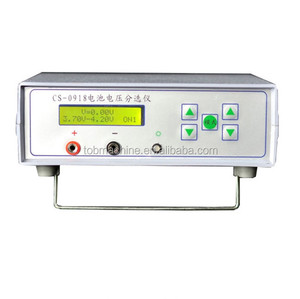
Lithium Ion Battery Voltage Current Capacity Tester
High-accuracy multi-channel capacity grading unit optimized for automated cell profiling, internal resistance DCIR analysis, and long-term lifespan verification.

Engineered for sub-millisecond dynamic response, bidirectional power cycling, regenerative grid feeding, and hardware-in-the-loop (PHIL) integration across New York’s clean-tech R&D ecosystems.
High-accuracy multi-channel capacity grading unit optimized for automated cell profiling, internal resistance DCIR analysis, and long-term lifespan verification.
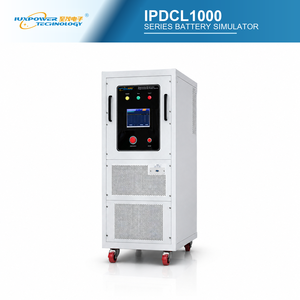
Compact 1KW benchtop unit delivering programmable constant-power curve emulation, seamless source/sink transitions, and zero-ripple dynamic loads.
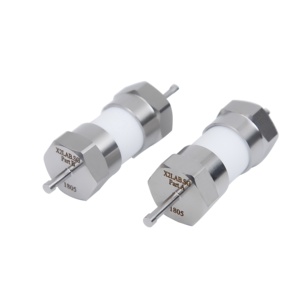
Ultra-low microamp resolution emulator engineered for ultra-low power IoT hardware, biomedical implant sensors, and coin cell degradation testing.
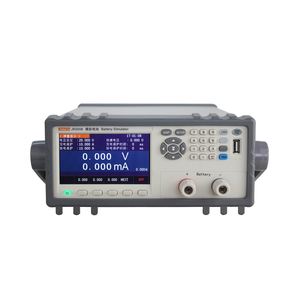
High-density 6-channel programmable DC source/sink instrument engineered for portable electronics ATE racks and battery protection board verification.
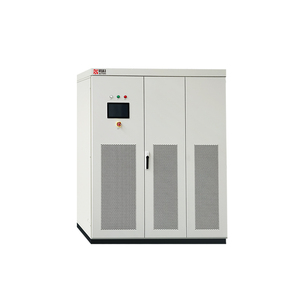
Megawatt-class bidirectional power system featuring full regenerative feedback (>96% efficiency) for heavy EV traction testing and utility-scale BESS emulations.
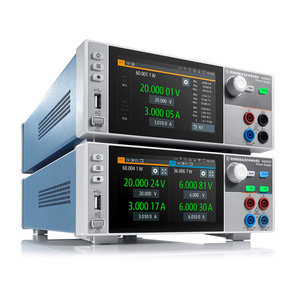
Precision two-quadrant bipolar power supply featuring fast recovery times, ultra-low residual ripple, and linear load regulation for wireless IoT device test routines.
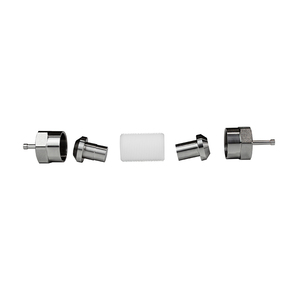
Dedicated laboratory tool designed to mimic accurate chemistry discharge curves, internal impedance shifts, and pulsed current draw profiles for CR2032/CR2016 cells.
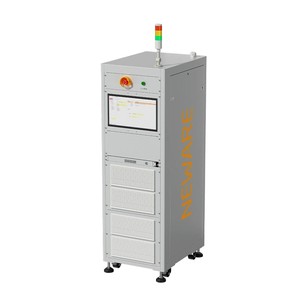
Galvanically isolated 24-channel cell matrix engineered for automated Battery Management System (BMS) testing, passive/active balancing evaluation, and fault injection.
Modern electrical engineering validation requires test infrastructure capable of high dynamic speed, broad operating boundaries, and absolute electrical safety. As New York aggressively transitions toward renewable microgrids, heavy-vehicle electrification, and urban battery energy storage systems (BESS), traditional voltage-fed programmable DC power supplies encounter fundamental physical constraints. Our bidirectional power supplies utilize a rugged current-fed power processing topology designed specifically to conquer the thermal and dynamic liabilities of conventional DC power architecture.
Information Gain Insight: Unlike traditional voltage-fed topologies that rely on large parallel output filter capacitors—which discharge catastrophic energy spikes during short circuits—current-fed topologies store intermediate energy in a series input inductor. This yields continuous short-circuit immunity, intrinsic inductive kickback protection, and immediate quadrant transition without dynamic hunting.
When simulating real-world traction batteries or utility grid ties, power supplies must transition seamlessly from sourcing current (charging simulation) to sinking current (regenerative braking or discharge simulation). In voltage-fed switch-mode supplies, sinking requires complex anti-parallel MOSFET switching sequences and dissipative braking resistors or dual-stage inversion. In contrast, current-fed bidirectional architectures maintain continuous current control via phase-shifted high-frequency isolation transformers coupled with SiC (Silicon Carbide) power switches.
| Architecture Feature | Standard Voltage-Fed Supplies | Magna-Power Current-Fed Topology |
|---|---|---|
| DC Bus Energy Storage | Large Electrolytic Capacitors (High Stored Energy) | Series Input Inductors (Low Stored Energy) |
| Short-Circuit Behavior | Heavy current spike, potential trip/fuse blown | Natural current-limiting; immune to continuous shorts |
| Dynamic Sinking Response | Slow transition (>15-50 ms), requiring thermal dumping | Sub-millisecond seamlessly controlled bidirectional transitions |
| Operating Range Envelope | Fixed rectangular V/I boundary or limited autoranging | Ultra-wide constant power envelope over broad V/I window |
| Energy Recovery Back to Grid | Dissipative heat or low-efficiency external inverter | Integrated active front-end (AFE) regeneration (>96% efficiency) |
For modern engineering projects across New York—such as validating smart grid tie-in inverters for Long Island offshore wind feeds or testing fast-charging algorithms at Brooklyn Navy Yard clean-tech incubators—real-time simulation accuracy is paramount. Our bidirectional DC power supplies feature high dynamic slew rates (> 450 V/ms) and low latency control loops (< 100 μs control cycle), rendering them the gold standard for PHIL real-time digital simulators (e.g., OPAL-RT, RTDS, dSPACE).
Feeds clean sinusoidal current back to the 3-phase AC utility grid with total harmonic distortion (THD) < 3%, minimizing facility HVAC load and utility billing.
Emulate chemistry-specific internal resistance ($R_i$), State of Charge (SOC) degradation, temperature coefficients, and cell imbalance in real time.
Built-in primary-to-secondary isolation rated up to 5000V DC prevents ground loops and safeguards upstream automation hardware during high-power destructive tests.
As a leading supplier of heavy industrial power electronics, high-voltage DC supplies, and advanced battery emulators, our systems are deployed in mission-critical applications across major technology corridors in New York State.
In Albany NanoTech Complex and Rochester microelectronics labs, our fast-transient DC supplies provide stiff DC bus power for dynamic double pulse testing of next-gen Silicon Carbide (SiC) and Gallium Nitride (GaN) power switches.
Assisting NYC engineering firms in meeting strict FDNY 3(r) safety standards and Con Edison grid-interconnection rules. Our 150kW-1000kW bidirectional emulators stress-test urban battery enclosures under simulated peak-shaving cycles.
Supporting offshore wind integration labs along Long Island. Our high-power regenerative DC sources emulate high-voltage DC (HVDC) rectified buses, allowing engineers to validate grid-tied inverter synchronization and fault ride-through (FRT).
Deployed at Brookhaven National Laboratory (BNL), Columbia University, and Cornell Tech. Used for fundamental electrochemical impedance spectroscopy (EIS), advanced battery chemistry synthesis, and multi-channel BMS balancing research.
The demand for high-capacity, high-efficiency bidirectional power hardware in New York is accelerated by aggressive state legislation, stringent municipal fire codes, and substantial clean energy investments:
With over four decades of power electronics engineering excellence, our nearby East Coast vertically integrated manufacturing facility sets the industry standard for customizability, build quality, and rapid delivery schedules.
From custom magnetics winding, sheet metal fabrication, and surface-mount PCB assembly to final full-power burn-in—every step is controlled under one roof.
While overseas competitors suffer from 20+ week logistics delays, our domestic production chain guarantees rapid made-to-order assembly times of 4 to 6 weeks.
Flexible modular designs spanning 1.5 kW to 10 MW, air-cooled or water-cooled units, high-voltage options up to 1000V+, and seamlessly scalable master/slave control.
Common questions from test system integrators, lab directors, and procurement managers in New York:
Require detailed engineering sizing, custom voltage/current envelopes, or on-site demonstration in New York? Submit your technical requirements to receive an authoritative proposal and budgetary quotation within 24 hours.
Get a Quote