
Engineering Whitepaper: Air-Cooled Power Architecture & Thermal Management in Greater Sydney
As Australia’s primary hub for advanced manufacturing, commercial battery research, defense technology, and grid-scale renewable innovation, Sydney demands robust, highly resilient power supplies and electronic loads capable of operating continuously under challenging environmental conditions. Industrial facility engineers, test bench architects, and laboratory directors across New South Wales (NSW) face severe operational pressures: high summer ambient temperatures exceeding 40°C in Western Sydney industrial precincts, demanding grid harmonics compliance under AS/NZS standards, and the imperative for absolute measurement precision in high-voltage testing.
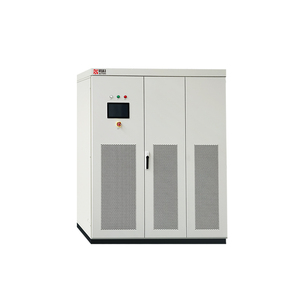
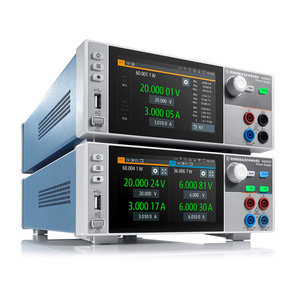
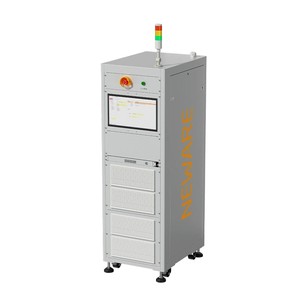
This technical document serves as a operational manual and engineering evaluation framework for specifying air-cooled programmable DC power supplies, bipolar battery simulators, and multi-channel cell emulators tailored for exporters and enterprise buyers serving Sydney. By examining thermodynamic heat dissipation, current-fed converter topologies, and localized hardware-in-the-loop (HIL) application profiles, this whitepaper delivers direct information gain for senior systems integrators.
1. Thermodynamic Dynamics of Air-Cooled Systems in Australian Climates
Selecting between liquid-cooled and air-cooled power topologies often hinges on facility infrastructure constraints. In many Sydney research parks—such as Macquarie Park, Pyrmont, and the emerging Western Sydney Aerotropolis—retrofitting closed-loop deionized water cooling loops introduces substantial capital expenditures, complex maintenance overheads, and potential points of failure from fluid leakages near sensitive test equipment.
Modern high-density air-cooled power supplies solve this challenge by integrating advanced aerodynamic fan management, custom copper-extrusion heat sinks, and isolated forced-air wind tunnels. Key thermodynamic considerations for Sydney deployments include:
- Thermal Derating Thresholds: Premier air-cooled systems are rated to deliver 100% full continuous power up to 50°C ambient temperatures without thermal tripping, mitigating room heating issues during Sydney's peak heatwaves.
- Variable-Speed Airflow Control: Smart internal microcontrollers continuously monitor MOSFET junction thermal sensors, dynamically scaling pulse-width modulated (PWM) fan speeds to minimize acoustic noise in laboratory environments while maximizing airflow velocity during full-power discharge cycles.
- Current-Fed Energy Storage: Utilizing inductive energy storage on the primary DC bus rather than standard electrolytic capacitor banks drastically reduces internal heat generation caused by high ripple currents, doubling instrument MTBF (Mean Time Between Failures).
2. Current-Fed vs. Voltage-Fed Power Topology Performance Comparison
For heavy industrial DC testing, traction inverter validation, and battery pack emulation, the underlying power conversion topology governs instrument longevity. Conventional power supplies rely on voltage-fed topologies, which utilize large filter capacitor banks directly across the output terminals. Under short-circuit conditions or rapid dynamic switching, voltage-fed supplies suffer massive current surges, causing severe thermal stress on switching semiconductors and potential output arc damage.
Conversely, our exported air-cooled systems utilize a proprietary current-fed power processing topology. By inserting a high-frequency decoupling inductor between the input rectifier stage and the inverter bridge, current flow is inherently limited.
| Performance Metric | Current-Fed Topology (Air-Cooled) | Traditional Voltage-Fed Topology | Direct Benefit to Sydney Operators |
|---|---|---|---|
| Short-Circuit Behavior | Inherent current limiting via primary bus inductor | High peak discharge surge from output capacitors | Zero semiconductor fatigue during arc or fault conditions |
| Thermal Dissipation Rate | Uniform low-loss magnetic switching profile | Concentrated hot spots across capacitor banks | Extended operating lifespan in high ambient temps (45°C+) |
| Capacitance Across Output | Extremely low (up to 90% reduction vs voltage-fed) | High energy storage filter capacitors | Essential for rapid voltage ramping & battery profiling |
| Regenerative Tolerance | High resistance to reverse-EMF kickback | Prone to over-voltage bus shutdown/damage | Ideal for motor drives, actutators, and EV braking tests |