
Explore our enterprise-grade programmable power platforms, multi-channel battery cell emulators, and high-power dynamic simulation systems designed for stringent battery management system (BMS) validation and energy storage testing.
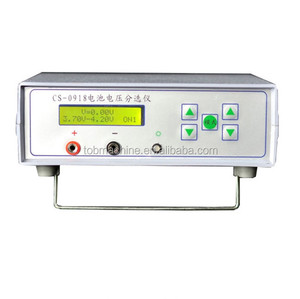
Accuracy: ±0.02% F.S. Voltage & Current
Response Time: < 1 ms dynamic step
Applications: Pack capacity sizing, multi-channel automated cycle testing.
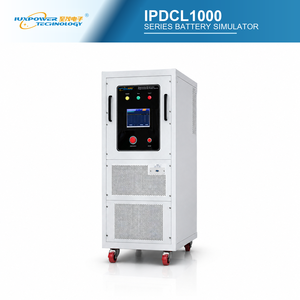
Topology: Programmable CP / CC / CV Sinking
Bus Ripple: Low-noise DC linear response
Applications: EV auxiliary drive test, DC-DC converter evaluation.
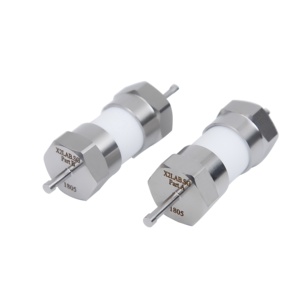
Resolution: 100 nA current measurement
Form Factor: Modular micro-fixturing
Applications: IoT wear testing, electrochemical coin cell profiling.
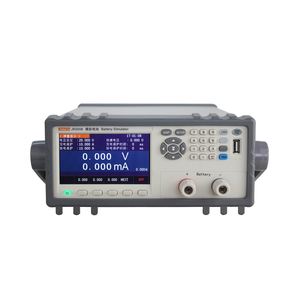
Channels: Isolated multi-channel output
IR Modeling: Programmable internal resistance
Applications: Consumer electronics BMS validation, battery charge simulation.
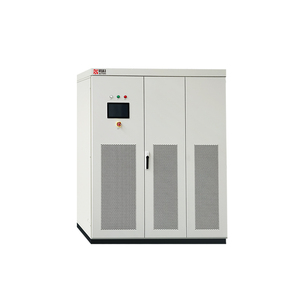
Power Scalability: 150 kW to 1 MW megawatt class
Bidirectional: Seamless quadrant switching
Applications: EV traction inverter testing, microgrid storage emulator.
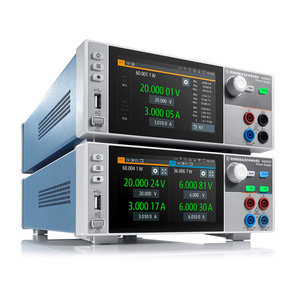
Input Voltage: 100–240V AC universal
Speed: Fast transient output dynamic < 30 µs
Applications: Semiconductor characterization, telecom power supply testing.
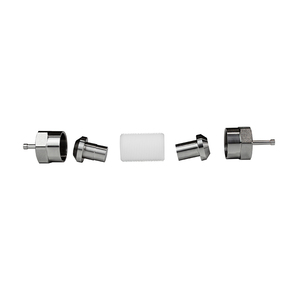
Precision: Sub-millivolt ultra-stable source
Protection: Over-current and thermal interlock
Applications: Bio-sensor testing, chemical cell research & development.
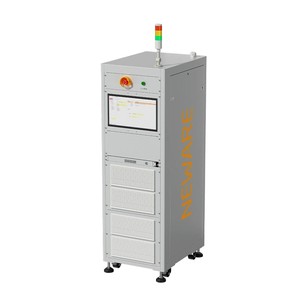
Channel Density: 24 isolated channel control
Functionality: Active cell balancing & SOC fault inject
Applications: Automotive ECU/BMS Hardware-in-the-Loop (HIL) testing.
In modern industrial test environments, the demand for extreme precision, high dynamic responsiveness, and long-term operating reliability has reshaped how power conversion systems are specified. Whether evaluating electric vehicle (EV) traction inverters, validating multi-channel Battery Management Systems (BMS), or carrying out double-pulse switching tests on wide-bandgap (SiC/GaN) semiconductors, design engineers require uncompromising power fidelity.
This technical guide examines the architectural principles that separate industrial-grade power supplies and battery simulators from conventional off-the-shelf power equipment, focusing on topology selection, thermal management, software emulation routines, and procurement strategies.
The primary architectural differentiator in heavy-duty programmable power supplies lies in the primary DC bus energy storage method. Traditional switch-mode supplies rely on large voltage-fed electrolytic capacitor banks. While low cost, voltage-fed architectures exhibit vulnerable short-circuit behavior, high stored surge energy, and limited dynamic flexibility when driving highly inductive or low-impedance loads.
In contrast, premier high-power platforms utilize a Current-Fed Power Processing Topology. By placing an energy-storing inductor on the primary side before the switching stage, current-fed supplies inherently limit short-circuit currents and absorb back-EMF spikes without device destruction. This inherent ruggedness is critical during continuous battery cycle testing, regenerative motor braking evaluation, and plasma or arc-discharge testing.
| Topological Parameter | Standard Voltage-Fed Supplies | Advanced Current-Fed Supplies | Linear MOSFET Sinking (Loads) |
|---|---|---|---|
| Primary Energy Storage | Capacitance (High Stored Energy) | Inductance (Controlled Current Limit) | Direct Transistor Dissipation |
| Short-Circuit Toleration | Requires Active Shutdown | Inherent Natural Current Limit | Fast Active Limiting |
| Dynamic Step Response | Limited by Bus Output Caps | Fast Transient Step < 1 ms | Ultra-Fast Microsecond Response |
| EMI / Noise Injection | Moderate to High Switching Noise | Filtered Low-Ripple Output | Zero Switching EMI (Linear Sinking) |
Testing battery-powered hardware—such as automotive ECUs, power tools, and satellite subsystems—with actual chemical battery packs presents safety hazards, operational delays, and inconsistent state-of-charge (SOC) conditions. Precision Battery Simulators bridge this gap by executing real-time mathematical models of electrochemical cells on embedded DSP micro-controllers.
Key functional capabilities include:
V_out = V_open_circuit - (I_load × R_internal).Integrated manufacturing control, modular software stack, and proven field durability across demanding military, automotive, and industrial aerospace projects.
Inductive DC bus storage prevents catastrophically high discharge currents during load faults, delivering unmatched short-circuit protection and arc tolerance.
Standardized SCPI command architecture across all units, supported by native IVI-COM, LabVIEW drivers, and Python API bindings for rapid ATE integration.
From sheet metal fabrication and magnetic winding to surface-mount PCB assembly and 100% full-power burn-in testing, everything occurs in-house.
As the global transition toward electrification accelerates, engineering teams face new procurement challenges. Buying power instrumentation is no longer a matter of selecting fixed-point voltage supplies; it requires evaluating total cost of ownership, software adaptability, and megawatt-scale expansion capabilities.
Automotive OEMs are migrating from legacy 400V powertrain architectures to 800V and 1200V systems to facilitate ultra-fast charging. Consequently, battery simulators and programmable DC supplies must deliver full power output up to 1500 V DC while maintaining strict safety interlocks, low ground leakage, and high common-mode rejection ratios (CMRR).
Silicon Carbide (SiC) and Gallium Nitride (GaN) power switches operate at switching speeds exceeding 100 kHz with extremely high dV/dt slew rates. Programmable supplies acting as high-voltage DC bus sources must exhibit minimal parasitic inductance and low bus ripple to prevent artificial ringing and false switching energy (E_on / E_off) calculation errors during double-pulse testing.
Hardware power instruments are increasingly embedded within complex automated hardware-in-the-loop testbeds (e.g., dSPACE, Opal-RT, NI VeriStand). Procuring systems with standardized Modbus TCP, EtherCAT, or LXI APIs allows automated real-time profile streaming—simulating drive cycles like WLTP, EPA Federal Test Procedure, or custom solar curve sweeps (PPPE) without manual operator intervention.
We combine four decades of specialized power conversion engineering with modern digital control to deliver world-class test equipment.
Unlike asset-light assembly operations, our facility controls every stage of production. We spin and dip our own magnetics, laser-cut and punch sheet metal enclosures, populate multi-layer PCBs with automated SMT lines, and validate performance in dedicated full-power burn-in bays.
This vertical integration ensures strict quality verification, rapid prototyping, and industry-leading lead times of 4 to 6 weeks even on custom power configurations.
Our instruments are specified by premier defense contractors, national aerospace labs, tier-1 automotive suppliers, and leading university research centers across 50+ countries. Factory service is backed by regional calibration and repair centers spanning the United States, European Union, United Kingdom, China, and Australia/New Zealand.
Every unit ships with NIST-traceable calibration documents and full schematic transparency for long-term operational peace of mind.
Clear, authoritative answers to common inquiries regarding power ratings, customization, interface protocols, and delivery schedules.
Our product portfolio scales from 1.5 kW 1U rack-mount units (SLx / SL Series) up to 10 MW+ water-cooled custom cabinet configurations (ML Series). Master-slave digital paralleling allows modular expansion across benchtop, R&D rack, and megawatt industrial test environments.
Due to our vertically integrated factory infrastructure—including in-house machining, magnetics winding, and automated SMT assembly—standard made-to-order build times range between 4 to 6 weeks. High-demand models are also available in ready-to-ship stock inventories.
While a standard DC power supply maintains a fixed voltage, a battery simulator dynamically models electrochemical cell behavior. It continuously recalculates voltage based on state-of-charge (SOC), internal resistance (IR), temperature, and load current, while also supporting bidirectional power sinking for regenerative energy testing.
All instruments come standard with LXI-compliant Gigabit Ethernet, USB, RS-232, and isolated 37-pin analog/digital user I/O. Optional factory-installed interfaces include IEEE-488 GPIB and Modbus TCP, with full SCPI command support and native drivers for LabVIEW, Python, and IVI-COM.
Yes. By pairing our MagnaDC supplies with Photovoltaic Power Profile Emulation (PPPE) software, the power supply accurate reproduces non-linear I-V curves, irradiance variations, and temperature sweeps for MPPT (Maximum Power Point Tracking) validation on solar inverters.
Factory service headquartered in the USA is supported by regional authorized service hubs covering Europe, the UK, Asia-Pacific, and China. All instruments ship with full factory burn-in documentation and traceable calibration certificates compliant with international testing standards.
Need assistance matching voltage-current matrices, configuring multi-channel battery simulation hardware, or specifying dynamic linear MOSFET loads for your test cell? Contact our engineering team today for technical guidance and direct factory pricing.