
Top China EV Tester Manufacturers & Factories

2026 Industry White Paper: Advanced Battery Simulators, High-Precision Regenerative DC Test Equipment, and BMS Validation Topologies for Automotive OEMs

Enterprise Hardware Portfolio

Industrial-Grade EV & Battery Testing Solutions

Direct-from-factory high-dynamic battery simulators, cell simulators, and programmable DC power supplies engineered for stringent EV validation standards.
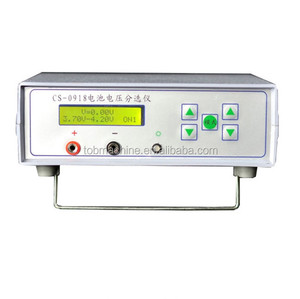
Lithium Ion Battery Voltage Current Capacity Tester

Lithium Ion Battery Voltage Current Capacity Tester

Multi-channel precision electrochemical analyzer engineered for cell charge/discharge profiling, internal resistance DCIR mapping, and high-rate capacity evaluation.
Contact Us
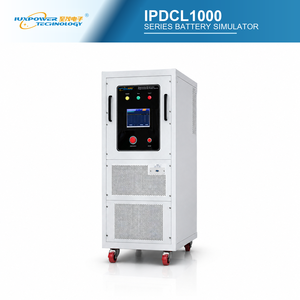
IPDCL1000 Series High-Precision Battery Simulator

IPDCL1000 Series 220V 1KW High-Precision Battery Simulator Constant Power

Bidirectional programmable DC simulation system featuring ultra-fast dynamic transient response, seamless quadrant switching, and constant power function testing.
Contact Us
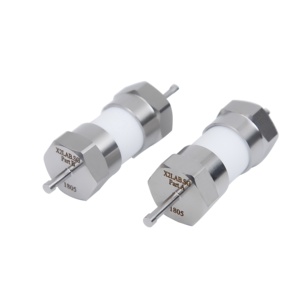
Removable Coin Battery Simulator

Removable Coin Battery Simulator for Coin Battery Test Coin Cells

Modular laboratory test fixture designed for coin cell chemistry simulation, low micro-amp leakage evaluation, and precision electrochemistry R&D applications.
Contact Us
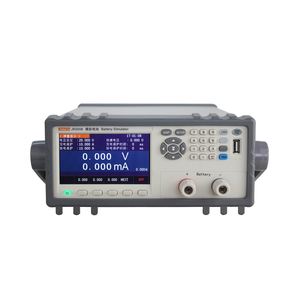
JK5506 Battery Simulator

JK5506 Multi-Channel High-Accuracy Battery Simulator

Benchtop isolated multi-channel power simulator optimized for portable device BMS testing, automated line integration, and battery emulation scenarios.
Contact Us
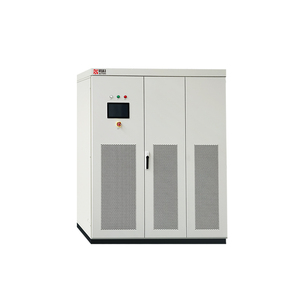
Power Aikesaibo ABS High-precision Battery Simulator 150-1000KW

Power Aikesaibo ABS High-Precision High-Dynamic Battery Simulator 150-1000KW

Megawatt-class heavy-duty regenerative EV powertrain testing hardware supporting 800V/1200V architecture, high dynamic load steps, and grid power feedback.
Contact Us
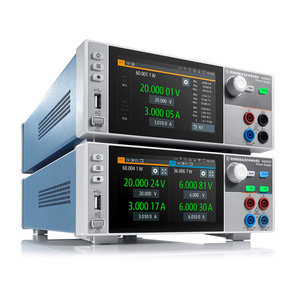
Rohde & Schwarz NGM201-NGM202 Industrial Bipolar Battery Simulator

Rohde & Schwarz NGM201-NGM202 Industrial DC Power Bipolar Simulator

Ultra-low ripple bipolar power supply providing fast transient response, 100-240V AC input versatility, and sub-uA resolution for delicate sensor & BMS chip validation.
Contact Us
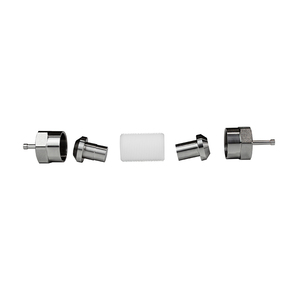
Coin Cell Simulator CR2032/2016

Coin Cell Simulator for CR2032/2016 Electrochemical Laboratories

Precision electrochemical research instrument designed to substitute physical button cells during micro-power harvesting and low-current circuit testing.
Contact Us
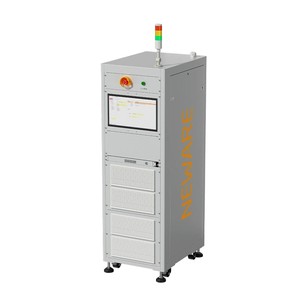
24-Channel Battery Cell Simulator for BMS Validation

24-Channel Battery Cell Simulator for BMS Validation & SOC Estimation

High-density multi-channel cell emulator with active fault injection, temperature sensor simulation, and high-speed bus communication for automotive BMS HIL rigs.

Contact Us
10MW+ Total System Capacity
< 1 ms Dynamic Step Response
0.01% FS Voltage Precision
ISO/IEC 17025 Accredited Calibration
4-6 Wks Standard OEM Lead Time
Technical Mastery & Manufacturing Excellence

State-of-the-Art Manufacturing Capabilities & Engineering Rigor

China's Electric Vehicle (EV) testing ecosystem has evolved into a global benchmark for power electronics innovation, high dynamic responsiveness, and continuous industrial reliability. As a leading manufacturer of programmable DC power supplies, high-power battery simulators, and multi-channel BMS testing rigs, our manufacturing facilities integrate comprehensive vertical processes under one roof—mirroring top-tier global standards while delivering unrivaled agility and cost efficiency.

From component-level magnetics winding, custom copper busbar machining, high-density Surface Mount Technology (SMT) assembly, to full-load high-temperature burn-in chambers, every stage of manufacture is subjected to stringent quality control loops governed by ISO 9001 and ISO 14001 certifications.

Current-Fed Topology

Utilizes inductive energy storage on the DC bus to provide native short-circuit immunity, superior arc resistance, and dynamic resilience against inductive kickbacks during heavy EV drive cycle tests.

FPGA+DSP Processing

Dual-core architecture executes real-time battery electrochemical models, dynamic internal resistance (DCIR) variation, and temperature coefficients with update rates reaching sub-millisecond speeds.

Regenerative Energy Sinking

High-efficiency SiC-based inverter stages sink power back to the AC grid at >96% efficiency, significantly cutting facility cooling demands and operational electricity expenses in continuous EOL testing.

Vertical Integration 100% Full Load Burn-In High Voltage SiC MOSFETs ISO 26262 Ready SCPI / LabVIEW / Python SDK Modular Master-Slave Paralleling
Engineering Specifications

EV Tester Architecture Technical Comparison

Navigating the complex specifications of modern electric vehicle power testing equipment requires a clear understanding of dynamic transient responses, isolation ratings, and power expansion capabilities. Below is an engineering benchmark outlining key equipment categories produced by top China manufacturers.

Equipment Platform Voltage Range Current / Power Range Transient Response Primary Application Intent
Megawatt EV Pack Simulators 100V - 1500V DC Up to 2000A / 1000kW+ < 1 ms (-90% to +90%) Heavy-duty powertrain validation, fast-charging emulation, traction inverter EOL test.
High-Density BMS Cell Simulators 0V - 6V per cell (24-Channel) 5A Sink/Source per Channel < 100 µs micro-step BMS Hardware-in-the-Loop (HIL), passive/active balancing, fault injection testing.
Linear MOSFET Electronic Loads 10V - 800V DC 1.25 kW to 20 kW per chassis Sub-microsecond ripple-free Ultra-low noise DC/DC converter characterization, fuel cell polarization testing.
Electrochemical Lab Testers 0V - 20V DC 10mA to 100A channels High precision ±0.01% FS Button/Coin cell chemistry evaluation, dQ/dV differential capacity profiling.
Bidirectional Modules (IPDCL) 220V - 1000V DC 1 kW to 100 kW modular < 2 ms continuous quadrant Automated production line testing, module-level burn-in, constant power cycling.
Industry Foresight & Roadmap

Key Technological Trends Shaping Future EV Test Architecture

As EV battery chemistries transition toward ultra-fast-charging solid-state cells, high-nickel cathode formulations, and 1200V Silicon Carbide (SiC) inverter platforms, test equipment must innovate rapidly. Factories across China are leading this architectural shift through four key technology vectors:

  • 1. Transition to 1500V High-Voltage Bus Architectures: Passenger EVs and commercial buses are rapidly adopting 800V to 1200V nominal architectures to reduce cable copper weight and enable 480kW+ Megawatt Charging Systems (MCS). Modern test equipment factories are designing battery simulators with breakdown ratings exceeding 2000V DC to ensure generous safety margins and dynamic headroom during extreme inductive load switching.
  • 2. Ultra-Fast Wide-Bandgap (SiC/GaN) Power Stages: Traditional IGBT-based power supplies are constrained by switching frequencies under 20kHz, limiting dynamic transient performance. Next-generation Chinese EV testers integrate wide-bandgap SiC semiconductors, boosting internal switching frequencies above 100kHz. This enables dynamic load step responses under 500 microseconds—essential for catching transient voltage spikes that trip vehicle safety interlocks.
  • 3. Micro-level Cell Impedance Spectroscopy (EIS) Integration: Future end-of-line (EOL) battery pack and module testers are embedding real-time Electrochemical Impedance Spectroscopy (EIS) into high-power charge/discharge channels. This allows factory automation lines to detect internal micro-short circuits, dendrite growth, and contact resistance anomalies in seconds, eliminating manual laboratory analysis.
  • 4. Digital Twin Hardware-in-the-Loop (HIL) Co-Simulation: The line between physical power hardware and software simulation is blurring. Modern EV battery simulators feature high-speed optical interfaces (e.g., EtherCAT, Aurora protocols) that plug directly into real-time simulators (dSPACE, RT-LAB, NI PXI). This allows engineers to stream complex MATLAB/Simulink battery aging models into the physical hardware with sub-millisecond latency.
Strategic Sourcing Guide

Global EV Test Equipment Procurement & TCO Optimization

Procurement directors and test bench system integrators face increasing pressure to shorten commissioning timelines while reducing total cost of ownership (TCO). Sourcing directly from top-tier Chinese EV test equipment factories offers substantial strategic advantages when managed with proper technical due diligence.

40% - 60% TCO Savings

Direct OEM sourcing eliminates multi-tiered distributor markups while providing custom chassis dimensions, specialized cooling connectors, and tailor-made firmware protocols at factory prices.

Standardized SCPI Command Sets

Modern Chinese power equipment standardizes on SCPI protocol over Ethernet/LXI, USB, and CAN-FD interfaces, enabling plug-and-play substitution into existing automated test equipment (ATE) software racks.

Global Compliance & Safety

Leading suppliers ensure standard compliance with CE, UL 61010, CSA, and EMC Directive EN 61000-6-2/4, supported by comprehensive factory acceptance testing (FAT) video verification prior to air/sea dispatch.

Procurement Knowledge Base

Frequently Asked Questions by Technical Sourcing Teams

What distinguishes a dedicated battery simulator from a standard programmable DC power supply?
A standard DC power supply operates primarily as a unidirectional voltage source with limited current sinking capacity and slow transient recovery. In contrast, a high-dynamic Battery Simulator features true 2-quadrant bidirectional operation, allowing seamless transition between sourcing (discharging simulation) and sinking (regenerative braking simulation) in milliseconds. Furthermore, battery simulators integrate programmable output impedance (programmable Rint) to dynamically mimic real-time internal battery resistance drops during heavy load pulses.
How do China EV tester factories handle master-slave expansion for megawatt-scale testing?
High-power systems utilize a digital high-speed master-slave bus architecture. Individual 100kW or 150kW power chassis are interconnected via optical fiber or shielded high-speed differential lines. The master controller automatically scales control loop parameters and current distribution, ensuring accurate active current sharing (<0.5% deviation) across parallel chassis without requiring external control box accessories.
What accuracy level is required for 24-Channel BMS Cell Simulators during HIL validation?
Automotive-grade BMS State-of-Charge (SOC) and State-of-Health (SOH) algorithms depend on millivolt-level accuracy for cell balancing decisions. Professional 24-channel simulators deliver cell voltage simulation accuracy of ±0.01% of Full Scale (or ±1mV offset) with multi-range micro-amp current measurement. This level of precision enables engineering teams to simulate delicate cell imbalance conditions, sensor wire breaks, and temperature sensor NTC fault responses accurately.
Can Chinese EV test systems sink power continuously back into our facility grid?
Yes. Regenerative power units feature active front-end (AFE) grid-tied inverters that convert absorbed DC energy back into clean 3-phase AC mains power at 50Hz/60Hz. Total Harmonic Distortion (THD) of the regenerated current is maintained below 3%, and power factor exceeds 0.99 under nominal load, minimizing thermal dissipation in the test bay and delivering significant energy bill savings.
What lead times can be expected for custom OEM/ODM EV testing equipment orders?
Thanks to localized supply chains for components, sheet metal, and transformers, standard catalog models (benchtop simulators, 1U-3U rack supplies) are typically built and tested within 2 to 3 weeks. Complex, customized megawatt-class high-voltage cabinets or multi-channel automated test benches generally carry a lead time of 4 to 6 weeks, inclusive of full-power factory burn-in and calibration checks.
What safety interlock mechanisms are integrated to protect high-voltage EV battery packs?
Comprehensive hardware and software protection layers are integrated: fast Over-Voltage Protection (OVP), Over-Current Protection (OCP), Over-Power Protection (OPP), Emergency Power Off (EPO) physical contacts, reverse polarity protection diodes, isolation monitoring circuitry, and software-programmable rate-of-change (dV/dt and dI/dt) safety trip limits.

Accelerate Your EV Test Engineering Pipeline

Consult directly with our senior application engineers to specify voltage envelopes, dynamic transient limits, and custom interface options tailored to your EV powertrain, BMS, or laboratory research project.

Contact Us