
Engineered for rigorous industrial research, EV powertrain validation, coin-cell electrochemical testing, and multi-channel BMS firmware calibration.
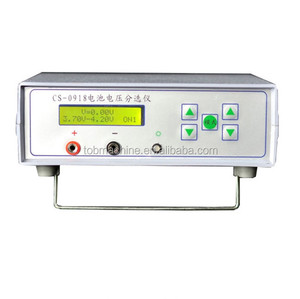
High-accuracy multi-channel capacity analyzer tailored for lithium-ion pouch, cylindrical, and prismatic cell life-cycle cycling tests.
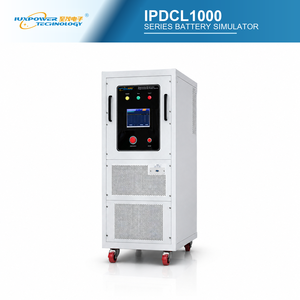
Constant power testing unit equipped with programmable internal resistance emulation and dynamic transient current sourcing capabilities.
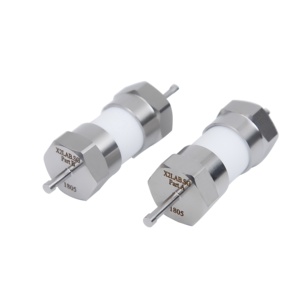
Designed specifically for micro-power devices and electrochemical labs requiring sub-milliamp noise floor resolution and removable cell fixtures.
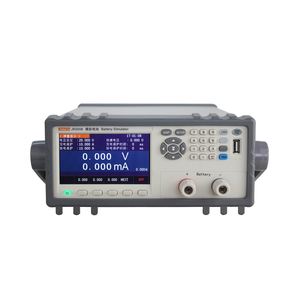
Compact rack-mountable simulator providing bi-directional current sourcing and sinking for rapid BMS firmware functional verification.
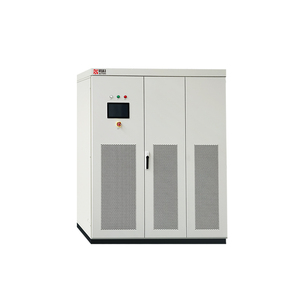
Air-cooled heavy-duty power system built for electric vehicle drive-cycle emulation, traction inverters, and utility energy storage testing.
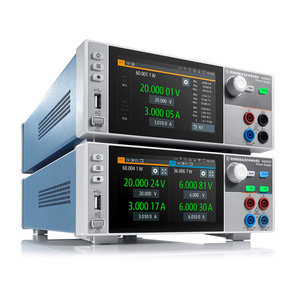
Ultra-low ripple bipolar power supply optimized for IoT component characterization, fast transient response, and precision current logging.
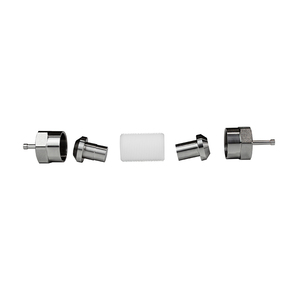
Specialized laboratory instrument simulating exact impedance profiles and discharge curves of button-cell battery chemistry under variable loads.
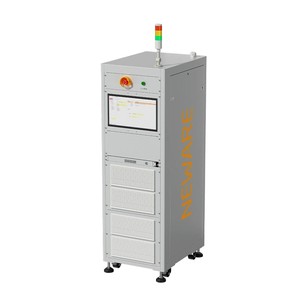
High-density cell simulator designed for automated HIL testing of Battery Management Systems, passive/active balancing, and SOC estimation.
In modern industrial research and mass production test bays, Air-Cooled Programmable DC Power Supplies and Battery Simulators form the backbone of electrical testing infrastructure. As global electrification accelerates across automotive, aerospace, renewable energy, and micro-electronics sectors, test engineers face an increasing demand for power supplies that combine high power density, rapid dynamic response, and operational simplicity.
Historically, high-power DC test systems exceeding 100kW mandated complex liquid-cooling infrastructures, including dedicated chillers, external heat exchangers, deionized water loops, and leak-detection safety systems. However, groundbreaking advancements in current-fed switching power topologies, combined with third-generation Silicon Carbide (SiC) MOSFET semiconductors and optimized thermal airflow modeling, have elevated air-cooled systems to unprecedented performance levels.
China's power electronics manufacturing landscape has evolved from high-volume assembly to pioneering advanced magnetics design, high-frequency switching controllers, and automated burn-in testing protocols. As a leading manufacturer and exporter, our engineering architecture prioritizes structural modularity, low thermal stress on critical internal components, and comprehensive protection mechanisms into reactive and highly dynamic loads.
A detailed engineering baseline comparing air-cooled power supply architectures across key operational metrics.
| Architecture Class | Power Scaling Range | Cooling Mechanism | Dynamic Response | Ideal Application Profile |
|---|---|---|---|---|
| Benchtop & Micro-Cell | 1W – 1.5kW (Modular) | Forced Air (Low-Noise Variable Speed) | < 50 µs | Coin cell testing, IoT device profile analysis, sensor calibration. |
| Rack-Mount High Precision | 1.5kW – 15kW per 1U-3U | Front-to-Rear Air Ducted Channels | < 100 µs | Automated Test Equipment (ATE), BMS HIL validation, laboratory R&D. |
| Industrial Cabinet Systems | 150kW – 3MW Parallel | Redundant Heavy-Duty Fan Arrays | < 1 ms | EV motor drives, traction inverters, solar inverter PV emulation. |
| Linear MOSFET Load Sinks | 1.25kW – 20kW+ | High-Density Copper Heatsinks + Air | Zero Switching Noise | Fuel cell impedance evaluation, battery pulse discharge testing. |
Rooted in four decades of power electronic design, our vertically integrated manufacturing facility in China guarantees rigorous quality control, standardized software stacks, and dependable long-term global support.
Unlike traditional voltage-fed topologies that store massive kinetic energy in output capacitor banks, our current-fed architecture utilizes inductive energy storage on the DC bus. This ensures short-circuit immunity, arc protection, and graceful handling of dynamic battery back-EMF spikes.
We exercise complete control over our manufacturing process. From precision sheet-metal enclosure punching and custom high-frequency magnetics winding to SMT PCB placement and full-load burn-in testing, every phase is completed under ISO 9001 certified protocols.
Our programmable DC power instruments feature a flexible constant-power output stage. A single unit can deliver full rated wattage across a broad spectrum of voltage and current combinations, replacing multiple fixed-range power supplies in production test racks.
Seamlessly integrate equipment into automated test environments (ATE). Standard remote control options include Ethernet/LXI, USB, RS-232, and isolated analog programming, fully compatible with SCPI command standards, NI LabVIEW, MATLAB, and Python drivers.
Insights into how next-generation power electronics, bidirectional energy recovery, and digital twin simulation are shaping global procurement strategies.
Wide-bandgap SiC power switches allow higher switching frequencies (>100kHz), drastically reducing magnetic component footprint while pushing overall power conversion efficiency beyond 96% in air-cooled chassis.
Next-gen test systems seamlessly transition between sourcing power to a DUT and sinking power back into the AC grid with >94% efficiency, reducing laboratory thermal loading and operating electricity expenses.
Ultra-fast microsecond loop speed enables real-time mathematical battery model execution (e.g., Randles circuit parameters), reproducing exact cell chemistry behaviors for high-speed BMS testing.
Essential considerations for technical buyers, system integrators, and procurement officers sourcing air-cooled testing hardware from China.
Air-cooled power supplies offer significant advantages in terms of lower upfront capital expenditure, zero maintenance of fluid pathways, rapid installation, and overall facility flexibility. They are ideal for laboratory environments and test benches up to 150kW-300kW where ambient room HVAC can effectively absorb heat output. Conversely, water-cooled supplies are chosen for extreme power applications (500kW to 10MW) or sealed cleanrooms where ambient air exchange is strictly restricted. Our air-cooled designs optimize thermal airflow channels to deliver whisper-quiet operation at light loads and max cooling during peak dynamic testing.
While a standard DC power supply primarily operates as a voltage or current source, a true Battery Simulator features bi-directional operation (sourcing and sinking current) along with programmable output impedance ($R_i$). It can emulate state-of-charge (SOC) curves, voltage recovery transients, temperature-dependent cell degradation, and fast fault conditions (such as short circuits or cell balance failures). This allows engineers to safely validate Battery Management Systems (BMS) and motor controllers without using real lithium-ion cells, which present thermal runaway hazards during testing.
All exported instruments are manufactured under ISO 9001 quality management systems and strictly comply with international electrical safety and electromagnetic compatibility standards, including CE, ROHS, and FCC Part 15 Class A. Each power supply or battery simulator undergoes factory burn-in testing under full load conditions and ships with a factory calibration certificate traceable to national measurement standards (such as NIST or NIM).
Yes. Our equipment incorporates a digital Master/Slave communication bus architecture. Multiple air-cooled power supply modules can be interconnected in parallel to expand total current and power capacity up to Megawatt levels, or in series to achieve higher output voltage rails. The master unit automatically manages current sharing across slave modules, maintaining unified SCPI programming through a single IP address or communication channel.
Thanks to our vertically integrated factory, standard catalogue configurations typically ship within 4 to 6 weeks from order confirmation. Custom engineering configurations (e.g., specialized high-voltage outputs or extreme transient pulse options) typically require 6 to 8 weeks. We offer comprehensive export packaging—including ISPM-15 compliant shock-isolated wooden crates—and full support for DAP, DDP, FOB, and CIF shipping terms worldwide.
Speak directly with our technical application engineers to define your voltage, current, dynamic response, and rack-mounting requirements. We provide tailored technical proposals and commercial quotations within 24 hours.
Get a Quote