
Precision hardware for EV powertrain qualification, BMS hardware-in-the-loop validation, cell characterization, and high-dynamic traction simulation.
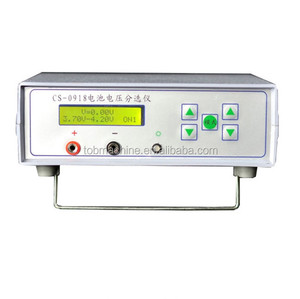
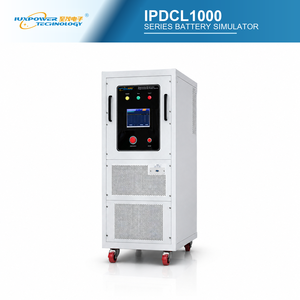
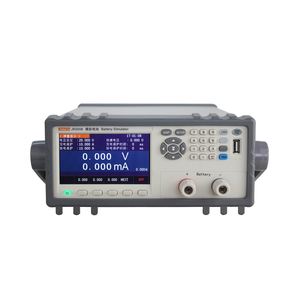
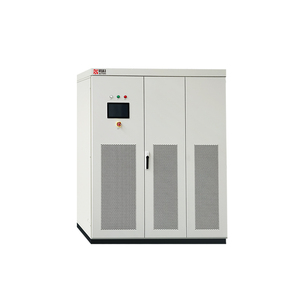
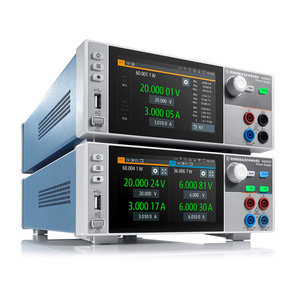
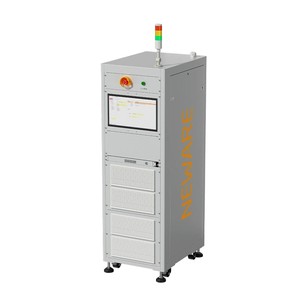
As the global electrification of transportation accelerates across electric vehicles (EVs), urban air mobility (AAM), heavy rail, and defense mobility, testing infrastructure demands are shifting dramatically. High-power traction motor drives, wide-bandgap (SiC/GaN) inverters, and multi-kilowatt battery packs require testing equipment capable of high-dynamic energy handling, precise transient response, and uncompromising physical safety.
Core Technical Insight: Traditional voltage-fed power conversion topologies are increasingly proving inadequate for dynamic electric powertrain testing due to high output capacitance, slow dynamic current slew rates, and susceptibility to catastrophic failure during back-EMF spikes. Current-fed power processing topologies provide superior short-circuit tolerance and wide constant-power operation across high voltage ranges.
In traction drive characterization, the device under test (DUT)—typically an electric vehicle inverter or bidirectional DC-DC converter—presents highly dynamic inductive and capacitive behavior. When testing under sudden full-load acceleration or rapid regenerative braking, power supplies utilizing standard voltage-fed topologies store significant energy in large output filter capacitors. This stored energy can dump uncontrollably into the DUT during a fault, causing destructive micro-welding or inverter MOSFET breakdown.
Conversely, advanced industrial traction simulators implement a current-fed power processing topology. In this architecture, an inductor serves as the primary energy storage element on the DC bus. This fundamental physics dynamic delivers three crucial engineering advantages:
Selecting the appropriate test equipment partner requires evaluating manufacturing integration, dynamic hardware capabilities, software interface openness, and long-term reliability. Below is an authoritative market matrix comparing key performance metrics across leading global traction testing equipment OEMs.
| Manufacturer / Supplier | Topology / Architecture | Power Range | Slew Rate / Dynamics | Primary Application Fit |
|---|---|---|---|---|
| Magna-Power Electronics | Current-Fed High dynamic DC | 1.5 kW – 10 MW+ | Sub-millisecond step | EV Powertrain, Heavy Traction, PHIL |
| Rohde & Schwarz | Linear / Bipolar Low-noise | 100W – 5 kW | Microsecond response | BMS Cell Emulation, Sensor Validation |
| Keysight Technologies | Switched Regenerative | 5 kW – 500 kW | High-speed digital HIL | Automotive Functional Safety Testing |
| Chroma ATE | Bidirectional Switching | 2 kW – 1.2 MW | Standard Dynamic Slew | End-of-Line Pack Cycling & Production |
| NH Research (NI) | High Voltage Regeneration | 10 kW – 2.4 MW | Fast Transient Mode | Battery Module & Pack Test Stations |
| Aikesaibo (ABS) | High Power Dynamic DC | 150 kW – 1 MW | Industrial Heavy Duty | Rail Traction & High-Capacity Battery Sim |
| Horiba Mira | Custom Turnkey Dyno Systems | 50 kW – 800 kW | Integrated Dyno Control | Complete Powertrain NVH & Traction |
| AVL List GmbH | High Performance Regenerative | :// 100 kW – 2 MWUltra-fast HIL Replay | Full-vehicle Virtual Test Bed | |
| EA Elektro-Automatik | Autoranging Bidirectional | 1.5 kW – 2 MW | Standard Autoranging | Laboratory Bench & General R&D Testing |
| Unico LLC | Multi-axis Inverter Drive | 50 kW – 3 MW | Industrial Traction Slew | Mining Vehicles, Heavy Off-Highway Drives |
As automotive OEMs and aerospace defense contractors transition toward 800V and 1200V architecture baselines, procurement teams face evolving equipment requirements. Understanding these future technology shifts is critical when committing capital for multi-year test bench investments.
Silicon Carbide (SiC) switches operate at switching frequencies exceeding 100 kHz. Traction simulators must offer minimal parasitic capacitance and high harmonic immunity to allow double-pulse testing without ringing or measurement distortion.
Energy efficiency is paramount. Modern traction motor testing requires bidirectional power supplies capable of recycling over 96% of absorbed electrical power back into the facility AC grid, dramatically reducing thermal rejection loads.
Simulators must integrate tightly with real-time platforms like dSPACE, OPAL-RT, and NI VeriStand via low-latency EtherCAT or CAN FD interfaces to execute automated driving cycles (WLTP, EPA FTP-75) in hardware.
When evaluating top traction tester manufacturers, structural vertical integration remains the single greatest predictor of on-time delivery, instrument longevity, and custom modification flexibility. Companies operating vertically integrated facilities execute machining, magnetic transformer winding, printed circuit board assembly (PCBA), sheet metal enclosure creation, and full-load burn-in under one roof.
This localized control ensures that critical components—such as high-power inductors and water-cooled heatsinks—are custom-engineered specifically for the severe pulse loads encountered in traction drive research. Furthermore, vertical integration reduces typical build lead times from industry averages of 16-24 weeks down to predictable 4-6 week windows, ensuring test cell commissioning deadlines are maintained.
Key considerations for engineering directors, procurement managers, and test cell architects during equipment evaluation.
Need exact model sizing, custom voltage-current profile replaying, or high-dynamic traction hardware integration? Contact our technical team today for complete system specifications and direct factory quotes.
Get a Quote