
Explore high-accuracy battery simulation instruments, multi-channel cell validation units, and low-impedance test lead hardware engineered for lab research and factory burn-in environments.
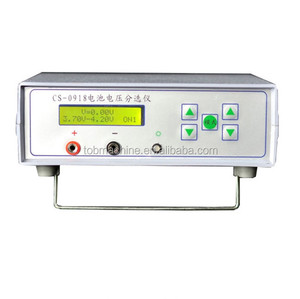
Precision electrochemical test station engineered for high-throughput Li-ion cell formation, capacity sorting, and dynamic voltage/current profile analysis.
Contact Us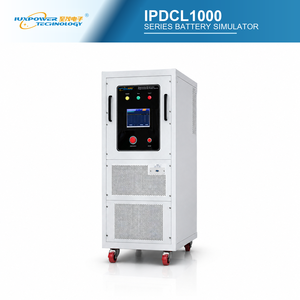
Fast transient response programmable DC power source featuring constant power emulation for advanced EV powertrain component testing.
Contact Us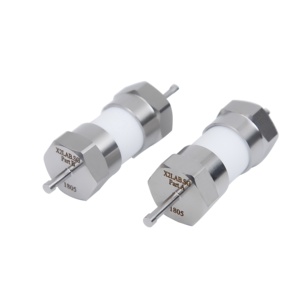
Modular laboratory coin cell fixture with micro-ohm contact resistance design for wearable electronics and ultra-low-power MCU evaluation.
Contact Us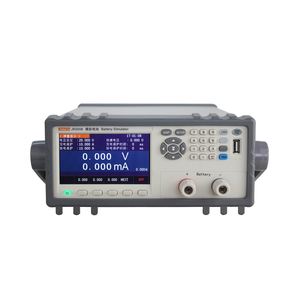
Compact benchtop multi-channel DC source offering bipolar voltage output and real-time current monitoring for BMS testing.
Contact Us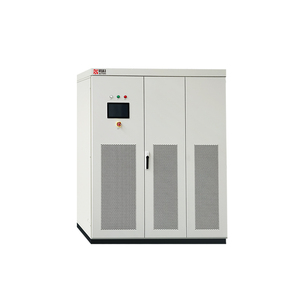
Industrial-scale power supply platform engineered for heavy vehicle electrification, grid storage simulation, and dynamic load cycling.
Contact Us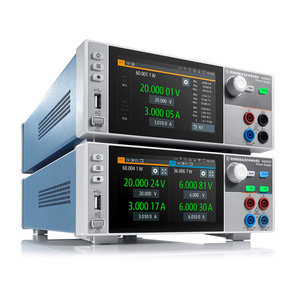
High-speed bipolar power supply designed for transient response measurement, sensor simulation, and ultra-low noise DC ripple applications.
Contact Us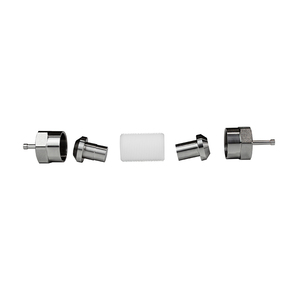
Gold-plated contact test lead fixture built for repeatable impedance measurement and long-term cycling in electrochemical laboratories.
Contact Us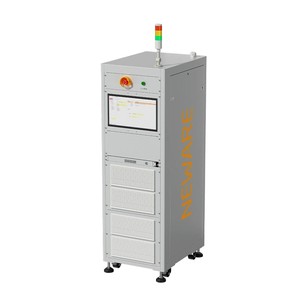
Integrated multi-node voltage generator for Hardware-in-the-Loop (HIL) BMS validation, active balancing estimation, and fault insertion.
Contact UsIn high-density battery cell manufacturing, electric vehicle (EV) powertrain prototyping, and aerospace power electronics testing, the physical link—the test lead setup—and the emulation power source determine signal fidelity, safety, and yield.
When evaluating high-capacity lithium-ion cells or dynamic automotive BMS networks, standard copper-clip leads introduce parasitic inductance and thermal electromotive force (EMF) drift. Professional OEM manufacturers specify multi-laminate gold/silver-plated contacts, high-flex silicone jackets rated up to 200°C, and dedicated 4-wire Kelvin configurations to eliminate lead resistance interference during micro-volt delta readings.
A comprehensive technical evaluation matrix designed for procurement leads, QA engineers, and automated test system (ATE) integrators.
Leading factories utilize double-extruded silicone or fluoropolymer (PTFE) jacketed cables compliant with IEC 61010-031 standards. Cable assemblies must withstand breakdown tests exceeding 5,000V AC without dielectric degradation under flexural stress.
Premium suppliers enforce strict plating thickness (minimum 3u" gold over phosphor bronze or beryllium copper). This mitigates surface oxidation, prevents contact pitting during high-current pulsing, and guarantees over 10,000 insertion cycles.
For high-speed battery simulation and fast-transient DC load testing, lead inductance must be minimized (<50 nH/m). Shielded twisted pairs and coaxial topologies prevent cross-talk during rapid step-load responses.
| Evaluation Metric | Standard Commercial Grade | Industrial OEM Standard (Tier 1) | Impact on Test Accuracy |
|---|---|---|---|
| Conductor Wire Spec | Standard PVC Copper Strand | High-Strand Tinned OFC / Pure Silver Core | Prevents voltage drop under high ampacity |
| Contact Resistance | 5.0 mΩ – 15.0 mΩ | < 0.3 mΩ – 0.5 mΩ | Crucial for accurate internal resistance (IR) measurement |
| Temperature Range | -10°C to +70°C | -65°C to +200°C Silicone / PTFE | Prevents jacket cracking in environmental thermal chambers |
| Safety Rating | CAT II 300V | CAT III 1000V / CAT IV 600V (IEC 61010-31) | Essential for operator safety in high-energy battery packs |
Key market transitions shaping the procurement strategies of global Tier-1 automotive manufacturers, battery pack assembly plants, and research laboratories over the next decade.
As electric vehicles migrate from 400V to 800V and 1500V DC architectures, legacy test lead harnesses are obsolete. Future procurement mandates test interfaces rated for higher creepage and clearance distances, equipped with active thermal monitoring sensors inside banana plugs and terminal lugs.
Modern battery management systems demand multi-channel, isolated cell simulators (such as 24-channel or 96-channel modular banks) capable of dynamic cell balancing testing. Procurement is shifting towards modular sub-racks with standardized high-density ribbon leads.
Industry 4.0 automated factories require test lead assemblies embedded with memory chips or RFID tags. These store insertion count, resistance offset calibration data, and safety check timestamps directly on the lead head.
From raw copper drawing and custom connector tooling to complete PCB design and high-voltage burn-in testing—vertical manufacturing guarantees absolute product consistency.
Precision CNC machining and injection molding ensure custom clip shapes, specialized probe tips, and custom overmolded cable strain reliefs tailored to unique OEM client needs.
Every batch of precision test leads and battery simulators undergoes NIST-traceable calibration, guaranteeing sub-millivolt accuracy out of the shipping crate.
All dynamic electronic loads and megawatt battery simulation cabinets endure 72 hours of uninterrupted continuous power burn-in at elevated ambient temperatures.
Certified under CE, UL, RoHS, REACH, and IEC 61010, enabling smooth regulatory approval and zero friction during international customs clearance.
Answers to common technical, commercial, and engineering questions posed by procurement officers and test bench engineers.
Need custom test lead harnesses, high-voltage banana plugs, multi-channel BMS simulators, or high-power megawatt DC testing systems? Contact our technical team for custom specs, CAD models, and direct wholesale quotation.