
In modern high-precision manufacturing, energy generation, civil infrastructure, and aerospace development, test equipment is no longer merely an analytical checkpoint; it is the fundamental guarantor of operational integrity and structural safety. Navigating the world’s top 10 test equipment factories and suppliers requires an in-depth understanding of total quality control pipelines, architectural topology, metrological calibration compliance, and long-term sensor stability.
Engineers and global procurement managers face an increasingly complex sourcing environment. From electro-mechanical universal tensile testing to non-destructive testing (NDT) Leeb hardness measurements, foundation pile integrity diagnostics, high-voltage semiconductor evaluation, and common rail injection characterization—selecting an OEM/ODM partner demands technical transparency. Leading factories distinguish themselves through direct vertical integration, in-house component machining, custom firmware control suites, and verified adherence to international standards such as ISO 9001, ISO/IEC 17025, CE, and FCC.
Key Procurement Insight: Advanced instrumentation suppliers are pivoting from single-function hardware units to integrated hardware-in-the-loop (HIL) environments, automated cloud telemetry, and low-drift current-fed topologies that ensure high signal-to-noise ratios in rugged industrial settings.
Rigorously validated laboratory testing units, industrial diagnostic systems, and precision measurement equipment sourced directly from leading manufacturing facilities.
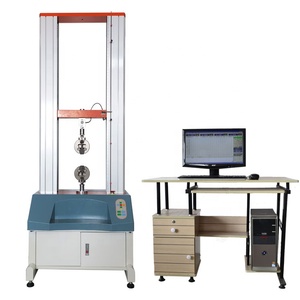
High-precision tensile, compression, flexural, and shear load frame designed for advanced polymer, metallic alloy, and composite material characterization. Features closed-loop DSP control.
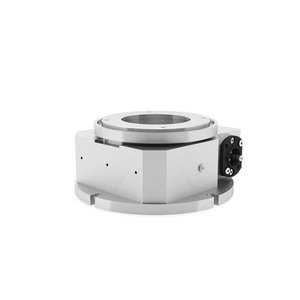
Heavy-duty rotational torque and dynamic bearing durability dynamic test rig. Engineered for continuous industrial drive train evaluation, transmission validation, and wear analysis.
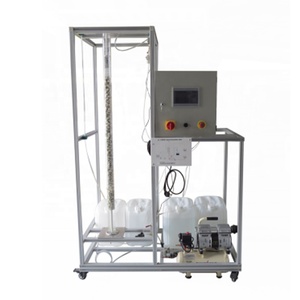
Precision transient plane heat source thermal conductivity analyzer. Ideal for educational research, laboratory material science, insulation verification, and thermodynamic testing.
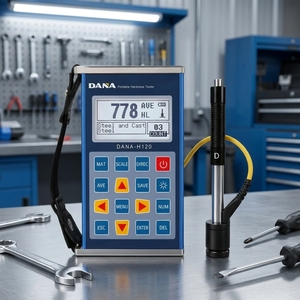
Non-destructive portable metal hardness testing unit with USB 2.0 telemetry interface. ISO/CE/FCC certified for field metallurgical inspection and high-volume production quality control.
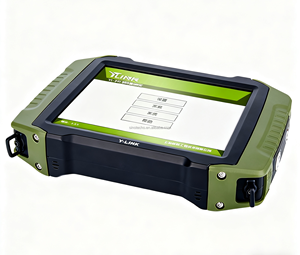
Advanced acoustic wave foundation inspection analyzer for civil engineering works. Accurate sonic echo measurement for detecting pile shafts structural defects, cracks, and voids.
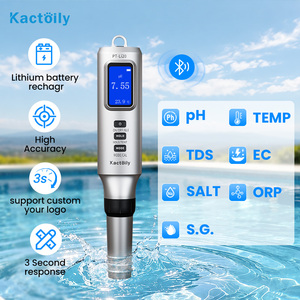
Comprehensive online liquid analyzer recording pH, TDS, ORP, Salinity, Specific Gravity, EC, and Temperature. Integrated mobile app analytics for industrial wastewater compliance.
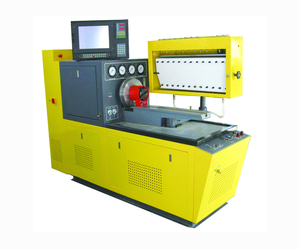
Industrial-grade automotive and heavy-duty diesel injector test station. Delivers precise pressure simulation, electromagnetic compatibility testing, and fuel delivery calibration.
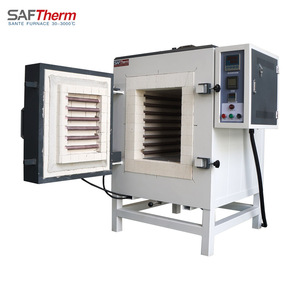
High-temperature ceramic fiber laboratory furnace featuring PID multi-segment digital programming. Essential for material sintering, thermal stress treating, and gravimetric testing.
When evaluating the top 10 test equipment suppliers globally, technical procurement teams must look beyond superficial spec sheets. The true marker of engineering reliability lies within vertical manufacturing control and hardware robustness. High-end OEMs differentiate themselves through precise topology selection, such as current-fed power conversion, linear MOSFET architecture, and completely integrated internal production capabilities.
In-house CNC sheet metal fabrication, transformer magnetics winding, Surface Mount Technology (SMT) PCB assembly, and final full-power thermal burn-in ensure strict quality assurance across every unit batch.
Utilizing inductive DC bus energy storage allows supplies to withstand short-circuits, severe electrical load transients, and high-frequency arcing without catastrophic failure or degradation.
Direct compliance with ISO 9001 quality systems, CE electromagnetic standards, FCC class A emissions directives, and ISO/IEC 17025 laboratory calibration traceability protocols.
The table below summarizes the key operational envelopes and metrological capabilities across the main product categories offered by premier suppliers:
| Equipment Category | Primary Measurement Parameters | Standard Metrology / Target | Typical Industrial Application |
|---|---|---|---|
| Universal Tensile Testers | Yield strength, elongation, modulus of elasticity, shear | Class 0.5 / ISO 7500-1 accuracy compliance | Metallurgy, aerospace alloys, polymer testing |
| Portable Leeb Hardness (NDT) | HLD, HRC, HRB, HB, HV hardness scales | ±6 HLD precision via carbide impact body | On-site forging inspection, heavy machinery pipelines |
| Pile Integrity Testers (PIT) | Acoustic wave velocity, reflection time, integrity profile | 24-bit high-speed ADC sampling up to 100 kHz | Civil engineering deep foundation validation |
| Thermal Conductivity Meters | W/(m·K), thermal diffusivity, heat capacity | 0.001 to 300 W/(m·K) range (±3% accuracy) | Aerospace thermal tiles, advanced insulation, research |
| Multi-Parameter Water Testers | pH, TDS, EC, ORP, Salinity, Specific Gravity, Temp | Multi-sensor galvanic/optical digital probe array | Industrial effluent discharge compliance & water plants |
As industrial supply chains adjust to automation, decarbonization, and rapid product iteration, buying patterns for electronic and mechanical test equipment are undergoing a structural shift. Buying teams must adapt to four pivotal procurement trends over the next decade:
The test and measurement industry is undergoing a digital transformation driven by edge computing, high-frequency switching, and advanced predictive sensor models. Understanding these developmental paradigms enables enterprise buyers to future-proof their capital investments:
Legacy test instruments required rigid periodic laboratory calibration cycles to correct for component drift. Next-generation systems integrate embedded edge microprocessors running self-diagnostic algorithms. By constantly analyzing internal thermal gradients, component operation hours, and baseline electronic noise, these intelligent instruments alert operators to calibration shifts before measurement errors compromise product batches.
Hardware testing is increasingly intertwined with advanced mathematical modeling. Power supply manufacturers now integrate Photovoltaic Power Profile Emulation (PPPE) and battery internal resistance (IR) emulation software directly into power hardware units. This allows a single DC source to simulate fluctuating solar irradiance, cloud passes, temperature sweeps, and dynamic battery state-of-charge (SoC) curves in real time.
Component developers are shortening time-to-market by pairing physical test benches with digital twin simulations. Test equipment suppliers are designing modular load frames, injection benches, and power supplies with microsecond command latency to seamlessly interact with real-time HIL simulators, ensuring comprehensive stress testing under extreme simulated environments.
Addressing key technical, logistical, and calibration considerations during the vendor evaluation process:
Current-fed topologies utilize an inductor as the primary energy storage element on the DC bus, whereas voltage-fed systems rely on large electrolytic capacitor banks. The current-fed approach inherently limits fault current during short-circuit conditions or load arcing, resulting in exceptional structural durability, longer component lifespans, and high tolerance to dynamic loads.
Procurement teams should verify ISO 9001 factory registration, CE mark compliance for safety and EMC (EN 61000-6-2 / EN 61000-6-4), FCC Class A credentials, and calibration certificates compliant with ISO/IEC 17025 standards traceable to NIST or equivalent national metrology institutes.
Yes. Top-tier vertically integrated manufacturers handle sheet metal design, custom transformer fabrication, and control software modifications in-house. This allows for custom voltage/current envelopes, modified mechanical rack form factors, high-slew-rate modifications, and specialized field environment enclosures.
While standard off-the-shelf portable NDT devices often ship immediately, custom or made-to-order high-capacity load frames, muffle furnaces, and high-power DC systems typically carry a 4 to 6-week build time when manufactured within vertically integrated facilities.
Leading global suppliers maintain regional service centers across North America, Europe, Asia-Pacific, and Latin America. Standard factory warranties cover 1 to 3 years with options for extended service level agreements (SLAs), spare parts availability guarantees up to 10+ years, and remote SCPI telemetry diagnostics.
Whether upgrading automotive common rail test lines, specifying civil foundation pile inspectors, or outfitting aerospace materials testing laboratories, working directly with established test equipment manufacturers ensures verified compliance and long-term operating accuracy.