
Explore our top-tier programmable DC power supplies, multi-channel battery cell simulators, and high-dynamic solar array emulators engineered for precision R&D and automated factory validation.
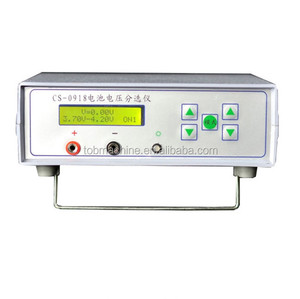
Industrial-grade precision analyzer engineered for high-throughput cycle testing, internal resistance profiling, and multi-parameter capacity evaluation of advanced lithium chemistry storage cells.
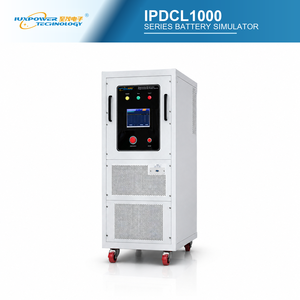
High-precision programmable DC power supply features constant power modes, ultra-low current ripple, and fast transient response designed for dynamic load emulation.
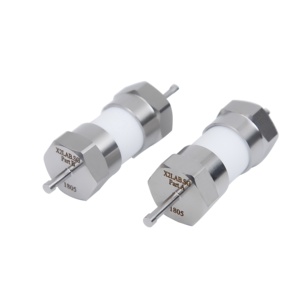
Modular laboratory fixture engineered for electrochemical impedance spectroscopy (EIS), micro-ampere leakage testing, and coin cell validation under controlled laboratory setups.
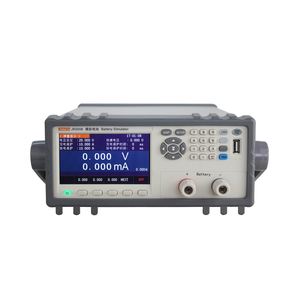
Compact benchtop multi-channel simulator providing millivolt-level output accuracy and micro-ampere sensing, optimized for portable electronic BMS verification.
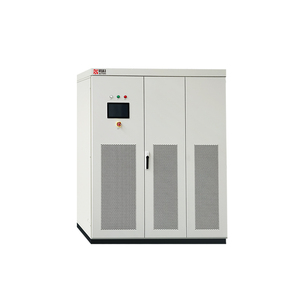
Megawatt-scale programmable DC power platform built with current-fed power topology, supporting dynamic IV curve generation and bidirectional grid-tied energy regeneration.
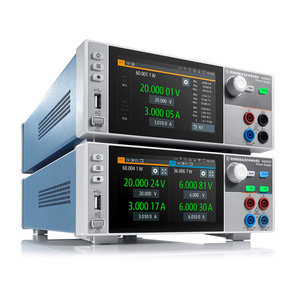
Dual-quadrant power supply delivering high-speed execution, seamless source-sink switching, and linear voltage regulation for high-end aerospace and telecom ATE setups.
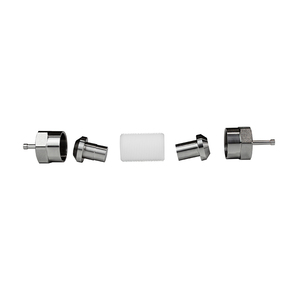
Precision electrochemical research instrument simulating CR2032/2016 discharge profiles, temperature coefficients, and high-frequency internal impedance dynamics.
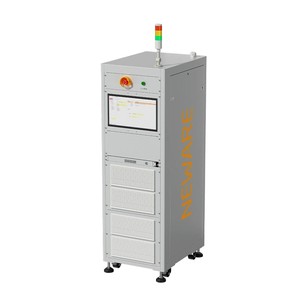
High-density cell emulation rack designed for Hardware-in-the-Loop (HIL) testing, active cell balancing strategy verification, and real-time SOC estimation algorithm tuning.
As solar energy conversions scale to higher voltage buses (1500V DC) and next-generation N-Type TOPCon and Perovskite-Silicon tandem modules enter mass production, evaluating solar simulator manufacturers requires a clear focus on spectral match, dynamic performance, and physical build standards.
Per IEC 60904-9, ASTM E927-19, and JIS C 8912 international standards, solar simulators are rated across three core criteria: Spectral Match to AM1.5G, Spatial Uniformity of Irradiance, and Temporal Instability. Top-tier manufacturers achieve Class AAA (or Class A+A+A+) certification by maintaining tight spectral output within 0.75 to 1.25 of ideal solar spectra and keeping spatial non-uniformity below 2% across the entire test plane.
Unlike conventional voltage-fed topologies relying on large filter capacitors, current-fed architectures store energy inductively. This delivers natural short-circuit immunity, rapid arc suppression, and superior dynamic response during photovoltaic I-V curve sweeps.
Leading exporters maintain vertically integrated facilities—housing sheet metal CNC fabrication, custom magnetic component winding, automated SMT PCB assembly, and full-power burn-in testing under one roof for strict quality control.
Dedicated Photovoltaic Power Profile Emulation (PPPE) software allows engineers to program real-world cloud cover transitions, daily temperature coefficient curves, and dynamic Maximum Power Point Tracking (MPPT) validation routines.
A breakdown of leading global factories, OEM exporters, and system architectures across key performance indicators (KPIs).
| Manufacturer / Category | Core Technology | Power Range | Cooling Method | Key Sourcing Advantage |
|---|---|---|---|---|
| Magna-Power Electronics | Current-Fed DC Topology | 1.5 kW to 10 MW | Air & Water Cooled | Vertical USA integration, 4-6 week lead times, ultra-rugged current-fed safety |
| High-Dynamic Battery Simulators | Bidirectional Regenerative | 150 kW to 1 MW+ | Liquid / Water Cooled | Seamless source/sink switching, low total harmonic distortion (THD <3%) |
| Precision Benchtop Units | Linear MOSFET Architecture | 100 W to 10 kW | Forced Air | Sub-millivolt ripple noise (<1mV RMS), essential for delicate sensor testing |
| Multi-Channel BMS Testers | Isolated Matrix Output | 24 to 96 Channels | Air Cooled | Independent channel voltage regulation with micro-ampere balancing measurement |
| Pulsed Flash Solar Simulators | Xenon Lamp & Filter Array | Up to 10 MW Impulse | Air Cooled | High peak intensity for utility-scale PV panel flash testing on mass assembly lines |
| Steady-State LED Simulators | Tunable Multi-Wavelength LED | Continuous R&D scale | Convection / Water | Extremely long emitter lifetime (>20,000 hrs), programmable spectral match |
Procurement teams and test engineers are shifting how they specify and acquire solar array simulators and battery cell test equipment. Here are four dominant market trends shaping global supply chains.
Utility-scale solar farms have largely migrated from 1000V DC to 1500V DC systems to lower balance-of-system (BOS) wiring costs and increase overall plant efficiency. As a result, procurement managers must source solar simulators rated for continuous operation at up to 2000V DC open-circuit output with robust insulation ratings and advanced over-voltage safety interlocks.
Traditional Xenon flash tubes are increasingly replaced by tunable LED arrays. LED-based simulators offer instant turn-on without warmup delays, continuous steady-state illumination, lower operational thermal stress, and the ability to dynamically adjust light spectra to evaluate complex tandem heterojunction (HJT) and perovskite photovoltaic architectures.
Solar simulators are no longer evaluated solely as standalone power units. Modern factory tenders demand seamless integration into Hardware-in-the-Loop (HIL) testbenches via high-speed digital protocols (Ethernet/LXI, Modbus TCP, CANbus, and Python-native SCPI command sets), allowing engineers to simulate complex microgrids combining solar, wind, and battery storage.
Energy efficiency has become a primary sourcing metric. High-power solar inverter testing facilities now prioritize bidirectional DC programmable supplies and electronic loads that recycle up to 96% of absorbed energy back onto the facility AC grid, drastically reducing thermal loads, HVAC cooling infrastructure requirements, and monthly utility overheads.
Manufacturers are continually advancing power conversion efficiency, dynamic firmware routines, and safety mechanisms to keep pace with evolving energy technologies.
The integration of SiC MOSFETs and diodes enables internal switching frequencies exceeding 100 kHz. This yields unprecedented power density (up to 10 kW in a 1U chassis), lower operational harmonic distortion, and reduced thermal dissipation.
Modern solar inverters employ dynamic MPPT algorithms capable of tracking irradiance changes occurring within fractions of a second. Next-gen solar array simulators provide microsecond voltage/current slew rates to accurately assess inverter efficiency under severe cloud-edge conditions.
Advanced battery simulators now feature internal resistance ($R_i$) modeling that dynamic alters voltage curves based on temperature, state-of-charge (SOC), degradation history, and specific chemical profiles (LFP, NMC, Solid-State, Sodium-Ion).
Direct answers to critical questions faced by engineering leads and international purchasing managers during technical equipment evaluation.
Speak directly with our senior power electronics application engineers to review your voltage ranges, current profiles, transient response requirements, and delivery schedules.