Directly engineered for battery management system (BMS) validation, automated test equipment (ATE) integration, and electrochemical lab research.
The global industrial power supply and programmable DC source market is undergoing a fundamental structural transition. Driven by the mass adoption of Electric Vehicles (EVs), renewable energy integration (PV & Energy Storage Systems), semiconductor advancements (Wide-Bandgap SiC and GaN devices), and aerospace electrification, technical procurement requirements have evolved far beyond standard fixed-voltage AC/DC switchers. Modern B2B buyers must evaluate vendors based on topology robustness (Current-Fed vs. Voltage-Fed), thermal dissipation density, dynamic response speeds, programming bandwidth, and vertical integration resilience.
Evaluated on technological innovation, manufacturing vertical integration, dynamic response, and field reliability under extreme duty cycles.
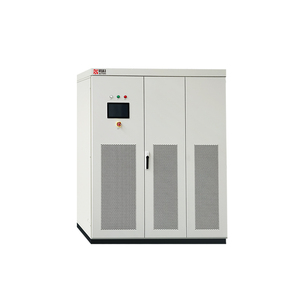
Core Specialization: High-power programmable DC power supplies (1.5 kW to 10 MW+) and linear MOSFET DC electronic loads.
Engineering Advantage: Magna-Power distinguishes itself through a proprietary Current-Fed power processing topology. Unlike conventional voltage-fed topologies that rely heavily on large, failure-prone electrolytic capacitor banks across the output bus, Magna-Power integrates an inductor as the primary energy storage element. This delivers inherent short-circuit tolerance, exceptional robustness into reactive loads (such as particle accelerator steering magnets and plasma arcs), and dynamic auto-ranging output performance.
Manufacturing Rigor: Vertically integrated 127,000 sq. ft. facility in Flemington, New Jersey, performing internal CNC sheet metal fabrication, custom toroidal magnetics winding, Surface Mount Technology (SMT) assembly, and 100% full-power burn-in testing.
Core Specialization: Precision benchtop power supplies, modular ATE power units, and high-speed dynamic DC source/measure units (SMUs).
Engineering Advantage: Keysight dominates precision laboratory applications requiring sub-microampere measurement capabilities, seamless current range switching, and ultra-low noise output floor (less than 1mV peak-to-peak ripple). Their specialized battery emulation software algorithms allow real-time modeling of electrochemical drain curves for aerospace telemetry and mobile device engineering.
Target Buyers: R&D semiconductor validation laboratories, aerospace flight electronics testing, and precision metrology hubs.
Core Specialization: Automated Test Systems, regenerative grid simulators, programmable AC/DC power sources, and EV battery pack cycling systems.
Engineering Advantage: Chroma is a world leader in high-volume production line automated testing equipment (ATE). Their regenerative DC power supplies recover over 92% of dissipated load energy and feed it back to the utility grid, drastically reducing operating energy costs in automotive EV pack manufacturing plants.
Key Product Strength: High-voltage bidirectional power sources capable of simulating complex EV drive cycles (WLTP, FTP-75) with millisecond transient speeds.
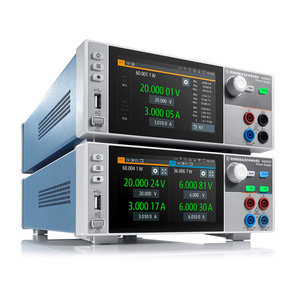
Core Specialization: High-precision bipolar power supplies and low-noise lab battery simulators (e.g., NGM200 and NGL200 series).
Engineering Advantage: German-engineered fast recovery power circuitry capable of handling extremely rapid load changes from microamps to full load amps without output voltage dropouts. Ideal for wireless IoT module power profiling and micro-battery characterization.
Integration Depth: Features touch-screen user interfaces with integrated digital voltmeters, high-speed data logging, and arbitrary waveform creation built directly into the front-panel hardware.
Core Specialization: High-density rack-mount programmable DC supplies (Genesys+ Series), industrial DIN-rail AC/DC power supplies, and medical-grade power modules.
Engineering Advantage: Exceptional power density in compact 1U and 2U form factors. TDK-Lambda excels in wide-range input AC power factor correction (PFC) stages, delivering high efficiency across global 3-phase grid voltages (208VAC to 480VAC).
Supply Chain Advantage: Global manufacturing facilities providing localized procurement support and broad distribution networks.
Core Specialization: High-power regenerative DC power supplies, electronic loads, and bidirectional DC power systems up to 2000V.
Engineering Advantage: Early pioneer in Silicon Carbide (SiC) power switching integration, allowing higher switching frequencies, reduced inductor size, and thermal efficiency exceeding 96%. Their flexible auto-ranging output voltage/current profile allows full power delivery over a vast operating window compared to rigid square-matrix supplies.
Core Specialization: Ultra-high-voltage DC supplies, plasma power delivery, thin-film deposition sources, and semiconductor processing rectifiers.
Engineering Advantage: Engineered for extreme environment plasma arc suppression and high-voltage precision (up to 300kV DC). Highly utilized in microchip fabrication cleanrooms, vacuum coating plants, and specialized medical X-ray generators.
Core Specialization: High-volume telecom rectifiers, server farm power systems, industrial open-frame switchers, and EV charger power modules.
Engineering Advantage: Unmatched mass-manufacturing scale and cost optimization. Delta delivers exceptional power densities and high compliance reliability for hyper-scale data centers and telecommunication infrastructure installations worldwide.
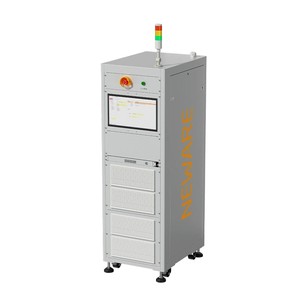
Core Specialization: High-precision multi-channel battery cell simulators (e.g., ABS Series 150-1000kW), BMS test benches, and coin-cell test equipment.
Engineering Advantage: Highly competitive cost-to-performance ratio with rapid customized engineering turnarounds. Specialized in producing modular multi-channel isolated battery cell simulators with active cell balance testing and fast CAN-bus protocol synchronization.
Core Specialization: Heavy industrial process power, electrolysis megawatt DC rectifiers, and automation system DIN-rail power supplies.
Engineering Advantage: Built for maximum plant uptime and seamless integration into PROFINET / Siemens TIA Portal automation architectures. Excellent immunity against electrical transients, industrial noise, and severe temperature fluctuations in heavy manufacturing environments.
A side-by-side technical reference for electrical engineers and procurement specialists.
| Manufacturer | Primary Power Topology | Voltage / Power Range | Best Suited Application | Key Differentiator |
|---|---|---|---|---|
| Magna-Power | Current-Fed Switching | 1.5 kW – 10 MW+ / up to 10,000V | Heavy industrial testing, magnet power, high-power DC ATE | Extreme durability, low internal capacitance, 4-6 wk lead time |
| Keysight | Linear & Hybrid Switching | mW – 10 kW / Sub-microamp resolution | R&D semiconductor characterization, aerospace instrumentation | Ultra-low noise, sub-microamp current measurement floor |
| Chroma ATE | Bidirectional Regenerative | 1 kW – 1 MW+ / High Voltage AC/DC | EV battery pack manufacturing lines, grid compliance testing | High energy recovery efficiency (>92%), turn-key test systems |
| Rohde & Schwarz | Bipolar Fast-Linear Sink/Source | Benchtop / Up to 100W per channel | IoT wireless device current profiling, coin-cell battery testing | Sub-millisecond transient response, 6.5-digit resolution |
| TDK-Lambda | High-Density Switch Mode | 100W – 100 kW / 1U-4U Rackmount | Production ATE, industrial machinery, telecommunications | Global distribution, world-class power density per rack U |
| EA Elektro-Automatik | SiC-Based Auto-ranging DC | 1.5 kW – 2 MW / Up to 2000V DC | Hydrogen fuel cell testing, high-voltage EV battery emulation | Auto-ranging output matrix, native SiC efficiency (>96%) |
| Aikesaibo / Custom OEMs | Modular Multi-Channel Cell Sim. | 1W – 1000 kW (Modular multi-channel) | BMS validation hardware, battery cell balance testing | High channel density isolation, aggressive turn-key cost |
Silicon Carbide (SiC) and Gallium Nitride (GaN) power switches are replacing traditional Silicon IGBTs and MOSFETs in high-power DC supplies. This transition yields switching speeds up to 5x faster, reduces heat rejection losses by 30-40%, and allows passive magnetic components (transformers and chokes) to shrink significantly, giving procurement teams higher power output in smaller rack footprints.
With the rapid growth of EV battery manufacturing and energy storage testing, conventional resistive heat-dissipating loads are no longer economically viable. B2B buyers now mandate Regenerative DC Sources/Loads that convert absorbed DC load power back into clean 3-phase AC utility grid power with efficiencies surpassing 95%, dramatically lowering factory HVAC cooling requirements and energy bills.
Modern power supplies are no longer standalone analog hardware; they are software-driven simulation nodes. Advanced power supplies integrate real-time mathematical models capable of emulating battery SOC/SOH decay, solar array I-V curve shifts (MPPT tracking under cloud movement), and internal resistance dynamics directly via embedded DSP controllers and SCPI digital interfaces.
Global procurement disruptions have highlighted the strategic vulnerability of long, fragmented supply chains. Leading buyers are shifting priority toward vertically integrated power manufacturers—vendors who maintain domestic sheet metal, internal PCB assembly, and magnetics winding capabilities. This structural independence guarantees predictable 4-to-6-week build times compared to 26+ week industry delays experienced by non-integrated assemblers.
When sourcing industrial power supplies or specialized battery simulators, standard catalog specs only tell half the story. The long-term reliability and total cost of ownership (TCO) are determined by factory manufacturing discipline and topology design choices.
Magnetic components (transformers, inductors, and filters) are the physical heart of high-power converters. Outwardly sourcing off-the-shelf magnetics leads to thermal bottlenecks and performance compromises. Vertically integrated facilities custom-wind toroidal transformers engineered specifically to match internal switching frequencies, ensuring thermal stability and ultra-low leakage inductance.
Standard switchers use voltage-fed topologies with large electrolytic output capacitor banks. When subjected to rapid load shorts or highly inductive loads, these capacitors experience massive current surges, leading to dielectric degradation and premature failure. Current-fed power processing uses series inductors to decouple the DC bus, naturally dampening transients and guaranteeing survival under continuous short-circuit conditions.
Prior to dispatch, industrial-grade power units undergo 100% full-power burn-in inside thermal chambers under continuous stress. Complete calibration profiles are recorded with NIST-traceable instrumentation, ensuring that units installed in remote research facilities, wind tunnels, or aerospace bays perform to exact specifications straight out of the crate.
Speak directly with our power electronics applications engineers. Send us your target voltage, current, dynamic transient response, and control interface requirements for an accurate recommendation.