
Precision-engineered test instruments designed for hardware-in-the-loop (HIL) validation, electrochemical characterization, and high-power industrial battery emulation.
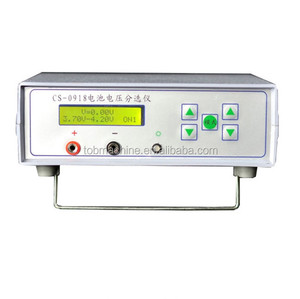
Industrial grade capacity analyzer providing micro-ohm internal resistance resolution, automated charge-discharge cycling, and end-of-line quality validation.
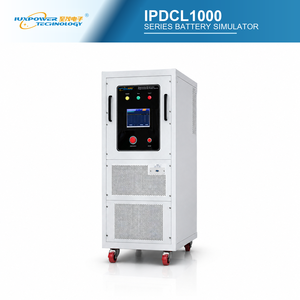
High-precision programmable DC simulator featuring constant power function, sub-millisecond dynamic transient response, and seamless bidirectional power flow control.
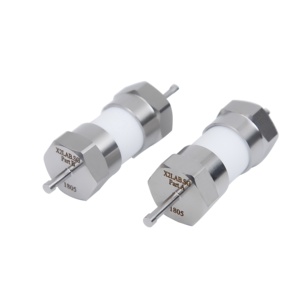
Modular laboratory coin cell simulator tailored for electrochemical research, wearable device power testing, and micro-ampere dynamic drain measurement.
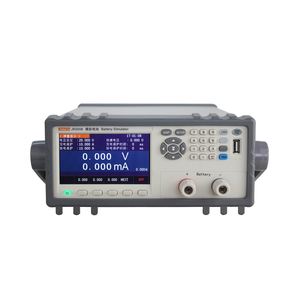
Compact multi-channel battery cell emulator optimized for BMS firmware verification, passive cell balancing assessment, and fault injection simulation.
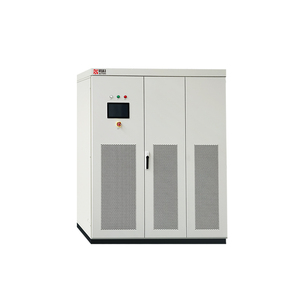
Megawatt-scale industrial dynamic battery pack emulator designed for EV powertrain, energy storage system (ESS), and heavy industrial hardware testing.
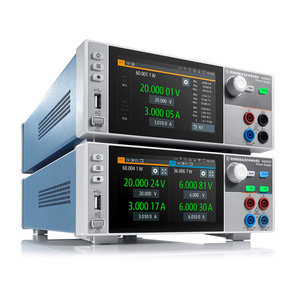
Bipolar industrial DC power supply and battery simulator featuring fast linear regulation, low output noise, and dual-quadrant operation across 100-240V AC inputs.
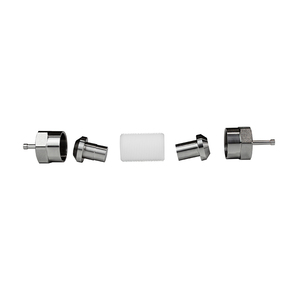
Precision electrochemical laboratory simulator designed to mimic CR2032/2016 discharge curves, dynamic internal resistance, and recovery parameters.
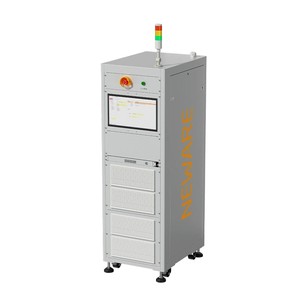
High-density cell emulator engineered for state-of-charge (SOC) estimation, active/passive balancing validation, and automated fault simulation in complex battery packs.
In the rapidly evolving landscape of electrification—spanning Electric Vehicles (EVs), Grid-Scale Energy Storage Systems (ESS), Aerospace Hypersonics, and Wide-Bandgap (SiC/GaN) Power Electronics—the requirement for precise, dynamic, and ultra-reliable high-power DC test systems has transitioned from an operational necessity to a core strategic differentiator. Modern battery test stands can no longer rely on conventional switch-mode supplies or static resistive loads. Instead, global tier-1 manufacturing facilities and top 10 high-power factories are standardizing on current-fed, software-defined battery simulators capable of real-time cell modeling, sub-millisecond dynamic transient response, and bidirectional energy feedback into the facility grid.
This comprehensive industry whitepaper examines the core manufacturing principles, power conversion architectures, strategic procurement trends, and technological innovations shaping high-power DC test equipment. By combining vertically integrated factory control with current-fed power processing, test engineers and global procurement directors can achieve unprecedented operational stability, drastically reduce total cost of ownership (TCO), and mitigate critical supply chain bottlenecks.
The fundamental limitation of traditional voltage-fed DC power supplies lies in their energy storage mechanism. Voltage-fed architectures utilize large parallel capacitor banks on the DC bus. When subjected to dynamic, highly reactive loads, rapid short-circuit conditions, or arcing in high-power test setups (such as plasma coating or battery thermal runaway testing), these capacitors discharge violently, causing high peak surge currents, contact welding, and severe instrument degradation.
In contrast, advanced manufacturing facilities utilize a Current-Fed Inverter Topology. By placing an inductor as the primary energy storage element on the DC bus, the power supply inherently limits short-circuit surge currents. This current-fed approach delivers several critical technical advantages for battery simulation and high-power DC testing:
Inductive energy storage prevents instantaneous discharge spikes during load faults, allowing continuous short-circuit survival without triggering protective shutdowns or damaging internal IGBT stages.
Unlike fixed-point switchers, current-fed supplies deliver full rated power across a broad output voltage and current window, enabling a single simulator to cover multiple battery module configurations.
Inductive and capacitive energy back-feed from electric vehicle traction motors or heavy dumper solenoids is absorbed seamlessly without causing DC bus overvoltage trips.
In high-power equipment manufacturing, reliance on third-party subassembly vendors creates severe quality variances, prolonged lead times, and vulnerability to global supply chain disruptions. Top tier-1 power electronics facilities overcome these barriers through complete vertical integration.
By executing sheet metal fabrication, transformer and inductor magnetic core winding, surface-mount printed circuit board assembly (PCBA), cabinet wiring, and full-load burn-in testing under a single roof, engineering feedback loops are reduced from months to hours. When field telemetry indicates a potential thermal hotspot under specific pulse-width modulation (PWM) duty cycles, design improvements are immediately integrated into the active production line.
The selection of high-power test instrumentation requires balancing bandwidth, power density, thermal dissipation, and dynamic control. The table below outlines structural technical differences across standard instrument platforms:
| Topology Class | Power Range | Transient Response | Cooling Method | Primary Industrial Application |
|---|---|---|---|---|
| Linear MOSFET Architecture | 1.25 kW – 20 kW | < 10 µs | Air Cooled | Ultra-low noise cell sensing, fuel cell impedance analysis, micro-amp drain testing. |
| 1U/2U High-Density Switchers | 1.5 kW – 10 kW | < 1 ms | Forced Air | Automated Test Equipment (ATE) racks, benchtop R&D, space-constrained production cells. |
| Medium Cabinet (3U-16U) | 5 kW – 100 kW | < 500 µs | Air / Liquid Hybrid | EV traction controller testing, industrial motor drives, multi-channel BMS balancing rigs. |
| Megawatt Industrial Systems | 150 kW – 10 MW+ | < 2 ms | Closed-Loop Water | Megawatt ESS pack simulation, hypersonic arc-heaters, grid-tied V2G bidirectional test systems. |
As battery chemistries transition toward ultra-fast charging Solid-State, Sodium-Ion, and high-nickel NMC formulations, testing requirements are experiencing three structural shifts:
A. Hardware-in-the-Loop (HIL) Real-Time Integration: Modern Battery Management Systems (BMS) require high-density cell simulators (such as 24-channel isolated simulators) that interface directly with real-time digital simulators (RTDS, dSPACE, OPAL-RT) over EtherCAT or CANbus at loop rates exceeding 1 kHz. This allows real-time execution of equivalent circuit models (ECM), simulating state-of-charge (SOC), thermal runaway, and internal degradation curves without hazardous physical testing.
B. Silicon Carbide (SiC) Power Switching Stages: The adoption of SiC MOSFET devices within high-power DC supplies enables switching frequencies beyond 100 kHz. This yields dramatic reductions in physical magnetic volume, lower total output capacitance, and sub-millisecond dynamic response speeds capable of replicating the rapid pulse profiles of regenerative braking in electric vehicles.
C. Closed-Loop Water-Cooled Modular Scaling: As power levels climb into the megawatt regime (150 kW to 10 MW), facility HVAC capacity becomes a bottleneck. Water-cooled power processing units dissipate up to 95% of thermal output into facility liquid loops, dramatically reducing acoustic noise in engineering test bays while enabling continuous 24/7 full-power operation.
Global procurement managers sourcing high-power equipment often face multi-month delivery delays, proprietary software lock-ins, and expensive maintenance contracts. When selecting a high-power equipment manufacturing partner, procurement teams should evaluate four critical metrics:
Submit your voltage, current, power envelope, dynamic response, and interface requirements for customized technical proposals.