
Explore our industrial-grade, OEM/ODM ready programmable battery simulators and grid emulation solutions engineered for high-precision validation, BMS testing, and electrochemical research.
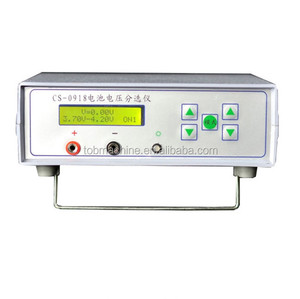
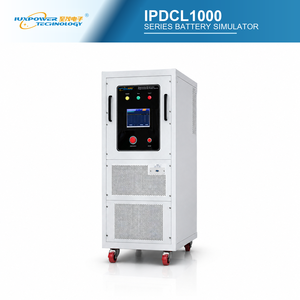
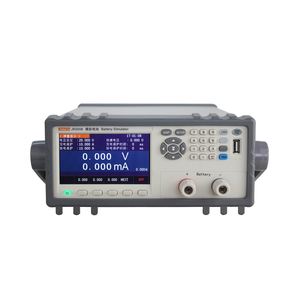
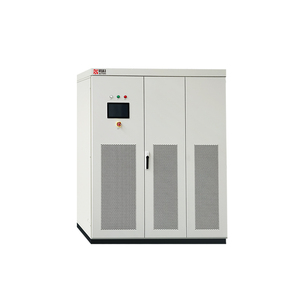
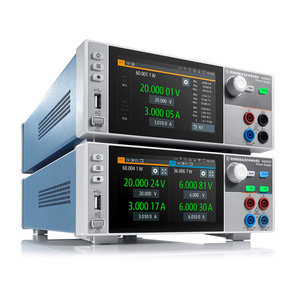
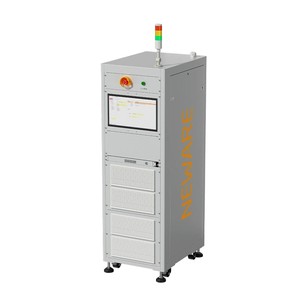
A deep engineering dive into current-fed topologies, vertically integrated US/Global manufacturing, and unmatched dynamic response under extreme regenerative testing loads.
Unlike standard voltage-fed architectures that rely on large, vulnerable output filter capacitors, our industrial grid and battery simulators utilize a robust current-fed power topology. Inductive energy storage on the internal DC bus delivers inherent short-circuit immunity, zero-delay arc tolerance, and graceful recovery when driving non-linear, highly reactive, or regenerative motor loads.
From custom planar magnetics winding and heavy-copper multi-layer PCB assembly to precision sheet metal enclosure CNC fabrication, every unit is manufactured in-house. A strict 100% full-power thermal burn-in protocol guarantees bulletproof field reliability and ISO 9001:2015 quality compliance for high-demand aerospace, automotive, and utility test bays.
We provide deep white-label OEM and ODM hardware integration. Whether your test bench demands specific mechanical form factors (1U rackmount up to 10 MW multi-cabinet water-cooled setups), custom SCPI/Modbus command structures, high slew-rate dynamic stepping, or specialized mathematical battery SOC modeling software, our engineering team co-designs solutions tailored precisely to your application.
Our megawatt-scale AC grid simulators and high-power battery simulators feature advanced four-quadrant regenerative power stages. Power absorbed from solar inverters, EV traction drives, or microgrid energy storage systems (BESS) under test is returned to the local AC utility grid with over 93% efficiency, dramatically lowering thermal loads and reducing operational energy expenses.
Equipped with high-frequency Silicon Carbide (SiC) power switching devices and dual DSP architecture, our simulators achieve transient voltage recovery times under 100 microseconds. This rapid dynamic control allows precise emulation of real-world grid disturbances, low-voltage ride-through (LVRT) events, frequency sweeps, and instantaneous battery cell step loads.
Consistency across test stations is paramount. Our complete hardware platform utilizes a standardized SCPI protocol over Ethernet/LXI, USB, RS-232, and optional GPIB or Modbus TCP. Software teams can seamless port automated test scripts from small 1.5 kW benchtop validation units straight to 3 MW production testing lines without changing software syntax.
An in-depth performance analysis comparing next-generation OEM/ODM current-fed programmable simulators against conventional voltage-fed and switch-mode linear systems.
| Performance Parameter | Current-Fed Regenerative (Our Technology) | Traditional Voltage-Fed PWM | Linear AC Power Supplies |
|---|---|---|---|
| Power Range Scaling | 1.5 kW to 10 MW+ (Paralleled) | 1 kW to 500 kW max | 500 W to 20 kW max |
| Short-Circuit Tolerance | Inherent (Inductive Bus Energy Limit) | Requires electronic trip / Fuse trip | Poor (High thermal stress on linear MOSFETs) |
| Total Harmonic Distortion (THD) | < 0.5% at Nominal Line | 1.0% – 3.0% average | < 0.2% (Very pure, but low efficiency) |
| Energy Recovery Efficiency | Up to 94% Bi-directional Sinking | 75% – 85% Sinking | 0% (100% heat dissipation) |
| Transient Recovery Time | < 100 µs (SiC Switch Stage) | 500 µs – 2 ms | < 50 µs |
| Cooling Options | Air-Cooled & Direct Liquid Water-Cooled | Air-Cooled standard | Air-Cooled heavy fan noise |
| Acoustic & Electrical Noise | Low EMI (Shielded In-house Magnetics) | Moderate to High EMI | Extremely Low EMI |
How rapid decarbonization, wide-bandgap semiconductors, megawatt EV charging, and smart microgrids are reshaping the OEM/ODM supplier landscape.
The global energy landscape is undergoing an unprecedented transition from centralized fossil-fuel power generation to decentralized renewable microgrids. This transformation has introduced unprecedented complexity to grid stability, voltage regulation, and harmonic compliance. Modern renewable power conversion systems—such as utility-scale solar string inverters, wind turbine converters, energy storage system (ESS) power conversion systems (PCS), and commercial EV fast-charging stations—require testing environments that mirror complex grid conditions.
Consequently, global procurement teams are shifting away from unidirectional AC sources toward dynamic, four-quadrant bi-directional grid simulators. Procurement specifications now mandate systems capable of serving as both high-purity AC power sources and full-capacity energy sinks. By capturing energy regenerated during inverter anti-islanding validation or EV motor braking and returning it back to the facility's main utility grid with efficiency exceeding 93%, enterprises drastically lower operational energy bills, reduce cooling HVAC burdens, and achieve carbon footprint reduction mandates.
Silicon Carbide (SiC) and Gallium Nitride (GaN) power MOSFETs have revolutionized high-power electronics engineering. By replacing traditional Silicon (Si) IGBTs with SiC devices within the power inverter stages of grid simulators, OEM/ODM manufacturers can operate switching frequencies an order of magnitude higher (50 kHz to 200 kHz+). This technical advancement unlocks three vital procurement benefits:
In high-stakes power systems testing, software-only simulation is no longer sufficient to guarantee safety and performance. Test engineers are increasingly coupling power grid simulators with real-time digital simulator (RTDS) setups and Typhoon/OPAL-RT Hardware-in-the-Loop (HIL) platforms. This strategy—known as Power Hardware-in-the-Loop (PHIL)—demands ultra-low latency analog control inputs (< 5 µs signal propagation delay) within the power supply control loop.
As an experienced OEM/ODM factory, our customizable analog control interfaces permit direct digital-to-analog driving of phase angles, instantaneous amplitude modulation, and individual harmonic injection (up to the 50th harmonic). This capability enables automated test bays to model complex real-world events, such as catastrophic transmission line trips, asymmetrical grid faults, and weak grid impedance resonances, without risking destruction of multi-megawatt prototype equipment.
Alongside AC grid emulation, the rapid growth of the electric vehicle (EV) industry and grid-scale battery energy storage systems has created a surge in demand for specialized multi-channel DC battery simulators. A modern Battery Management System (BMS) must monitor, balance, and protect individual series-connected battery cells against thermal runaway, overcharge, over-discharge, and internal cell impedance variances.
Testing a BMS with actual chemical lithium-ion cells presents severe safety risks, high cycle times, and an inability to safely inject catastrophic fault conditions. Specialized multi-channel cell simulators (such as our 24-channel isolated battery cell simulator systems) solve this by mimicking individual cell chemistry voltage curves (LFP, NMC, LTO, Solid-State) with micro-ampere resolution. Advanced OEM/ODM battery simulators allow test engineers to trigger active/passive balancing routines and inject specific fault scenarios—such as shorted cells, open wire sense lines, or reverse polarity—in milliseconds, proving critical for ISO 26262 functional safety validation.
In today's unpredictable economic climate, procurement officers face challenges regarding extended lead times, component obsolescence, and shifting trade regulations. Supply chain managers are standardizing on OEM/ODM partners with vertically integrated manufacturing models. Factories that maintain internal CNC machining, surface-mount PCB production, automated transformer winding, and complete burn-in testing under one roof routinely offer predictable 4-to-6-week delivery cycles—compared to 26+ weeks from traditional catalog distributors.
Furthermore, modularity is a core requirement in modern procurement frameworks. Buying modular grid simulators that can seamlessly operate individually on benchtop R&D stations or be connected in parallel master-slave configurations to deliver megawatt-scale power in production test bays ensures maximum capital expenditure (CapEx) flexibility and future-proofs lab infrastructure.
Comprehensive answers to technical, operational, and commercial questions frequently raised by procurement specialists and senior test engineers.
Consult directly with our senior power electronics application engineers to review your voltage, current, transient speed, and interface specifications. Receive a tailored OEM quote and design proposal today.