
Direct factory-engineered programmable DC systems, high-dynamic cell simulators, and automated battery test benches for OEM/ODM procurement.
Understanding current-fed power conversion, microsecond transient response, and vertical integration in industrial power equipment manufacturing.
In contemporary industrial manufacturing, renewable energy R&D, electric vehicle (EV) powertrain validation, and semiconductor testing, the requirement for robust, highly programmable DC power systems has escalated rapidly. Global engineering teams moving away from off-the-shelf, low-margin power supplies now demand customized OEM/ODM DC power architectures tailored to specific dynamic voltage profiles, continuous bidirectional power cycling, and zero-downtime thermal management profiles.
As premier contract manufacturers and original design factories, our manufacturing ecosystem combines robust hardware topology design—such as Current-Fed Power Processing—with advanced digital control backplanes (SCPI, LXI, Ethernet, Modbus TCP). This whitepaper provides procurement directors, test equipment integrators, and system architects with an exhaustive engineering guide for evaluating OEM/ODM DC system manufacturers, specifying custom power supplies, and predicting key industry shifts over the next decade.
Comparing traditional voltage-fed topologies against advanced current-fed switching for industrial abuse tolerance.
Unlike standard voltage-fed power supplies that utilize large electrolytic filter capacitors prone to high stress and explosive fault currents, current-fed topologies employ an energy-storing inductor on the DC bus. This provides natural short-circuit immunity and microsecond-level fault recovery under severe dynamic load swings.
OEM DC systems utilizing multi-range auto-ranging output enable full rated power across a vast voltage and current spectrum. Instead of requiring three separate fixed-range power units, a single engineered OEM/ODM cabinet covers maximum current at low voltages and maximum voltage at low currents.
Achieving a 4-to-6 week build time for complex custom power supplies requires internalizing sheet metal CNC fabrication, high-frequency planar magnetics winding, PCB surface-mount assembly, and 100% full-power burn-in testing within a single ISO-certified manufacturing plant.
For applications demanding ripple-free current absorption—such as fuel cell stacks and battery cell balancing—our OEM ODM factory builds hybrid linear MOSFET electronic loads that eliminate switching noise injection while delivering ultra-fast dynamic transient response.
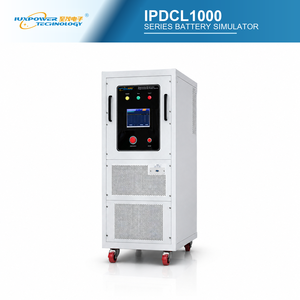
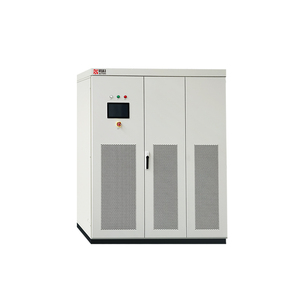
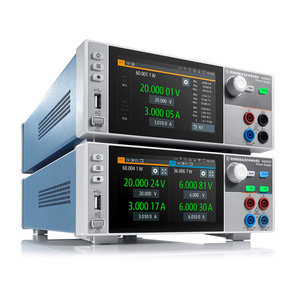
From 1U rack-mount air-cooled benchtop units (1.5 kW–10 kW) to megawatt-class water-cooled enclosures (500 kW–10 MW), custom OEM chassis are engineered for optimal thermal dissipation, quiet acoustic signatures, and harsh industrial environment isolation.
| System Platform | Power Density | Cooling Topology | Control Bus / Specs | Target OEM Applications |
|---|---|---|---|---|
| SLx / SL Series | 1.5 kW – 10 kW (1U) | High-Velocity Forced Air | LXI Ethernet, USB, RS232, Isolated Analog | ATE Systems, Benchtop R&D, Aerospace Avionics |
| TS Series | 5 kW – 100 kW (3U–16U) | Redundant Internal Blower | SCPI Command Set, Modbus TCP, GPIB | EV Battery Pack Cycling, Magnet Drives, Electrolysis |
| MT / ML Megawatt Cabinet | 150 kW – 10 MW+ | Closed-Loop Water Cooled | MagnaLINK™ Distributed DSP Architecture | Hypersonic Wind Tunnels, Arc Heaters, Grid Microgrids |
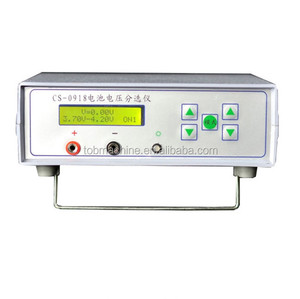
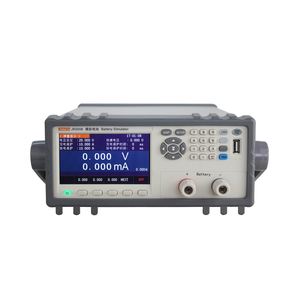
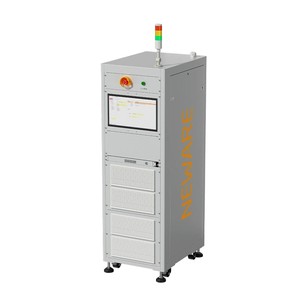
| BMS Cell Simulator Series | Multi-Channel (1 to 24 Ch) | Convection / Fan Cooled | uV-Level Resolution, High Galvanic Isolation | BMS HIL Testing, SOC Estimation, Balance Strategy |
Key technological shifts procurement officers and system engineers must navigate over the next decade.
Traditional DC testing involved drawing AC grid power, converting it to DC, dumping waste heat into resistive banks, and expelling thermal energy via costly HVAC. Modern procurement mandate prioritizes grid-tied regenerative DC systems. OEM factories are increasingly tasked with designing dual-quadrant and four-quadrant power supplies capable of returning >95% of absorbed load energy back to the local AC facility grid, drastically reducing total cost of ownership (TCO).
The rapid adoption of Wide-Bandgap (WBG) semiconductors like SiC MOSFETs and GaN transistors in OEM power supply designs allows for switching frequencies exceeding 100 kHz. For global buyers, this translates to a 40% reduction in cabinet footprint, lower magnetic component weight, reduced output ripple, and dynamic slew rates exceeding 100 V/µs for realistic transient simulation.
As battery chemistries diversify (LFP, NMC, Solid-State, Sodium-ion), EV manufacturers demand extreme precision during BMS validation. Sourcing trends show exponential demand for multi-channel battery cell simulators (e.g., 24-channel modules) capable of sinking and sourcing micro-amps, injecting simulated cell fault states (short circuits, open wire, reverse polarity), and tracking SOC balancing algorithms in real time.
Hardware is only as powerful as its firmware ecosystem. Sourcing requirements now mandate advanced software suites like Photovoltaic Power Profile Emulation (PPPE). Buyers expect OEM DC sources to simulate non-linear solar array I-V curves under fast-changing cloud cover, dynamic temperature sweeps, and spatial irradiance gradients for solar inverter Maximum Power Point Tracking (MPPT) verification.
How modularity, edge intelligence, and custom firmware drive the next phase of DC manufacturing.
Future industrial setups refuse single-point failure designs. OEM power systems are built around master-slave bus architectures where multiple 10 kW or 100 kW modules auto-configure upon connection. If one module requires maintenance, the system seamlessly throttles down without taking the entire production test track offline.
Integrating internal IoT diagnostic sensors directly into the DC supply control board allows tracking of thermal stress, electrolytic capacitor ESR aging, gate driver pulse degradation, and cooling fan RPM deviations. OEM platforms proactively alert facilities before an unexpected outage occurs.
Advanced physics applications—such as particle accelerator steering magnets, nuclear magnetic resonance (NMR), and electrochemical deposition—require DC supplies with drift specs below 5 ppm over 8 hours. Customized OEM modules incorporate ultra-stable current transducers (CTs) and temperature-compensated voltage references.
Clear, authoritative answers to common inquiries encountered during OEM/ODM technical evaluation and factory audits.
Skip generic sales reps. Speak directly with experienced application engineers to review your custom voltage, current, dynamic profile, and chassis requirements.
Contact Us