
Vertically Integrated Manufacturing & Current-Fed Topology
In the highly demanding landscape of mission-critical DC power systems, generic off-the-shelf power hardware consistently fails to deliver the dynamic thermal stability, low operational drift, and robust short-circuit resilience required by advanced aerospace, automotive, and semiconductor laboratories. As a premier Custom OEM Power System Manufacturer & Supplier, our engineering core relies on complete vertical integration combined with a robust current-fed power processing topology.
Technical Distinction: Unlike standard voltage-fed topologies that store peak energy across large electrolytic capacitor banks on the DC bus, current-fed systems employ an inductive energy storage bus. This inherent physical decoupling yields short-circuit immunity, superior dynamic current sharing during parallel operation, and extreme resistance to back-EMF from reactive or regenerative loads.
Every critical element—from precision planar magnetics winding and complex multi-layer PCB assembly to high-speed CNC sheet metal fabrication and final 100% full-power burn-in testing—is executed within a single vertically integrated domestic facility. This tight coupling between power electronics engineering design and manufacturing floors dramatically reduces iterative prototyping cycles, providing procurement managers with predictable 4-to-6 week lead times even for custom OEM power cabinet integration.
Inherent Short-Circuit Immunity
Current-fed inductive storage limits fault current overshoot naturally during dead-short conditions, rendering the power supply virtually indestructible in harsh continuous industrial environments.
Wide Constant-Power Envelope
Operate across a wide voltage and current profile instead of a single fixed rated point. A single 10kW current-fed supply fulfills testing requirements that previously required three separate legacy units.
Unified Programming Architecture
Standardized SCPI command architecture over Ethernet/LXI, USB, and isolated analog control across all product families (1.5kW 1U rack-mount units up to 10MW water-cooled enclosures).
Strategic Insights: Procurement Trends in High-Power Testing (2025–2035)
The global transition toward high-voltage electric vehicle platforms (800V to 1500V architectures), green hydrogen electrolysis, renewable microgrids, and wide-bandgap (SiC/GaN) semiconductor power electronics has reshaped global enterprise procurement criteria for test power infrastructure. Purchasing teams must look beyond initial capital expenditure (CapEx) to evaluate total cost of ownership (TCO), software agility, dynamic response speeds, and thermal efficiency.
1. The Transition to High-Dynamic Battery Emulation for BMS Validation
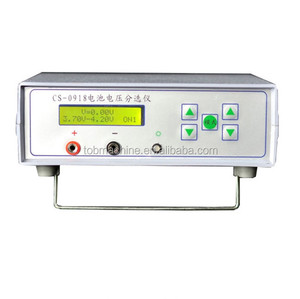
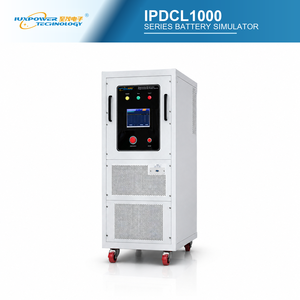
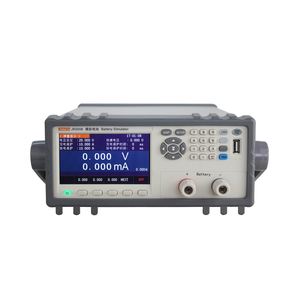
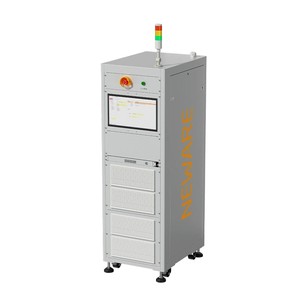
Traditional passive DC power supplies are inadequate for evaluating modern Battery Management Systems (BMS). Modern validation rigs require active multi-channel cell simulators capable of sourcing and sinking current on microsecond timescales, emulating individual cell chemistries, internal resistance (Rint), State-of-Charge (SOC) curves, and fault states (cell unbalance, thermal runaway triggers). Custom OEM battery simulators equipped with high-speed digital signal processor (DSP) hardware represent the single largest growth segment in enterprise test equipment procurement.
2. Demand for Water-Cooled Systems in High-Density Rack Facilities
As megawatt-scale testing demands shift into constrained laboratory footprints, traditional forced-air cooling reaches physical acoustic and thermal dissipation limits. High-density liquid cooling (chilled water/glycol loops) integrated directly into power electronics enclosures permits continuous 500kW to 10MW power output with low acoustic footprint, eliminating laboratory room air conditioning overhead while maintaining thermal equilibrium on critical power switching components.
3. Hardware-in-the-Loop (HIL) & Automated Test Equipment Integration
Modern automated production lines demand real-time telemetry streaming over industrial Ethernet protocols (Modbus TCP, EtherCAT, LXI Class C). Custom OEM manufacturers who provide open-source Python SDKs, native National Instruments LabVIEW drivers, and low-latency hardware triggers gain an unbeatable efficiency operational advantage over vendor-locked proprietary platforms.
Technology Comparison: Power Topologies & Sinking Architectures
Understanding the operational parameters between legacy linear power supplies, standard switch-mode supplies, current-fed supplies, and modern linear MOSFET electronic loads is key to optimizing test bay architecture.
| Architecture Type | Efficiency Range | Transient Response | Short-Circuit Tolerance | Noise & Ripple Characteristics | Ideal Application Domain |
|---|---|---|---|---|---|
| Current-Fed Switching | 88% – 95% | < 2 ms | Inherent (Inductive Limit) | Low Ripple / Stiff Bus | EV Traction, High-Voltage Bus, Hypersonic Testing, OEM ATE |
| Standard Voltage-Fed Switch-Mode | 82% – 90% | 5 ms – 20 ms | Fuses / Electronic Trip | Moderate Switching Noise | General Purpose Bench DC Power |
| Linear MOSFET Electronic Load | N/A (Sinks Energy) | < 50 µs | Active Thermal Limiting | Ultra-Low Noise (No Switching) | Battery Cell Sinking, Fuel Cell Testing, Converter Characterization |
| Legacy Linear Power Supply | 30% – 50% | < 100 µs | Thermal Derating | Ultra-Low Ripple | Low-Power Precision Metrology, RF Amplifiers |
Why Global Engineering Teams Standardize on Our OEM Infrastructure
As a global enterprise power supply manufacturer, our engineering methodology relies on strict design conservative derating. Printed circuit boards are populated with industrial-grade high-temperature components rated well beyond standard operating operating parameters. Thermal modeling ensures low hot-spot temperatures across power switches, magnetic cores, and smoothing chokes under continuous full-load operating conditions.
USA Manufacturing Traceability
Every system is built, tested, and calibrated at our headquarters in Flemington, New Jersey, adhering to NIST-traceable calibration standards and rigorous ISO-certified production controls.
High Stability Options (DBx Module)
For particle accelerator magnets, precision electroplating, and medical imaging applications, integrated high-stability modules reduce current drift down to sub-ppm levels.
Flexible Modular Expansion
Master/Slave parallel interface architecture allows seamless power scaling from a single 5kW rack instrument to a multi-cabinet 3MW system under a single digital address.
Custom OEM Power Procurement FAQ
Technical guidance compiled by our application engineering staff to address common procurement and integration queries.
What power ranges and form factors are available for custom OEM DC power configurations?
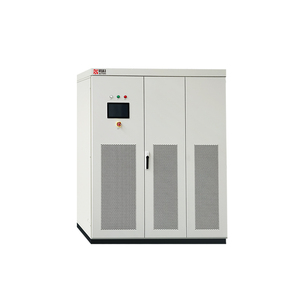
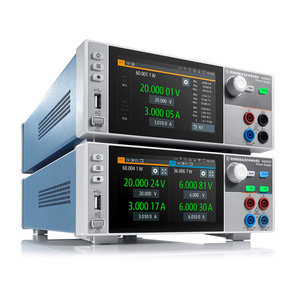
Our custom OEM platform covers scalable power capacities from 1.5 kW up to 10 MW+. Form factors range from high-density 1U rack-mount chassis (SLx/SL Series) and 2U rack units (XR Series) to mid-tier 3U–16U rack cabinets (TS Series) and standalone megawatt-class floor-standing enclosures (MT Air-Cooled and ML Water-Cooled Series).
How does current-fed topology improve reliability compared to conventional voltage-fed power supplies?
Current-fed power topology utilizes a high-inductance DC link to store energy rather than standard high-capacitance filter banks. This structural difference naturally prevents sudden short-circuit current surges, allows full output power across a wide operating envelope, prevents damage from back-EMF during inductive load decoupling, and drastically improves system MTBF in harsh production automated test environments.
What is the typical manufacturing lead time for custom made-to-order OEM power supplies?
Because our facility maintains vertically integrated manufacturing—including internal CNC sheet metal production, transformer magnetics winding, Surface Mount Technology (SMT) PCB assembly, and final burn-in—typical lead times for customized production systems are 4 to 6 weeks. Common configurations are also maintained in ready-to-ship stock.
Can your power supplies emulate photovoltaic arrays and battery chemisty profiles?
Yes. Utilizing our specialized software suites, such as PPPE (Photovoltaic Power Profile Emulation), MagnaDC programmable DC power supplies accurately emulate non-linear solar panel I-V curves under varying irradiance and temperature parameters for inverter MPPT validation. Additionally, our battery simulator family (including multi-channel cell simulators) precisely replicates charge/discharge state SOC curves and cell internal resistance profiles.
Which remote programming interfaces and automation protocols are standard?
Standard hardware interfaces include LXI-compliant Ethernet, USB, RS-232, and 37-pin isolated analog/digital user I/O ports. Optional industrial interfaces include IEEE-488 GPIB and Modbus TCP. Full SCPI command set support is standard alongside turnkey drivers for LabVIEW, IVI, C++, and Python environments.
When should engineers specify water cooling over forced-air cooling for high-power installations?
Water cooling (ML Series) is strongly recommended for high-power installations above 100 kW operating continuously in enclosed facilities, dirty ambient air conditions, cleanrooms, or environments where HVAC room heat dissipation and acoustic noise levels must be strictly minimized. Liquid-cooled units transfer thermal energy directly to plant chilled water loops with high efficiency.
What international quality certifications and warranty policies back your equipment?
All power systems are manufactured in compliance with strict ISO 9001 quality management procedures, carry CE and NRTL (UL/CSA) marks, and undergo 100% full-load burn-in prior to shipment. Units are backed by factory warranty coverage and long-term spare part availability supported by global service centers in North America, Europe, United Kingdom, Australia, and Asia-Pacific.
Collaborate With Our OEM Power System Engineers
Whether you require a low-ripple high voltage supply for wide-bandgap device testing, a multi-channel battery cell simulator for BMS verification, or a liquid-cooled megawatt DC bus system, our application team is ready to review your exact electrical and mechanical specifications.