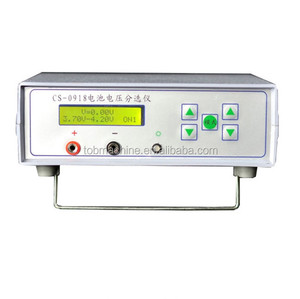

Engineered for BMS validation, electrochemical lab analysis, double pulse testing, and megawatt-scale power emulation.
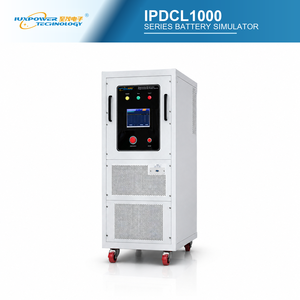
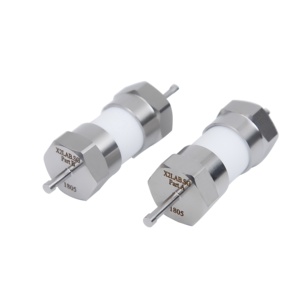
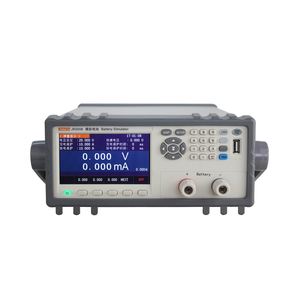
In modern industrial electronics, aerospace testing, automotive electrification, and semiconductor burn-in environments, the requirement for ultra-reliable, highly dynamic, and customizable DC power supplies has transitioned from basic voltage provisioning to complex real-time emulation. As a global Custom OEM Modular Supply Supplier & Exporter, our engineering framework solves the fundamental constraints of conventional switch-mode power conversion by deploying advanced current-fed power processing topologies combined with modular, rack-scalable hardware controllers.
Traditional voltage-fed power supplies store energy on their DC output bus using large capacitor banks. While cost-effective for static laboratory loads, voltage-fed architectures present severe dynamic liabilities when exposed to rapid transient cycles, high-frequency load switching, reverse EMF from electric vehicle drive trains, or inductive arcing in plasma and magnet power applications. A discharge of energy from a high-capacitance output can damage delicate microelectronics under test, cause uncontrolled current spikes, and introduce dynamic latency into automated ATE test loops.
Our modular custom OEM power architectures replace traditional capacitive storage with high-frequency inductive energy storage at the primary DC link. This current-fed topology inherently limits fault current, tolerates direct short circuits without hardware degradation, and delivers constant power performance across an exceptionally wide voltage and current operating envelope.
How global test engineers, system integrators, and procurement directors are mitigating supply chain risks while upgrading to software-defined DC power infrastructures.
Procurement is rapidly pivoting away from fixed-output DC hardware toward software-programmable, multi-quadrant power supplies. Enterprise buyers require instruments capable of seamlessly switching between DC power supply modes, battery pack charging/discharging emulation, photovoltaic I-V curve profiling, and high-speed dynamic load sourcing via SCPI or native Python environments.
Global supply chain volatility has made outsourced sub-assembly procurement high risk. Leading engineering procurement teams now mandate suppliers with high internal vertical integration—where sheet metal fabrication, magnetics winding, surface-mount PCB assembly, and full-power burn-in occur under a unified manufacturing umbrella to guarantee standard 4-to-6-week delivery cycles.
With test bay space commands at a premium, systems scaling from 1.5 kW up to 10 kW in ultra-compact 1U and 2U rack footprints are becoming standard specifications. Liquid-cooled (water/glycol) DC supplies are increasingly preferred over forced-air units for continuous multi-megawatt installations to eliminate acoustic noise and drastically lower facility HVAC thermal loads.
When engineering global test stations across multiple international facilities, standardizing on a single firmware and hardware control platform drastically reduces software maintenance lifecycle costs. Traditional OEM power procurement often suffers from hardware fragmentation—where a 1U benchtop supply requires a completely different driver set, calibration protocol, and physical pinout than a 100 kW cabinet system.
Our OEM modular platform maintains strict architectural harmony across all form factors. Whether procuring an SLx Series 1U 1.5 kW module or an ML Series 1 MW water-cooled system, the internal DSP logic, SCPI command structure, isolated analog controller mapping, and digital communication option cards remain identical. This ensures that automated ATE test sequences validated on small-scale engineering benches can be deployed globally to high-volume manufacturing lines without re-architecting software drivers or safety interlock loops.
Exploring wide-bandgap semiconductors, Hardware-in-the-Loop (HIL) battery simulation, and precision metrology integration.
The rapid adoption of Silicon Carbide (SiC) and Gallium Nitride (GaN) switching switches in electric vehicle traction inverters and solar microinverters demands high-voltage DC supplies with minimal parasitic capacitance. Our low-capacitance output filter designs, combined with high-slew-rate transient modes, enable rigorous double-pulse testing without overwhelming the DUT's wide-bandgap switching transitions.
Modern Battery Management Systems (BMS) for automotive lithium-ion packs demand microsecond-level voltage balancing validation. Multi-channel battery cell simulators provide isolated sink/source capabilities per channel, allowing hardware-in-the-loop (HIL) systems to simulate exact cell-level fault states, State-of-Charge (SOC) drift, thermal runaways, and active balance resistance strategies with sub-millivolt measurement precision.
| Platform Series | Power Output Range | Form Factor Envelope | Cooling Architecture | Primary Application Profile |
|---|---|---|---|---|
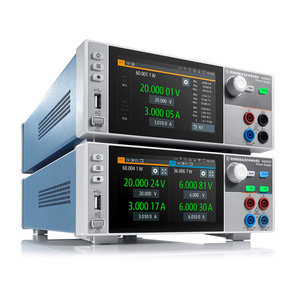
| SLx Series | 1.5 kW – 10 kW | 1U Rack-Mount | Forced Air (Front-to-Rear) | Automated ATE Racks, SiC/GaN Double-Pulse Bus Sourcing |
| XR Series | 2.0 kW – 10 kW | 2U Rack-Mount | Forced Air (Derated Thermal) | High Voltage Benchtop Lab Supplies, Industrial Automation |
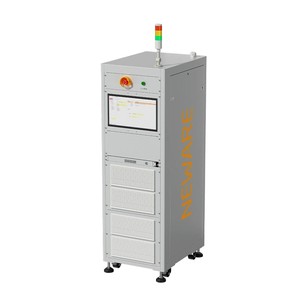
| TS Series | 5.0 kW – 100 kW | 3U – 16U Modular Rack | Intelligent Variable-Speed Air | EV Traction Inverter Testing, Battery Pack Cycle Testing |
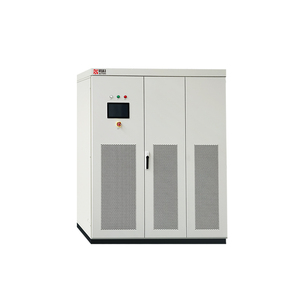
| MT Series | 150 kW – 3.0 MW | Integrated NEMA Cabinet | Air-Cooled Heavy Duty | Hypersonic Wind Tunnels, Arc Heaters, Plasma Research |
| ML Series | 500 kW – 10.0 MW+ | Liquid-Cooled Cabinet | Closed-Loop Water/Glycol | Continuous High-Power Electrolysis, Industrial Processing |
| ALx Loads | 1.25 kW – 20 kW+ | 3U – 6U Linear MOSFET | Low-Noise Forced Air | Fuel Cell Characterization, Ultra-Low Ripple Load Sinking |
Why leading aerospace defense contractors, automotive OEMs, and national laboratories specify our custom supply solutions.
We execute precision CNC metal fabrication, transformer/inductor magnetics winding, high-speed SMT printed circuit board assembly, and final system integration entirely inside our state-of-the-art facility in Flemington, New Jersey.
Every single power supply unit and electronic load built undergoes 100% full-load burn-in testing under elevated thermal conditions prior to global export, accompanied by NIST-traceable calibration certificates.
Our engineering division provides extensive custom hardware and firmware modifications: custom mechanical enclosures, specialized voltage/current matrix scaling, ultra-high stability DBx metrology modules, and custom SCPI command mapping.
To fully evaluate the operational advantage of our OEM modular supply instruments, engineers must inspect the primary power loop topology. Traditional switch-mode DC power supplies utilize a **voltage-fed switch topology**. In a voltage-fed scheme, the AC mains voltage is rectified and fed into a capacitive DC link before being chopped by high-speed power transistors and stepped down via a transformer. The output stage relies heavily on multi-microfarad electrolytic capacitor banks to smooth output voltage ripple.
However, when operating in high-dynamic industrial environments—such as battery simulation, pulse testing, or high-power motor drive validation—voltage-fed supplies reveal severe operational vulnerabilities:
In contrast, our proprietary Current-Fed Switching Topology places an energy-storing inductor on the primary DC link before the high-frequency inverter bridge. The primary inductor acts as a continuous current governor. This fundamental shift delivers massive technological gains: the output stage requires up to 90% less output capacitance, the power supply is naturally immune to short-circuit damage, output current slew rates are drastically accelerated, and the input power factor remains consistently high (>0.92) across the entire load control range.
Detailed answers for system integrators, quality directors, and global OEM buyers.
Consult directly with senior application engineers to configure custom OEM voltage matrices, current envelopes, dynamic transient options, or high-power liquid-cooled test stands.