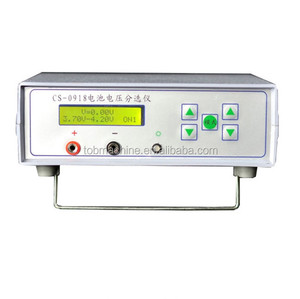

Explore our custom-engineered power supplies, high-dynamic battery simulators, and multi-channel hardware-in-the-loop (HIL) test instruments built to rigid OEM standards.
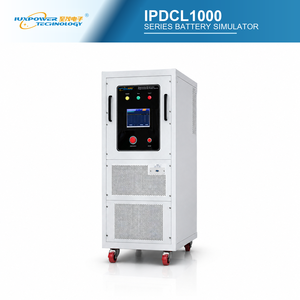
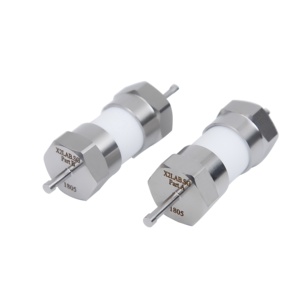
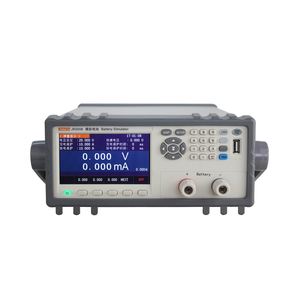
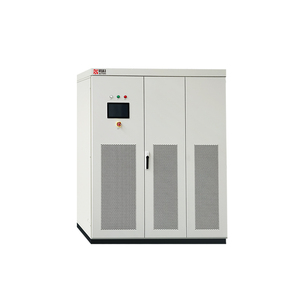
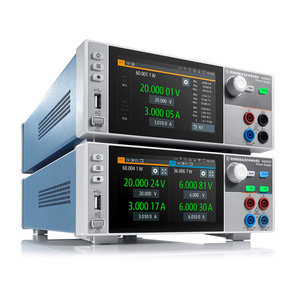
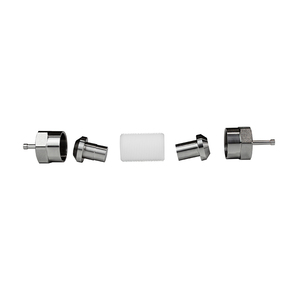
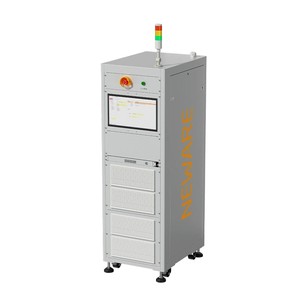
In modern industrial test bays, particle physics laboratories, energy storage facilities, and advanced EV powertrain testing environments, the demand for high-reliability, custom OEM magnet supply systems has reached an unprecedented peak. Designing electromagnetic solenoids, deflection magnets, plasma arc coils, and high-frequency inductive components requires not only structural magnetics mastery but also direct alignment with ultra-precise power electronic supplies.
As a vertically integrated OEM manufacturer engineering custom electromagnetic components and programmable DC power instruments since 1981, our facility unifies custom wire winding, core laminations machining, busbar architecture, thermal dissipation engineering, and digital signal control under a singular quality framework. This document provides a comprehensive technical overview of electromagnetic supply sourcing, high-dynamic current topologies, battery cell emulation architectures, and global supply chain strategies.
Core OEM Technical Advantage: Current-fed power conversion topologies replace capacitive energy storage at the primary DC bus with heavy inductive storage. This provides inherent immunity to short-circuit arcs, dynamic coil load shifts, and back-EMF voltage spikes common in inductive electromagnetic loads.
Electromagnets operate under stringent physical limits dictated by magnetic flux density (B), core saturation thresholds ($\beta_{sat}$), thermal coefficient limits of copper/aluminum windings, and high-transient voltage stresses ($L \cdot \frac{di}{dt}$). When procuring custom OEM magnet solutions, procurement managers and senior engineering teams must evaluate three fundamental parameters:
Selecting the optimal power processing topology is paramount when driving precision electromagnets, plasma arc reactors, or low-impedance battery cell simulators. The table below outlines the operational engineering differences between standard voltage-fed switch-mode supplies and advanced current-fed switch-mode architectures utilized across our custom OEM manufacturing spectrum.
| Engineering Attribute | Standard Voltage-Fed Supplies | Advanced Current-Fed OEM Topologies | OEM Application Impact |
|---|---|---|---|
| Energy Storage Element | Large Electrolytic Capacitor Bank | Heavy-Duty DC Link Inductor | Current-fed eliminates sudden capacitive discharge spikes during load short-circuits. |
| Short-Circuit Arc Tolerance | Relies on fast electronic trips (vulnerable) | Inherent, physical current limiting by inductor | Extremely high reliability in arc heating, magnet quenching, and plasma applications. |
| Dynamic Operating Envelope | Fixed power point (Derates at lower voltage) | Wide Constant-Power Curve | Single current-fed supply replaces multiple fixed-voltage conventional units. |
| Output Ripple & Noise | Requires high output filtering (adds stored energy) | Smooth continuous inductor current feed | Ideal for noise-sensitive particle accelerator magnets and micro-volt battery test setups. |
| Scalability & Paralleling | Complex master-slave current sharing logic | Natural active current balancing via MagnaLINK™ | Seamless scaling from 1.5 kW 1U modules up to 10 MW multi-cabinet systems. |
A rapidly expanding domain in custom OEM magnet and power supply manufacturing is high-speed battery simulation. Modern Battery Management Systems (BMS) for electric vehicles, defense platforms, and grid-scale storage require precise cell-level simulation to validate state-of-charge (SOC) estimation, thermal throttling protocols, and cell balancing algorithms.
Traditional DC supplies cannot simulate the micro-ohm internal resistance ($R_{int}$) or bidirectional transient responses of lithium-ion, sodium-ion, or solid-state cell chemistries. Our multi-channel battery simulators (such as the 24-channel isolated BMS validation unit featured in our product lineup) resolve this by offering micro-second transient response times, isolated voltage sinking/sourcing channels, and programmatically adjustable internal resistance curves.
Active linear MOSFET stages allow instant transition between charging and discharging modes, replicating regenerative braking impulses without voltage overshoot.
1000V+ inter-channel galvanic isolation enables stacking dozens of simulated cells in series to evaluate high-voltage pack BMS architecture safely.
Real-time mathematical emulations adjust cell resistance based on simulated cell temperature, state of health (SOH), and discharge depth.
Key technological shifts reshaping the procurement landscape for enterprise buyers, system integrators, and industrial research institutions.
The industry transition from traditional Si IGBTs to Silicon Carbide (SiC) and Gallium Nitride (GaN) power stages dramatically increases switching frequencies beyond 100 kHz. This reduces magnet coil size by 40% while achieving over 97.5% power conversion efficiency.
Global supply chain volatility has accelerated direct OEM factory partnerships. Manufacturing magnets, winding coils, fabricating sheet metal, and populating PCBs within single-facility domestic environments guarantees 4–6 week delivery times vs 24+ weeks for outsourced vendors.
Modern OEM magnet systems now require embedded Ethernet/LXI, SCPI command sets, Modbus TCP, and Python-native API drivers. This allows seamless integration into digital twin testbeds where power supplies emulate dynamic thermal and magnetic saturation behaviors in real time.
As power densities exceed 100 kW per rack, air-cooling limits are exceeded. Next-gen OEM magnet systems adopt closed-loop liquid cooling with deionized water loops, minimizing room heat rejection and enabling silent operational profiles in high-density test facilities.
Sourcing custom OEM magnets, solenoids, and high-power DC systems demands strict engineering validation. Under-designed magnetic components lead to localized thermal breakdown, excessive core losses, and premature insulation failure under high-voltage pulse operations. Our US-based and global manufacturing infrastructure resolves these procurement risks through total quality control.
Every toroidal transformer, DC filter choke, and custom magnet winding is engineered and produced in-house, ensuring absolute structural and magnetic integrity across every batch.
Before shipment, 100% of custom OEM units undergo rigorous full-power load burn-in testing under elevated ambient temperature conditions to ensure immediate field reliability.
We maintain full design documentation, schematic archives, and component spare parts inventory for over 25 years per design iteration, eliminating obsolescence concerns for defense and aerospace contracts.
From 1.5 kW bench-top power supplies up to multi-megawatt cabinet installations, our modular power platform provides uniform SCPI programming syntax across all series. System integrators can transition effortlessly from low-power R&D coin-cell testing to high-power industrial magnet drives without rewriting established test automation software.
Get expert answers regarding custom OEM magnet production, coil winding specifications, battery simulation protocols, and order lead times.
Submit your electromagnetic coil specs, power requirements, or battery simulator parameters. Speak directly with experienced power electronics designers—not call center representatives.