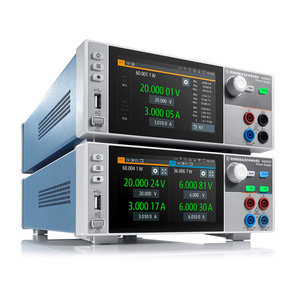
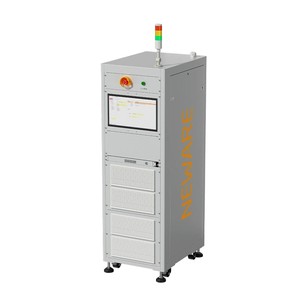
Standard and custom-engineered test equipment optimized for zero dynamic switching noise, micro-ohm resistance control, and cell-level emulation.
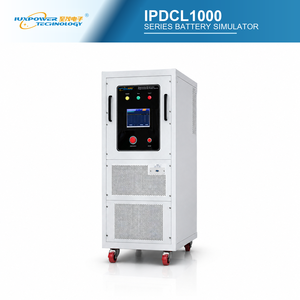
In modern power electronics testing—spanning electric vehicle (EV) battery pack characterization, wide-bandgap (SiC/GaN) semiconductor double-pulse evaluation, medical equipment power qualification, and fuel cell impedance testing—the choice of electronic load architecture directly governs measurement validity. Traditional switch-mode electronic loads (SMEL), while efficient, inject significant high-frequency Pulse-Width Modulation (PWM) ripple, phase noise, and electromagnetic interference (EMI) back into the Device Under Test (DUT). When evaluating delicate micro-ohm battery internal resistance, sensitive fuel cell catalyst degradation, or satellite payload power buses, switch-mode noise masks critical signal transients and yields invalid data.
Custom OEM linear electronic loads leverage power MOSFETs operating continuously within their linear region (active saturation zone) to dissipate electrical energy purely as heat. By functioning as high-speed, digitally controlled variable resistors, linear MOSFET loads achieve ultra-low Periodic and Random Deviation (PARD), zero dynamic switching noise, and microsecond transient recovery times. Procurement directors and test engineering managers seeking true compliance verification are increasingly specifying OEM linear architecture to guarantee measurement integrity across critical validation protocols.
Direct gate-source voltage ($V_{gs}$) modulation controls transistor drain current ($I_d$) without switching, eliminating parasitic noise spikes and harmonic distortion across the entire load spectrum.
Integrated inductive DC bus energy storage naturally limits short-circuit transients, providing inherent immunity against arcing, inductive kickback, and regenerative voltage spikes.
Embedded high-speed digital signal processors (DSP) manage high-bandwidth closed-loop feedback, permitting sub-10-microsecond slew rate adjustments in CC, CV, CR, and CP modes.
From raw sheet metal fabrication to custom high-frequency magnetic winding, our vertically integrated USA and international manufacturing infrastructure delivers unparalleled configuration flexibility and reliable delivery schedules.
Whether your Automated Test Equipment (ATE) program demands 1U ultra-compact rack-mount chassis, 3U-16U modular enclosures, or standalone megawatt-class liquid-cooled cabinets, our OEM engineering team customizes mechanical layouts, terminal locations, and airflow channels to fit exact cabinet envelopes.
Operating MOSFETs linearly subjects semiconductor junctions to extreme thermal stress. Our factories utilize precision CNC-machined copper vapor chambers and micro-channel liquid cold plates, combined with Real-Time Safe Operating Area (SOA) protective logic to prevent secondary breakdown under severe thermal cycling.
Every standard and custom linear load instrument shares a unified programming language (SCPI) over Ethernet/LXI, USB, RS-232, IEEE-488 (GPIB), and Modbus TCP. Software written for a 1.25 kW bench unit executes seamlessly when scaling to a 100 kW or 1 MW multi-cabinet system.
Consult our applications team to tailor voltage curves, dynamic response rates, and remote interfaces.
When selecting test systems for critical procurement contracts, engineering leads must evaluate performance tradeoffs. The matrix below illustrates why linear MOSFET architecture remains indispensable for high-fidelity test applications.
| Electrical / Operating Parameter | OEM Custom Linear MOSFET Load | Standard Switch-Mode Electronic Load | Regenerative DC Electronic Load |
|---|---|---|---|
| Dynamic Switching Noise / PARD | Zero Switching Ripple (<2 mV RMS) | High Noise (50 mV – 500 mV Peak-to-Peak) | Moderate to High Grid Inverter Noise |
| Transient Response Speed | Sub-10 μs Dynamic Transient Recovery | 100 μs – 1 ms Slow Recovery | Slow (2 ms – 10 ms grid sync delay) |
| Impedance Measurement Accuracy | Ultra-High Precision (Micro-Ohm Resolution) | Distorted by PWM Harmonics | Unsuitable for Micro-Impedance EIS |
| Minimum Operating Voltage | Near-Zero Volt Sinking at Full Current | Requires Voltage Drop for Switching | Requires Elevated Bus Threshold |
| Ideal Applications | BMS Validation, SiC/GaN DPT, Fuel Cell, Satellite | General Burn-In, Power Supply Production | High-Power Continuous Battery Discharge |
As Silicon Carbide (SiC) and Gallium Nitride (GaN) power switches achieve switching speeds exceeding 100 kHz with nanosecond rise times, high-voltage DC supplies and electronic loads must present extremely low stray capacitance and zero switching noise during double-pulse testing. OEM linear load exporters are redesigning busbar geometries to minimize parasitic inductance down to nanohenry levels.
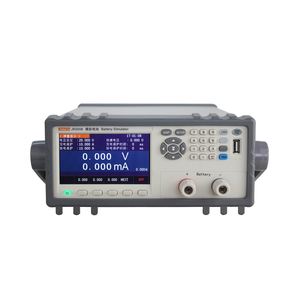
Modern Electric Vehicle (EV) battery management systems monitor hundreds of individual series-connected cells simultaneously. Future linear load procurement prioritizes high-density, multi-channel battery cell simulators (such as 24-channel to 96-channel modular instruments) capable of sourcing and sinking micro-currents to emulate cell balance routines, fault insertion (open/short circuit), and precise State-of-Charge (SOC) profiles.
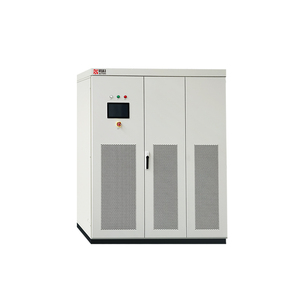
While bench-top linear loads traditional focused on sub-10 kW ranges, industrial hydrogen electrolyzer testing, megawatt energy storage systems (ESS), and aerospace hypersonic arc-heater testing demand linear load sinking capacities scaling from 100 kW to over 10 MW. Advanced water-cooled linear modules with closed-loop liquid chillers are becoming the standard specification for continuous megawatt dissipation without thermal throttling.
Enterprise buyers are moving away from fixed-function hardware toward software-defined electronic loads. Integrations with Python, NI LabVIEW, MATLAB/Simulink, and real-time HIL platforms (dSPACE, Opal-RT) allow complex real-world driving cycles, photovoltaic solar irradiance curves, and dynamic battery aging models to be executed directly on the load's internal FPGA/DSP hardware.
Validating passive and active battery cell balancing algorithms requires active voltage current sourcing and sinking without cross-channel leakage. Multi-channel cell simulators allow test engineers to inject micro-volt offsets, test isolation impedance, and verify over-charge/over-discharge safety trips dynamically.
Proton Exchange Membrane (PEM) and Solid Oxide Fuel Cells (SOFC) display low voltage, ultra-high current output characteristics sensitive to load ripple. Linear MOSFET loads operate down to true zero-volt thresholds, enabling full polarization curve mapping ($I-V$ curve) without causing cell reversal.
Spacecraft power distribution units (PDUs) operate under zero-tolerance reliability regimes. Custom linear loads simulate transient satellite payloads, solar panel shading events, and battery bus handoffs with millisecond response rates and zero spurious EMI emission.
Key technical, financial, and logistical insights for procurement managers and test systems architects.
Connect directly with our senior power electronics design team to review your voltage envelope, transient speed targets, dynamic load profiles, and chassis dimensions.