
Explore our industrial-grade diagnostic tools, automated functional test solutions, and portable field instruments designed for rigorous quality verification across HVAC, refrigeration, solar PV, and heavy manufacturing sectors.
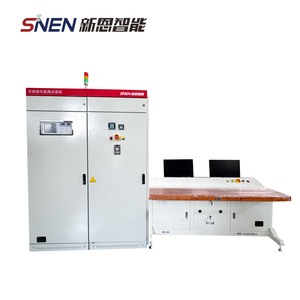
Fully integrated automated test bench for full-power load simulation, dynamic efficiency mapping, and thermal endurance testing of industrial drive units.
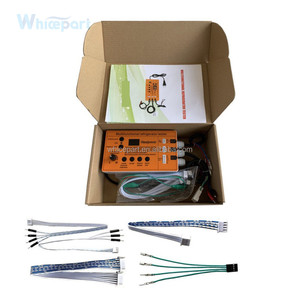
Universal diagnostic module tailored for appliance OEM assembly lines, field repair diagnostics, and inverter compressor board validation.
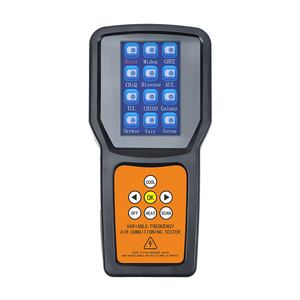
Comprehensive signal analyzer and drive tester engineered for split-system outdoor inverter control boards and IPM module verification.
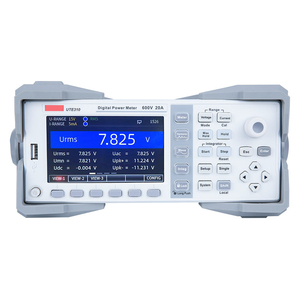
Precision AC/DC power analyzer capable of high-order harmonic distortion capture for VFD motor drives and megawatt-scale equipment.
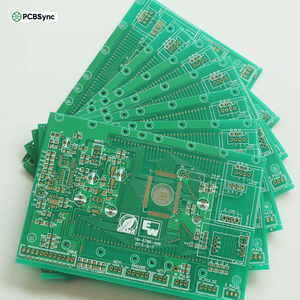
Turnkey mass-production testing platform featuring customizable bed-of-nails interfacing, firmware flashing, and load response validation.
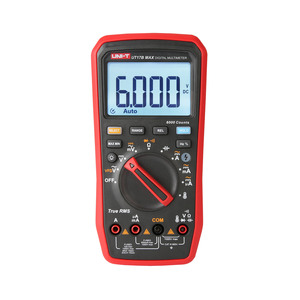
Ruggedized 6000-count handheld meter with built-in VFD low-pass filtering for accurate voltage/frequency measurement on pulse-width modulated drives.
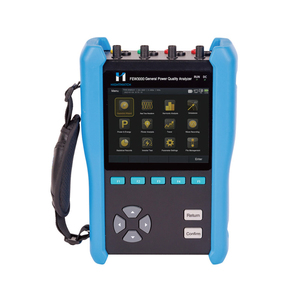
Advanced grid-tie analyzer specifically engineered to measure grid compliance, DC-to-AC conversion efficiency, and phase stability of solar inverters.
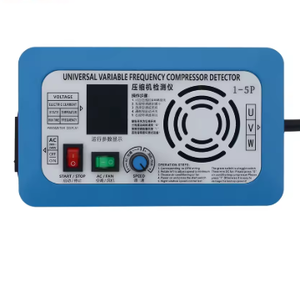
Smart color-screen field diagnostic analyzer providing instant evaluation of compressor winding, frequency conversion integrity, and drive communication.
Modern power electronics demand an unprecedented level of verification precision. As industrial variable frequency drives (VFDs), solar photovoltaic (PV) string inverters, electric vehicle (EV) traction drives, and variable-speed HVAC/refrigeration systems transition toward high-frequency Wide-Bandgap (WBG) semiconductors—such as Silicon Carbide (SiC) and Gallium Nitride (GaN)—traditional test equipment encounters fundamental measurement bottlenecks.
Inverter testing is no longer restricted to basic steady-state input/output voltage verification. Today’s industrial procurement landscape requires Automated Test Equipment (ATE) capable of dynamically evaluating efficiency across wide operational envelopes, quantifying Total Harmonic Distortion (THD), executing fault-injection routines, and simulating dynamic load transients in real time.
As a leading Custom OEM Inverter Tester Manufacturer & Supplier, our engineering team works directly with Tier-1 original equipment manufacturers to solve key testing bottlenecks:
Procurement teams must carefully align instrument selection with specific application environments. Below is a comparative engineering overview between handheld diagnostic instruments, HVAC field testers, and full-scale manufacturing test benches:
| Testing Parameter | Field Service Diagnostics (e.g., UT17B, JCS-01) | HVAC & Appliance Line Testers | OEM Production Test Benches (FCT / ATE) |
|---|---|---|---|
| Primary Objective | Rapid troubleshooting, continuity, basic VFD PWM signal verification | Pass/Fail validation of outdoor units & compressor drive boards | 100% full-power burn-in, dynamic efficiency mapping, safety compliance |
| Voltage Range | Up to 1000V True RMS (VFD Low-Pass Filtered) | 110V – 240V AC / 300V DC Bus | Programmable 0 – 1500V DC / 0 – 1000V AC 3-Phase |
| Harmonic Analysis | Basic THD / Fundamental Frequency Detection | Targeted IPM fault code decoding | Full spectrum capture (Up to 50th Order Harmonic Breakdown) |
| Data Connectivity | Digital Display / Handheld Logging | Serial / Modular Diagnostic Interface | Ethernet/LXI, SCPI Commands, Modbus TCP, NI LabVIEW, Python API |
| Customization Level | Standard Handheld Architecture | Semi-Custom Connector Harnesses | 100% Custom OEM Hardware, Software & Fixtures |
As global decarbonization accelerates, inverter procurement strategies are shifting rapidly. Procurement directors and engineering managers must evaluate future-proof test architectures that scale alongside emerging semiconductor and grid standards.
Higher switching frequencies (100kHz to 1MHz+) lower filter weight but demand ultra-fast bandwidth in test instrumentation. Future procurement mandates test benches equipped with fast-sampling ADCs (>100 MS/s) and sub-microsecond over-current isolation trips to protect costly engineering prototypes during development.
Sustainability guidelines now enforce energy recovery during high-power inverter burn-in testing. Modern OEM test stations incorporate bidirectional regenerative electronic loads that return up to 95% of consumed test energy back to the facility grid, significantly lowering operational expenditures (OpEx).
Fixed-hardware test equipment creates manufacturing bottlenecks. Industry trend analysis shows a 45% annual growth in software-configurable test systems where test routines, voltage levels, and communication protocols (CANopen, Modbus, Ethernet/IP) can be updated via remote OTA firmware updates.
Integrating machine learning algorithms directly into test bench firmware enables automated detection of subtle waveform anomalies. By recognizing micro-arcing, phase imbalance, and thermal drift pattern signatures early, OEMs can prevent catastrophic field failures before mass distribution.
Solar inverter procurement mandates complex Photovoltaic Power Profile Emulation (PPPE). Next-gen solar inverter testers must reproduce real-time solar irradiance drops, partial shading conditions, and rapid temperature sweeps to validate Maximum Power Point Tracking (MPPT) accuracy under harsh atmospheric changes.
As variable-speed inverter technology infiltrates residential heat pumps, refrigeration, and commercial HVAC systems, field service engineers require lightweight, color-screen diagnostic modules capable of instant line communication checks without needing complex oscilloscope setups.
Building high-precision electronic test equipment demands absolute control over design, assembly, and component calibration. Unlike pure assembly vendors who white-label outsourced sub-assemblies, our vertically integrated engineering facility handles every phase of production—from bare PCB assembly and magnetic winding to custom sheet metal fabrication and full-load burn-in testing.
By keeping magnetics design, sheet metal fabrication, software development, and quality testing under one roof, we eliminate supply chain vulnerabilities and ensure strict compliance with ISO 9001, CE, and UL engineering directives.
Our industrial test systems utilize a current-fed power architecture. Storing energy in inductors rather than sensitive capacitor banks provides inherent protection against output short circuits, dynamic load surges, and regenerative back-feed from motor windings.
Every custom OEM test system undergoes rigorous full-load thermal burn-in prior to shipment. Every single unit is supplied with traceable factory calibration certificates, guaranteeing measurement accuracy on day one.
Whether you require a custom form-factor diagnostic handheld, a bed-of-nails PCB fixture, or a 500kW automated test cabinet, our dedicated application engineers collaborate with your team through a streamlined 4-stage deployment process:
Find definitive engineering answers to standard technical questions asked by global procurement teams and quality assurance leaders.
Need a custom engineering solution, a high-volume OEM quotation, or specialized technical guidance? Speak directly with an experienced power electronics application engineer.