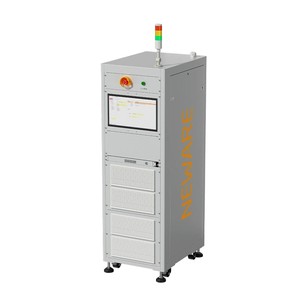
Custom OEM Curve Tracer Manufacturer & Exporter

High-Precision Semiconductor I-V Curve Analyzers & Multi-Channel Battery Cell Emulation Systems

Precision Instrumentation Catalog

Featured Curve Tracers & High-Dynamic Battery Simulators

Explore our custom OEM test platforms optimized for semiconductor I-V characterization, BMS hardware-in-the-loop (HIL) validation, and precision electrochemical laboratory testing.
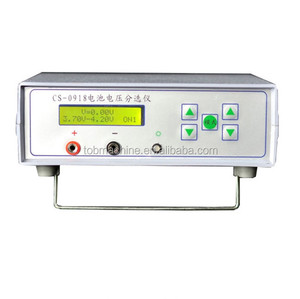
Lithium Ion Battery Voltage Current Capacity Tester
Get Catalog
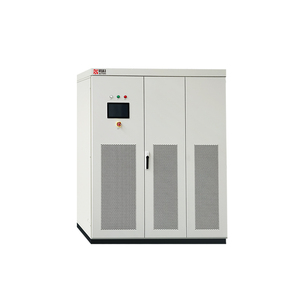
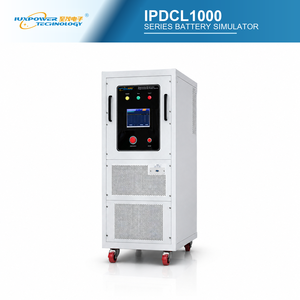
IPDCL1000 Series 220V 1KW High-Precision Battery Simulator
IPDCL1000 Series 220V 1KW High-Precision Battery Simulator Constant Power Function Testing Equipment
Get Catalog
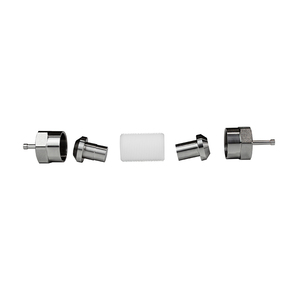
Removable Coin Battery Simulator
Removable Coin Battery Simulator for Coin Battery test Coin Cells Simulator
Get Catalog
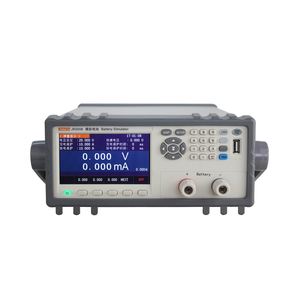
JK5506 Battery Simulator
Get Catalog
High-dynamic Battery Simulator 150-1000KW
Power Aikesaibo ABS High-precision, High-dynamic Battery Simulator With Universal Programmable Functions 150-1000KW
Get Catalog
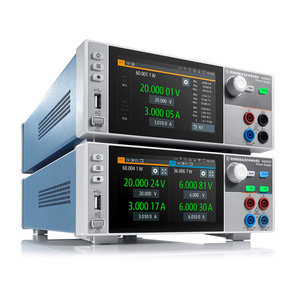
Rohde & Schwarz NGM201-NGM202 DC Power Bipolar Battery Simulator
Rohde & Schwarz NGM201-NGM202 Industrial DC Power Bipolar Battery Simulator with 100-240V AC Input
Get Catalog
Coin Cell Simulator CR2032/2016
Coin Cell Simulator Battery Simulator for Coin Cell Cr2032/2016 Commonly Used in Electrochemical Laboratories
Get Catalog
24-Channel Battery Cell Simulator for BMS Validation
24-Channel Battery Cell Simulator for BMS Validation SOC Estimation and Balance Strategy Testing
Get Catalog
40+
Years Power Engineering
475+ MW
Global Power Delivered
400k+
Custom OEM Configurations
4–6 Wks
Made-To-Order Lead Time
50k+
Instruments Deployed
Industry White Paper

Next-Generation Dynamic Curve Tracing & High-Speed Battery Emulation

Addressing the measurement physics of SiC/GaN wide-bandgap semiconductors, ultra-fast dynamic transient responses, and high-density multi-channel BMS hardware-in-the-loop (HIL) validation.

Current-Fed Switching Topology vs. Conventional Voltage-Fed Tracers

Traditional curve tracers and battery simulators rely heavily on voltage-fed switch-mode architectures with massive output capacitance filter banks. While effective for static steady-state characterization, voltage-fed systems suffer from slow transient discharge speeds, high stored energy at output terminals, and catastrophic arc damage during breakdown testing ($V_{(BR)DSS}$).

Our engineered Current-Fed Topology integrates an energy-storing inductor directly on the primary DC link. This inherent inductive current limitation provides continuous short-circuit immunity, rapid dynamic recovery under microsecond pulsed loads, and zero output surge current. When tracing semiconductor breakdown voltage or simulating cell internal resistance ($R_i$) under fault conditions, current-fed topology prevents DUT thermal destruction while preserving nanosecond voltage response.

Microsecond Bipolar Sinking & Four-Quadrant Dynamic Response

Modern electric vehicle (EV) powertrains and microgrid storage systems generate high-frequency back-EMF, regenerative current pulses, and sub-millisecond step loads. Standard programmable power sources operate strictly in Quadrant I (sourcing current). In contrast, specialized curve tracers and battery cell simulators demand true four-quadrant bipolar capability.

By pairing high-bandwidth linear MOSFET power stages with high-speed field-programmable gate array (FPGA) control loops, our custom OEM units achieve seamlessly continuous transitions between sourcing current (+) and sinking current (-) with transient recovery times under 10 microseconds. This enables precise simulation of battery cell balancing, instantaneous regenerative braking pulses, and dynamic impedance sweeps across diverse state-of-charge (SOC) parameters.

Technical Architecture Matrix: Custom OEM Solutions Comparison

Architecture Class Dynamic Response Voltage / Current Range Energy Storage Topology Primary Industrial Application
High-Voltage Dynamic Curve Tracer < 5 µs Pulse Width Up to 10,000 V / 1,000 A Current-Fed Inductive Link SiC / GaN Breakdown & $V_{GS(th)}$ Characterization
Multi-Channel BMS Cell Simulator < 10 µs Step Sinking 0–6 V / Cell (Up to 128 Ch) Linear MOSFET Dual Quadrant BMS HIL Validation, SOC Balance & Fault Injection
Megawatt Battery Simulator (150kW-1MW+) < 1 ms Full Scale Transient 150 V – 1500 V / Up to 3000 A Hybrid Matrix Switch-Mode EV Traction Inverter, DC Fast Charge & Microgrid Test
Coin Cell & Micro-Battery Simulator Sub-Microamp Resolution 0–5 V / 100 nA – 3 A Ultra-Low Noise Linear Stage Electrochemical Lab, Medical Wearables & IoT Testing
Vertically Integrated Manufacturing

Why Global OEMs & Laboratories Partner With Us

Full design control from raw sheet metal fabrication and precision magnetics winding to advanced PCB SMT assembly and 100% full-power thermal burn-in.

In-House Manufacturing

We do not rebrand third-party subassemblies. Every chassis, high-frequency transformer, control board, and firmware code is designed and fabricated within our vertically integrated facilities.

Unified Control Code

Standardized SCPI commands, Python API bindings, NI LabVIEW drivers, and Ethernet LXI/Modbus interfaces across all power levels—from 1U bench modules to megawatt systems.

100% Full-Power Burn-In

Every custom instrument undergoes strict high-temperature stress testing and automated I-V calibration under maximum load conditions prior to global export packaging.

4–6 Week Made-To-Order

By controlling core raw magnetic components and sheet metal stamping, we eliminate supply chain bottlenecks, consistently shipping tailored OEM solutions in weeks rather than months.

Strategic Sourcing Insights

Future Procurement Trends in Curve Tracing & Battery Emulation

Key technological shifts driving global R&D purchasing decisions across semiconductor fabs, automotive OEMs, and energy storage manufacturers.

01. Wide-Bandgap (SiC/GaN) Ultra-Fast Dynamic Curve Tracing

As SiC and GaN devices push switching frequencies beyond hundreds of kilohertz, static curve tracing is no longer sufficient. Procurement teams are prioritizing dynamic pulse curve tracers capable of sub-microsecond voltage sweeps up to 10 kV while capturing high-temperature leakage current ($I_{DSS}$) and dynamic $R_{DS(on)}$ degradation in real time.

02. Multi-Channel BMS Hardware-In-The-Loop (HIL) Integration

Modern battery management systems (BMS) require testing against hundreds of isolated cells concurrently. Enterprise buyers are moving away from single-channel bench supplies toward modular 24-channel to 128-channel cell simulators featuring millivolt-level accuracy, fault injection capabilities (open wire, short circuit), and active cell balancing simulation.

03. Closed-Loop Battery Electrochemical Impedance Simulation

Advanced battery simulators are incorporating real-time mathematical models (equivalent circuit modeling) to simulate State-of-Charge (SOC), State-of-Health (SOH), internal impedance ($R_i$), and temperature dependencies. This allows automotive engineers to test traction controllers without risking live battery pack thermal runaway events.

Technical Sourcing Guide

Frequently Asked Sourcing & Engineering FAQs

Common questions answered by our chief power system architects regarding OEM customization, exporting protocols, and system integration.

What is the fundamental difference between a dynamic curve tracer and a standard DC power supply?
A standard programmable DC power supply provides stable, regulated DC voltage or current for continuous power delivery, typically featuring slow slew rates to protect connected loads. A dynamic curve tracer, however, is designed to sweep voltage and current rapidly across broad operating ranges to plot the complete I-V characteristic curve of a semiconductor junction or electrochemical cell. Curve tracers feature nanosecond measurement sampling rates, high-frequency pulsing capabilities to prevent device thermal loading, and specialized four-quadrant bipolar sinking modes.
How do your OEM custom services accommodate unique high-voltage or high-current specifications?
Because we maintain full vertical integration—from custom magnetics winding to modular PCB design—we offer full OEM and ODM customization. Customers can specify non-standard voltage ranges (up to 10 kV DC), extreme current thresholds (up to 10,000 A via master/slave cabinet distribution), specialized liquid-cooling chassis topologies, multi-channel isolated outputs, and tailored software communications (Ethernet LXI, Modbus TCP, CANbus, RS-485).
Can these battery simulators simulate cell-balancing strategies and battery fault conditions?
Yes. Our multi-channel battery simulators (such as the 24-channel BMS Validation platform) feature independent bipolar sink/source capabilities per channel. This allows the equipment to inject both passive balancing loads and active reverse-current charge profiles into the BMS under test. Furthermore, individual channel outputs can programmatically trigger fault states, including cell over-voltage, deep discharge, open-circuit wire disconnection, and adjacent cell short-circuit scenarios.
What is the standard lead time for custom OEM manufacturing and global exporting?
Standard made-to-order instrument configurations ship within 4 to 6 weeks. For custom OEM engineering projects involving specialized form factors or megawatt-scale cabinet integration, typical delivery schedules range from 8 to 12 weeks. We hold common modular assemblies in stock for immediate dispatch and maintain export compliance certifications (CE, ISO9001, RoHS, LXI standard) for global delivery across North America, Europe, Asia-Pacific, and the Middle East.
How does current-fed topology protect delicate semiconductors during breakdown voltage testing?
In standard voltage-fed test systems, output filter capacitors dump significant stored electrical energy into the device under test (DUT) the moment avalanche breakdown occurs, frequently destroying the wafer junction. Our current-fed power topology uses an energy-storing inductor on the DC bus that inherently limits instantaneous fault current. This allows engineers to safely trace breakdown voltage curves ($V_{(BR)DSS}$) continuously without causing thermal damage or physical breakdown of the semiconductor die.
What automation interfaces and software libraries are included with custom units?
All curve tracers and battery simulators ship standard with Ethernet/LXI, USB, and RS-232 interfaces, alongside isolated analog I/O. Standard SCPI syntax is used for universal command sequences. We provide complete driver packages for standard environments including NI LabVIEW, MATLAB, IVI-COM/IVI-C drivers, Python open-source automation libraries, and Modbus TCP for industrial PLC integration.
Engineering Consultation

Request a Custom OEM Curve Tracer or Battery Simulator Proposal

Contact our senior power electronics design team today to discuss your exact voltage, current, dynamic slew rate, channel density, and custom OEM chassis requirement.