
Explore our wholesale catalog of high-dynamic DC regulated power systems, coin cell emulators, and high-power battery testers built with current-fed power architectures.
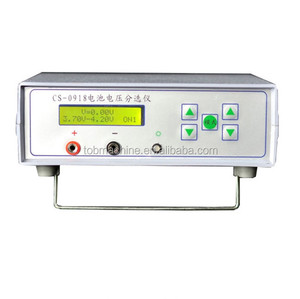
High-throughput capacity cycling, precise V/I monitoring, automated charge/discharge validation.
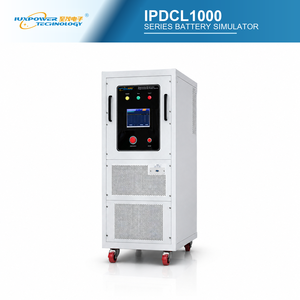
Microsecond transient recovery, constant power modes, low noise linear emulation stage.
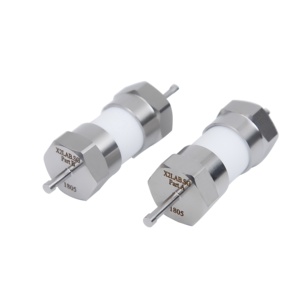
Modular cell fixture, nano-amp resolution current leakage test, lab-grade voltage sourcing.
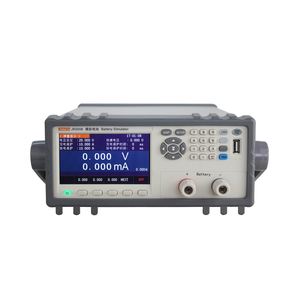
Benchtop multi-channel architecture, SCPI automation support, fast slew rate output control.
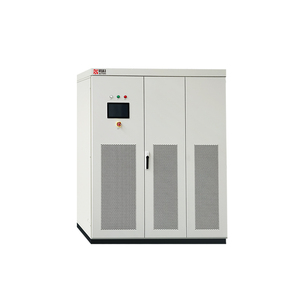
Megawatt-class EV drive testing, bidirectional power regeneration, liquid-cooled cabinet topology.
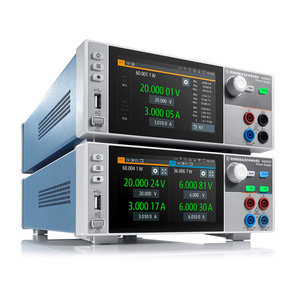
Bipolar operation, fast current sink/source switching, 100-240V universal AC mains input.
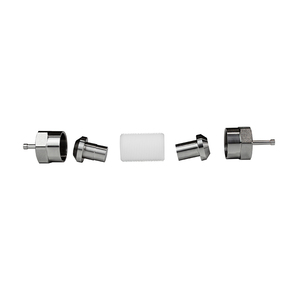
Electrochemical lab validation, ultra-stable DC offset, programmable internal resistance emulation.
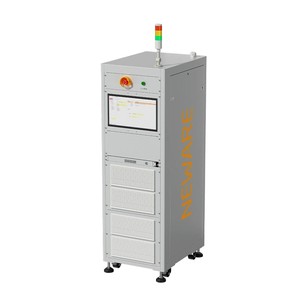
Multi-cell string emulation, channel-to-channel galvanic isolation, hardware-in-the-loop (HIL) ready.
In modern industrial test bays, semiconductor fabrication facilities, and electric vehicle powertrain labs, the demand for stable, low-noise regulated DC power has evolved beyond standard linear supplies.
Traditional voltage-fed DC regulated power supplies rely heavily on bulk capacitive storage across the output bus. While simple to manufacture, voltage-fed supplies suffer from high short-circuit surge currents, sluggish transient recovery when driving capacitive/inductive loads, and elevated stored energy that can destroy delicate devices under test (DUT) during flashover events.
Our OEM manufacturing facilities utilize a advanced Current-Fed Inverter Topology. By positioning an inductive reactor before the primary inverter stage, energy storage is shifted into the magnetic domain. This provides inherent short-circuit immunity, seamless constant-current (CC) to constant-voltage (CV) crossover, and drastically reduced peak surge currents during short circuits.
Validating Battery Management Systems (BMS) for EV traction packs and grid-scale ESS requires isolating each individual cell within a series string. Standard programmable supplies cannot sink active balancing current or simulate fast cell voltage drops without cross-channel ground loops.
Our 24-Channel Battery Cell Simulator platforms feature channel-to-channel galvanic isolation rated up to 1000V DC working voltage. Each channel delivers bi-directional sink/source capabilities with micro-amp resolution sensing, enabling real-time emulation of SOC drift, internal resistance fluctuations, and thermal runaway triggers under SCPI software control.
| System Platform Class | Power Output Envelope | Voltage & Current Range | Dynamic Transient Response | Primary Industrial Applications |
|---|---|---|---|---|
| Micro-Cell / Coin Battery Simulators | 100mW – 50W | 0 – 6V DC / 0 – 5A | < 20 μs recovery time | IoT devices, wearable sensors, electrochemical CR2032 cell characterization. |
| IPDCL High-Precision Benchtop Supplies | 1kW – 10kW | 0 – 600V DC / 0 – 200A | < 100 μs (10-90% load step) | DC-DC converter test, automated test equipment (ATE), lab R&D. |
| 24-Channel BMS Validation Simulators | 15W / channel (Isolated) | 0 – 5V DC per channel | < 50 μs response rate | BMS active/passive balancing validation, SOC estimation algorithm testing. |
| High-Dynamic ABS Megawatt Simulators | 150kW – 1000kW+ | 100 – 1500V DC / 0 – 2000A | < 1 ms dynamic response | EV powertrain dyno testing, microgrid solar/battery array simulation. |
As international buyers, system integrators, and OEM procurement managers source regulated DC power supplies from Chinese manufacturing hubs, four macro-technological trends are dominating request-for-quotation (RFQ) specifications.
Wide-bandgap (WBG) semiconductors like Silicon Carbide (SiC) and Gallium Nitride (GaN) are replacing legacy IGBTs in Chinese manufacturing facilities. SiC switching frequencies above 100kHz enable a 40% reduction in magnetics volume, achieving high power density in 1U and 2U rack-mount form factors.
Procurement mandates now prioritize bi-directional regulated supplies capable of returning siphoned energy back to the local AC grid with >96% efficiency. Sinking power back into grid infrastructure slashes facility cooling expenses during continuous battery burn-in and burn-out tests.
For particle accelerator steering magnets, medical imaging, and electrochemical research, standard power supplies fall short. Sourcing demands focus on high-stability output modules featuring ripple & noise parameters below 0.02% RMS and PPM-level thermal drift coefficients.
Wholesale buyers increasingly specify modular stackable architectures. Using unified digital control interfaces (LXI Ethernet, Modbus TCP, CANopen), individual 10kW rack units seamlessly parallel up to megawatt configurations under a master controller without control loop oscillation.
The transition from analog power supplies to software-defined, intelligent energy instruments is restructuring test labs around the globe.
Modern battery simulators go far beyond setting fixed DC voltage outputs. Embedded digital twin mathematical algorithms allow engineers to load dynamic battery chemistries (LFP, NMC, Solid-State, Sodium-Ion) and simulate real-time thermal degradation, aging, internal impedance shifts, and state-of-charge curves under dynamic load profiles.
Sourcing standard equipment without robust software support creates integration bottlenecks. Our industrial power supplies ship fully documented with Python SDKs, NI LabVIEW graphical drivers, IVI-C/IVI-COM software suites, and native SCPI command interpreters over isolated USB and Ethernet LXI ports.
Operating high-energy DC supplies carries severe arc-flash risks. Next-generation regulated units integrate programmable over-voltage protection (OVP), over-current protection (OCP), reverse polarity blocking diodes, remote sensing error detection, and safety interlock circuits certified to international ISO and CE compliance standards.
Combining vertical manufacturing integration with rigorous quality assurance to deliver robust custom power electronics worldwide.
Unlike assembly-only suppliers, we control every production process in-house: high-frequency transformer magnetic winding, multi-layer SMT surface mount assembly, sheet-metal enclosure CNC machining, and harness fabrication. This ensures strict quality control and predictable 4-6 week lead times.
Every single power instrument leaving our production line undergoes rigorous full-load thermal chamber stress testing, isolation voltage dielectric withstand testing (Hi-Pot), and dynamic load switching burn-in before final QC release, guaranteeing zero-defect arrival at client facilities.
Our power supplies comply with ISO 9001 quality management systems, CE safety directives, RoHS environmental standards, and UL safety design principles. We provide worldwide technical after-sales engineering support, calibration assistance, and spare parts availability.
Clear engineering and commercial answers to simplify your procurement decision.
Consult directly with our power electronics application engineers. Request tailored engineering specifications, custom OEM design options, and factory-direct wholesale pricing today.