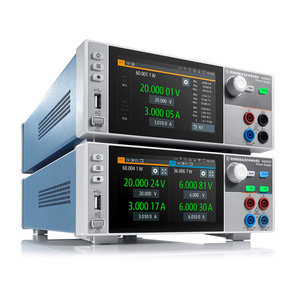
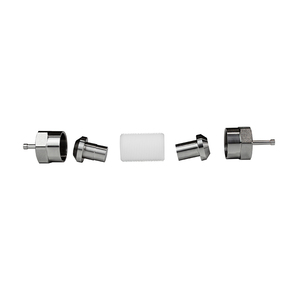
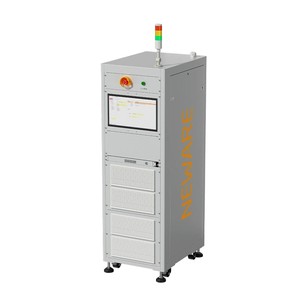
Explore our export-ready, high-dynamic DC testing equipment, coin cell emulators, and high-power BMS validation modules engineered for precision OEM applications.
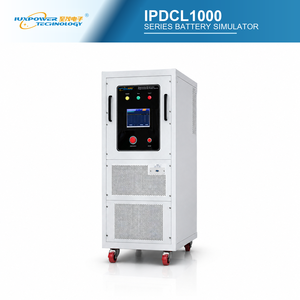
Strategic insights into current-fed topologies, wide-bandgap (SiC/GaN) power electronics, and high-dynamic battery emulation systems for B2B engineering decision-makers.
Unlike conventional voltage-fed topologies that rely heavily on electrolytic capacitors susceptible to thermal degradation and high inrush stress, modern industrial power modules utilize current-fed architectures. An inductive DC bus serves as the primary energy storage mechanism. This design delivers inherent short-circuit survival, exceptional immunity to arcing during plasma applications, and robust protection against regenerative dynamic energy returning from heavy motorized loads or traction testing rigs.
Traditional wholesale DC power modules lock peak power delivery to a single voltage and current point. Modern programmable DC modules incorporate auto-ranging power stage control, making full rated capacity available across a broad operating envelope. A single 10kW module can output high voltage at lower currents or lower voltage at maximum current seamlessly, optimizing total capital expenditure for ATE rack integrators and OEM system designers.
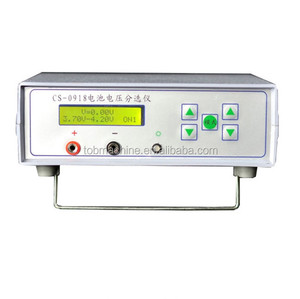
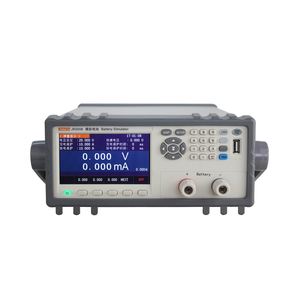
For modern Electric Vehicle (EV) battery packs and stationary Energy Storage Systems (ESS), validate Battery Management Systems requires precision multi-channel micro-power modules. By emulating individual cell voltage dynamics down to microvolt resolutions, systems like the 24-Channel Battery Cell Simulator enable precise verification of State-of-Charge (SOC) estimation, fault detection, passive balancing strategies, and thermal runway protection rules without risking real lithium chemistry.
Field data demonstrates that switching from traditional linear MOSFET arrays to high-frequency switched-mode, current-fed topology reduces module physical footprint by up to 65% while elevating thermal power density beyond 1.5 kW per 1U chassis. Furthermore, MTBF (Mean Time Between Failures) increases from 45,000 hours to over 180,000 operating hours under full load due to lowered internal operating temperatures and elimination of volatile capacitor banks.
Evaluating macro-market vectors: Silicon Carbide (SiC) integration, bi-directional energy flows, and total cost of ownership (TCO) optimization for export-grade power systems.
The global transition to wide-bandgap (WBG) semiconductors like Silicon Carbide (SiC) and Gallium Nitride (GaN) allows switching frequencies to surpass 200 kHz. Procurement teams must source power modules designed with high WBG switching rates to drastically diminish transformer footprints, minimize switching losses, and achieve power conversion efficiencies exceeding 96.5% under variable load curves.
Proprietary communications interfaces are fast becoming obsolete. Future-ready power modules must natively integrate LXI-certified Ethernet, USB, RS-232, and optional Modbus TCP / IEEE-488 (GPIB) command channels supporting standardized SCPI commands. Digital twin software integration allows remote hardware programming, live telemetry logging, and automated fault reporting directly into LabVIEW, Python, or MATLAB ATE environments.
With stringent global carbon accounting and energy costs rising, burn-in testing of power supplies, batteries, and solar inverters requires regenerative loads. Modern power modules act as dual-quadrant systems—supplying power during stimulus phases and absorbing dynamic current back onto the local AC grid with >92% energy recovery efficiency, drastically lowering facility utility overhead.
Compare standard module series specifications to select the exact hardware configuration for your testing bay or system integration project.
| Series Platform | Power Density Range | Chassis Form Factor | Cooling Topology | Transient Response | Primary Industrial Application |
|---|---|---|---|---|---|
| SLx Micro-Rack | 1.5 kW – 10 kW | 1U Rack-Mount | Forced Air Cooling | < 2 ms | ATE Systems, Double Pulse SiC Bus Testing |
| XR Precision | 2.0 kW – 10 kW | 2U Rack-Mount | Air Cooled / High Derating | < 1.5 ms | Aerospace Avionics, Metrology, High Voltage DC |
| TS Industrial | 5.0 kW – 100 kW | 3U – 16U Integrated Cabinet | Modular Fan Array | < 3 ms | EV Traction Drive, Electrolysis, Magnet Power |
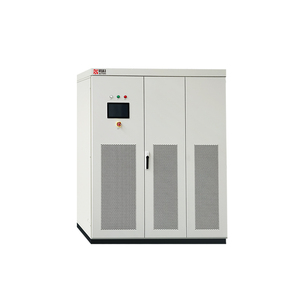
| MT Megawatt | 150 kW – 3.0 MW | Full Enclosure Floor Cabinet | Ducted High-CFM Air | < 10 ms | Plasma Coating, Hypersonic Wind Tunnels, Arc Furnaces |
| ML Water-Cooled | 500 kW – 10.0 MW+ | Custom Liquid Cabinet | Closed-Loop Water-Glycol | < 5 ms | Continuous Heavy Duty, Cleanroom & Noise-Sensitive Facilities |
| ALx Electronic Load | 1.25 kW – 20 kW+ | 3U – 6U Rack Unit | Linear MOSFET Heat Sink | < 500 µs | Fuel Cell, Solar Array Emulation, Battery Discharging |
By executing engineering design, CNC sheet metal fabrication, magnetics winding, PCB assembly, and 100% full-power burn-in inside one facility, we guarantee unmatched delivery speed and reliability.
Inductors and high-frequency isolation transformers are designed and wound in-house to custom core geometry standards. This controls thermal dissipation profiles and guarantees low leakage inductance, allowing rapid transient response during high-dynamic pulse loading conditions.
No power module leaves our production line without passing mandatory full-load burn-in cycles under elevated ambient temperatures. Detailed automated test documentation is generated for every serial number, ensuring zero-defect arrival at your factory floor.
All power equipment meets stringent international safety and EMC standards including CE Mark, UL Listing, and RoHS compliance. Backed by factory-trained regional engineering teams across North America, Europe, and Asia Pacific for seamless technical assistance.
Direct technical and commercial answers designed for chief engineers, procurement directors, and ATE system integrators.
Discuss your exact voltage, current dynamic profiles, and modular custom specifications with senior power engineers. Receive customized technical proposals and wholesale exporter pricing within 24 business hours.