
China Wholesale Power Electronics Manufacturers & Supplier

Industrial-Grade Programmable DC Power Supplies, High-Precision Battery Simulators & Regenerative Test Equipment

Enterprise Portfolio

Featured Battery Testing & Power Electronics Platforms

Precision-engineered hardware configurations designed for multi-channel cell emulation, battery pack cycling, and high-dynamic power simulation.

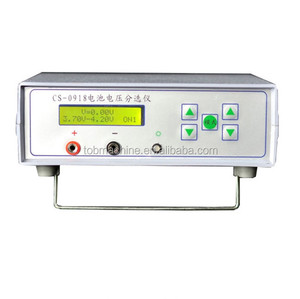
Lithium Ion Battery Voltage Current Capacity Tester

Lithium Ion Battery Voltage Current Capacity Tester

High Precision Capacity Analysis
Send an Inquiry
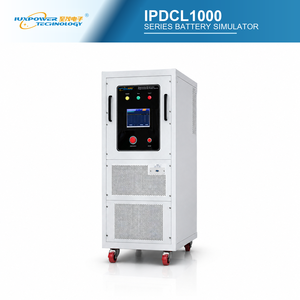
IPDCL1000 Series High-Precision Battery Simulator

IPDCL1000 Series 220V 1KW High-Precision Battery Simulator Constant Power Testing Equipment

1KW / 220V Constant Power
Send an Inquiry
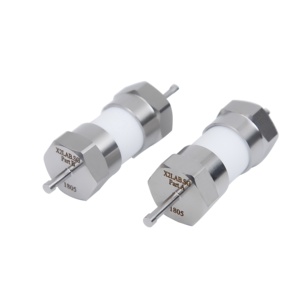
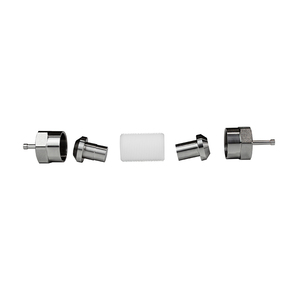
Removable Coin Battery Simulator

Removable Coin Battery Simulator for Coin Battery Test Coin Cells Simulator

Coin Cell Test Lab Grade
Send an Inquiry
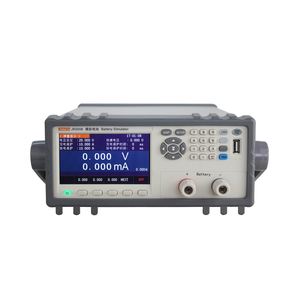
JK5506 Battery Simulator

JK5506 Battery Simulator Modular Test Station

Fast Response Programmable
Send an Inquiry
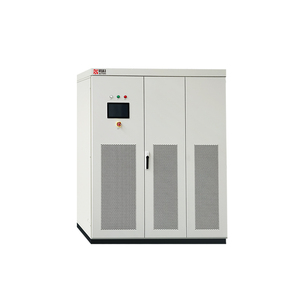
High-dynamic Battery Simulator 150-1000KW

Power Aikesaibo ABS High-Precision High-Dynamic Battery Simulator 150-1000KW

150-1000KW Megawatt Class
Send an Inquiry
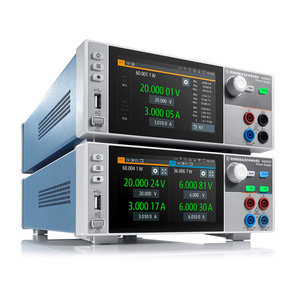
Industrial DC Power Bipolar Battery Simulator

Rohde & Schwarz NGM201-NGM202 Industrial DC Power Bipolar Battery Simulator

Bipolar Output Sub-mV Ripple
Send an Inquiry
Coin Cell Simulator CR2032 CR2016

Coin Cell Simulator Battery Simulator for CR2032/2016 Electrochemical Laboratories

Electrochemical CR2032/2016
Send an Inquiry
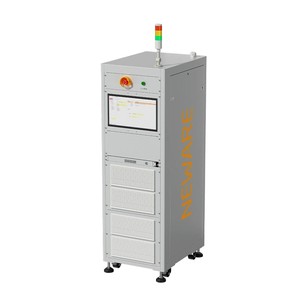
24-Channel Battery Cell Simulator

24-Channel Battery Cell Simulator for BMS Validation & SOC Estimation

24 Channels BMS Validation
Send an Inquiry
40+
Years Combined R&D Expertise
1.5kW-10MW
Power Range Scalability
<100 µs
Transient Response Speed
4-6 Weeks
Standard Wholesale Lead Time
Technical White Paper

Architectural Innovations in Industrial Power Electronics & Battery Emulation

An engineering benchmark on high-density power processing, current-fed switching topologies, and microsecond-level hardware-in-the-loop (HIL) battery simulation.

1. Executive Summary & Paradigm Shift in Power Test Infrastructure

The global shift toward electrification across automotive (EV), renewable microgrids, aerospace, and energy storage systems (ESS) has placed unprecedented demands on power conversion and testing systems. As battery voltages transition from standard 400V architectures to 800V and 1200V Silicon Carbide (SiC) and Gallium Nitride (GaN) driven platforms, standard programmable power supplies often fail to meet the rigorous dynamic constraints of modern testing environments.

As a premier China wholesale power electronics manufacturer and OEM/ODM supplier, our engineering paradigm centers on Current-Fed Power Conversion Topologies, high-speed DSP/FPGA control loops, and bidirectional energy recovery. Unlike traditional voltage-fed topologies that rely heavily on bulk capacitive output banks—which introduce severe thermal bottlenecks, slower dynamic response, and vulnerability to destructive short-circuit discharge—our current-fed architecture utilizes inductive energy storage on the internal DC bus. This fundamental topology shift provides inherent short-circuit immunity, superior dynamic regulation, and sub-millisecond dynamic step responses essential for modern battery management system (BMS) validation and wide-bandgap device characterization.

2. Current-Fed Topology vs. Voltage-Fed Systems: A Technical Comparative Analysis

To understand the engineering advantage of modern high-power DC systems and battery simulators, it is vital to contrast current-fed switching topologies against legacy voltage-fed systems. In high-power applications (spanning 1.5 kW up to multi-megawatt installations), the output capacitance of a voltage-fed power supply stores substantial electrical energy ($E = \frac{1}{2}CV^2$). When subjected to rapid load changes, arcing, or direct short-circuit conditions during unit-under-test (UUT) failures, this energy dumps instantaneously into the load, often causing catastrophic device damage.

Conversely, current-fed architectures decouple the primary voltage source using a series-connected DC link inductor. The switching network regulates the current fed into the main high-frequency transformer, offering distinct operational parameters:

Electrical Parameter Current-Fed Topology (Our Platform) Legacy Voltage-Fed Supplies Engineering Benefit
Short-Circuit Protection Inherent current control via series DC inductor Relies on rapid active shut-off circuits Zero catastrophic energy discharge during UUT short-circuit events
Operating Voltage Envelope Wide constant-power operating curve Narrow fixed power-rating point One unit covers multiple voltage/current testing profiles
Dynamic Step Response <100 µs to 1 ms recovery time 3 ms to 15 ms recovery time Accurately captures fast transient loads of inverter switching
Low-Voltage High-Current Ripple Sub-millivolt RMS low noise ripple High harmonic ripple at lower operating points High measurement accuracy for electrochemical & cell characterization
Parallelization Scaling Seamless Master/Slave digital synchronization Analog drop-compensation required Scalable up to 10 MW+ without control loop destabilization

3. Multi-Channel Battery Emulation & BMS Hardware-in-the-Loop (HIL) Testing

Modern battery pack testing requires more than simple static power delivery. Battery Management Systems (BMS) must monitor individual cell voltages, state of charge (SOC), state of health (SOH), and balance current across dozens or hundreds of series-connected cells. Our multi-channel battery cell simulators (such as the 24-Channel Battery Cell Simulator series) are explicitly designed to address the challenges of BMS algorithm validation.

Key Capabilities of Advanced Battery Cell Emulators:

  • Bidirectional Current Sinking & Sourcing: Each channel can independently source current (simulating charging) or sink current (simulating discharging and cell balancing) with seamless zero-cross transition times.
  • Individual Galvanic Channel Isolation: Built with 1000V+ channel-to-channel and channel-to-ground isolation, allowing continuous series stacking to simulate high-voltage EV battery strings.
  • Fault Injection Capabilities: Integrated hardware relays allow real-time injection of cell open-circuit faults, short-circuit conditions, reverse polarity, and temperature sensor (NTC/PTC) emulation.
  • Ultra-High Precision Current Sensing: Micro-ampere ($\mu\text{A}$) resolution measurement circuits capture minute quiescent current draw of BMS monitoring ICs during sleep modes.

4. Megawatt-Scale Power Systems & Water-Cooled Thermal Architecture

For high-capacity traction battery testing, grid-tied inverter validation, and industrial electrolysis, power requirements frequently scale from 150 kW to over 10 MW. At these levels, traditional air-cooled dissipation becomes impractical due to severe thermal loads on lab HVAC systems and elevated acoustic noise.

Our heavy-duty industrial test platforms employ closed-loop liquid cooling manifolds using direct-plate copper heat exchangers. Liquid cooling reduces the total enclosure footprint by up to 60% compared to equivalent air-cooled cabinets while maintaining internal junction temperatures well within optimal MTBF curves. Integrated flow meters, temperature sensors, and condensation control circuits ensure 24/7 continuous operation in rigorous industrial environments.

Manufacturing Excellence

Why Direct Wholesale Sourcing from Our Factory Accelerates Your Procurement

By consolidating design, vertical component fabrication, magnetics winding, and automated testing under one roof, we eliminate intermediate supply chain friction.

Vertically Integrated Production

From in-house CNC sheet metal enclosure processing and custom high-frequency transformer winding to SMT surface mounting and final load burn-in, we retain total control over build quality and lead times.

Strict Quality & Burn-In Testing

Every unit undergoes 100% full-power thermal burn-in testing prior to shipment. All instruments are calibrated to NIST-traceable standards and comply with international CE, UL, and ISO9001 certifications.

Open Software & SCPI Integration

Standard Ethernet/LXI, USB, RS-232, and isolated analog control interfaces. Standard SCPI command support allows rapid integration into LabVIEW, Python, MATLAB, and automated ATE test racks.

Future Sourcing Trends in High-Power Electronics & Battery Testing

As engineering teams plan their test lab capital expenditures over the next decade, several technology macro-trends are reshaping global procurement requirements for power supplies and battery simulators:

A. Transition to Wide-Bandgap (SiC/GaN) Power Devices

Silicon Carbide (SiC) MOSFETs allow power converters to switch at frequencies exceeding 100 kHz with significantly reduced switching losses. However, the high $dV/dt$ dynamic switching creates significant electromagnetic interference (EMI) and fast transient voltage spikes. Future power supplies must feature ultra-low parasitic capacitance, high isolation impedance, and fast dynamic regulation loop response times (<50 $\mu\text{s}$) to remain stable when supplying power to SiC traction inverters.

B. High-Voltage 800V-1500V Battery Architecture

Commercial electric vehicles, passenger cars, and utility-scale energy storage systems are rapidly transitioning from 400V DC bus architectures to 800V, 1000V, and 1500V DC standards to minimize $I^2R$ copper resistive losses and shorten charging times. Bipolar and programmable DC sources must offer flexible voltage output scaling up to 2000V DC without requiring complex series-cascading setups.

C. Regenerative Line-Feedback Loads (Green Testing)

Energy efficiency during burn-in and battery pack discharge testing is no longer optional. Modern electronic loads must incorporate Active Front End (AFE) regenerative technology to invert absorbed DC energy back into clean, low-distortion AC grid power with >95% electrical efficiency, drastically reducing factory cooling requirements and electrical power consumption.

Technical FAQ

Frequently Asked Buyer & Engineering Questions

Essential details for wholesale purchasers, system integrators, and lab managers evaluating China power electronics suppliers.

What power range and voltage levels do your wholesale programmable DC supplies support?
Our power equipment spans from compact 1.5 kW 1U rack-mount units up to megawatt-class (10 MW+) liquid-cooled cabinet systems. Voltage outputs range from 0–10V low-voltage high-current configurations up to 2000V DC high-voltage architectures, catering to everything from coin cell laboratory testing up to utility-scale ESS inverter validation.
How does a Battery Simulator differ from a standard programmable DC power supply?
A standard DC power supply delivers stable voltage and current, operating primarily in unidirectional Mode. A true Battery Simulator features high dynamic response, bidirectional current sourcing/sinking capability, selectable internal output resistance ($R_i$), precise State-of-Charge (SOC) curve loading, and sub-millisecond dynamic switching between charge and discharge modes without voltage overshoot.
What is the standard build time for customized OEM/ODM power supply orders?
Thanks to our vertically integrated factory setup (in-house metal fabrication, magnetics, and automated assembly), standard production lead times for made-to-order high-power units range between 4 to 6 weeks. Standard catalog inventory models are frequently available for immediate dispatch.
Can these power platforms emulate solar PV array profiles for MPPT validation?
Yes. When paired with our specialized profile emulation software, our programmable DC supplies accurately reproduce Photovoltaic I-V curves, simulating variations in solar irradiance, temperature, partial shading conditions, and fill factor for verifying Maximum Power Point Tracking (MPPT) algorithms on solar inverters.
How do you manage international technical support, warranty, and spare parts supply?
All equipment includes a standard factory warranty, extended service options, comprehensive schematic documentation, and direct engineering assistance over remote diagnostics. Spare modular power blocks, control cards, and fan assemblies are stocked for immediate international dispatch to ensure minimal operational downtime.
Which programming interfaces are standard for automated factory test benches?
Our systems come standard with Ethernet/LXI, USB, RS-232, and 0-5V/0-10V isolated analog I/O. Optional factory add-ons include GPIB (IEEE-488), Modbus-TCP, and CANbus protocols. Native SCPI commands and NI LabVIEW/Python drivers are provided for seamless ATE rack integration.

Request a Direct Factory Wholesale Quotation

Consult with our application engineers regarding custom voltage/current matrices, dynamic load requirements, and bulk supplier pricing for your facility.