
Explore top-tier equipment manufactured to international ISO standards, featuring patented evaporative media, precision process cooling, and high-efficiency heat rejection.
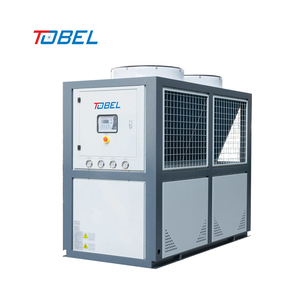
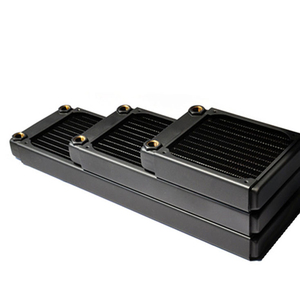
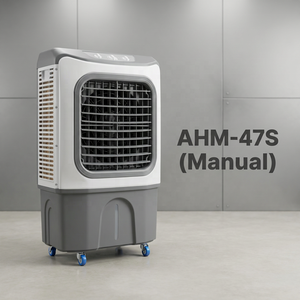
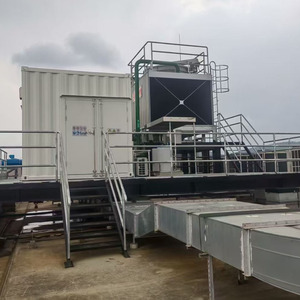
Thermal management in modern manufacturing, high-density computing, and continuous process operations has reached a critical inflection point. As thermal flux densities exceed traditional air-cooling limits (typically peaking at ~1.0 W/cm² to 1.5 W/cm²), industrial procurement teams must transition toward high-efficiency fluid thermodynamics. Water, exhibiting a specific heat capacity of approximately 4.184 kJ/(kg·K)—nearly four times that of dry air—provides an unparalleled thermal energy transport medium.
Chinese OEM/ODM manufacturing hubs have integrated vertically to produce modular liquid-cooling solutions engineered for severe continuous-duty applications. From low-temperature process chillers operating at sub-zero glycol thresholds to containerized liquid-liquid thermal exchange units designed for megawatt-scale AI data centers, China’s industrial cooling ecosystem delivers robust, cost-optimized, and compliant equipment worldwide.
Our direct-expansion and chilled-water loops utilize precision expansion valves and plate heat exchangers (PHE) to maximize latent phase transitions, drastically shrinking operational footprint while minimizing power draw.
Built with industrial-grade telemetry, automatic bypass loops, and programmable digital controls, our water-cooled process chillers prevent thermal runaway and hydraulic hammer shocks during peak production cycles.
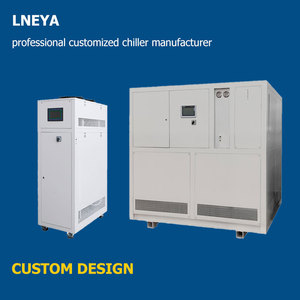
Deploy scalable cooling architecture from 8KW standalone benchtop units up to 1000KW+ containerized stations (DYF Series) capable of supporting multi-tenant liquid cooling loops effortlessly.
By controlling the complete manufacturing value chain—from sheet metal fabrication and copper manifold welding to automated PCB assembly and full-load burn-in testing—we provide unmatched cost efficiency and reliable build schedules.
Unlike assemblers who outsource critical components, our integrated facility executes CNC machining, custom coil bending, magnetics winding, and corrosion-resistant powder coating in-house under strict ISO 9001:2015 monitoring.
Every refrigeration unit, evaporative cooler, and liquid-liquid heat exchanger undergoes 100% full-power, continuous thermal pressure testing and helium leak detection prior to global packaging and export compliance sign-off.
Equipment ships with CE, UL, and RoHS compliance options. Controllers support Modbus TCP, RS-485, SCPI, and Ethernet/LXI remote telemetry for integration into modern industrial SCADA or BMS environments.
| Category | Cooling Capacity Range | Cooling Medium | Core Applications | Primary Advantage |
|---|---|---|---|---|
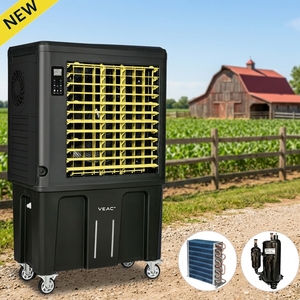
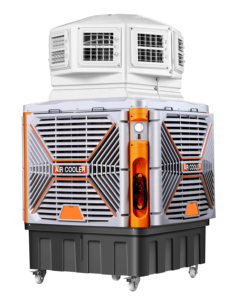
| Evaporative Air Coolers | 10,000 to 50,000 CMH | Water / Evaporative Media | Factories, Warehouses, Greenhouses | Ultra-low energy consumption (up to 80% savings vs air conditioning) |
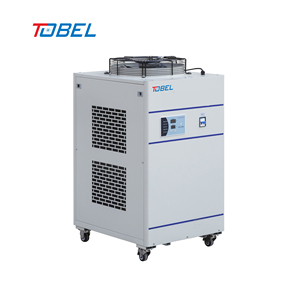
| Compact Process Chillers | 3 kW to 30 kW (1HP - 10HP) | R410A / R407C / Water | Injection Molding, Medical Lasers, CNC | High-precision temperature control (±0.5°C tolerance) |
| Glycol Sub-Zero Chillers | 50 kW to 500 kW | Water-Glycol Mixture | Ice Rinks, Chemical Processing, Cold Storage | Stable sub-zero operation (-15°C to -35°C continuous loop) |
| Containerized Cooling Stations | 200 kW to 2000 kW+ | Liquid-to-Liquid Heat Exchanger | AI Compute, Mining Containers, HPC Data Centers | Modular plug-and-play setup with zero facility footprint modification |
Global procurement guidelines are shifting rapidly toward sustainable refrigerants including R32, R1234yf, and R744 (CO2). Chinese suppliers are leading the factory-fitted transition, lowering carbon footprints while ensuring compliance with EU F-Gas and US EPA SNAP regulations.
Air cooling is structurally incapable of absorbing heat loads from modern GPU clusters exceeding 700W TDP per chip. The procurement of containerized liquid-liquid thermal distribution units (CDUs) is expected to grow at a CAGR of 24.5%, making pre-engineered cooling stations a critical infrastructure line item.
Next-generation process cooling machinery now embeds AI-driven microcontrollers that calculate compressor vibration, refrigerant flow efficiency, and heat exchange delta (ΔT) in real time. Remote alerts reduce unplanned downtime by over 60%.
Cooling capacity ($Q$) is calculated using the thermodynamic formula:
Q = m × Cₚ × ΔT
Where m represents the fluid mass flow rate (kg/s), Cₚ is the specific heat capacity of the coolant (e.g., 4.184 kJ/kg·°C for water), and ΔT is the temperature differential between fluid inlet and outlet. Our application engineers assist in specifying proper safety margins (typically +15% to +20%) to account for ambient summer spikes and fouling factors.
Air-cooled chillers reject heat to the surrounding air via condenser fans, making them easy to install without additional water infrastructure. However, water-cooled chillers reject heat via a dedicated cooling tower or water loop, offering vastly superior energy efficiency (up to 30-40% lower kWh consumption), smaller physical footprint, and quiet indoor operation. Water-cooled systems are ideal for heavy continuous industrial processes and high ambient heat locations.
We recommend demineralized or distilled water with a total dissolved solids (TDS) rating below 100 ppm and a pH level between 6.5 and 8.0. For sub-zero or low-temperature applications (such as ice rinks or outdoor loops), an inhibited ethylene or propylene glycol mixture (typically 20% to 40% concentration by volume) is required to prevent freezing and bio-fouling within copper or stainless steel heat exchangers.
Standard production lead times for standard process chillers and evaporative units range from 2 to 4 weeks. Custom-engineered configurations—such as specialized dual-circuit cooling loops, explosion-proof electrical enclosures, sub-zero glycol systems, or containerized liquid cooling stations—typically ship within 4 to 6 weeks. Complete OEM branding, customized PLC touchscreens, and custom frame dimensions are available upon request.
Evaporative water air coolers (such as our patented 10,000 CMH units) rely on the latent heat of water evaporation rather than energy-intensive mechanical refrigeration compressors. As a result, evaporative systems use up to 80-90% less electricity compared to standard DX air conditioning units delivering equivalent airflow, making them exceptionally cost-effective for large open factories, logistics hubs, and agricultural facilities.
Consult directly with our thermal application engineers to receive custom CAD drawings, thermodynamic load calculations, and factory-direct pricing for your project.