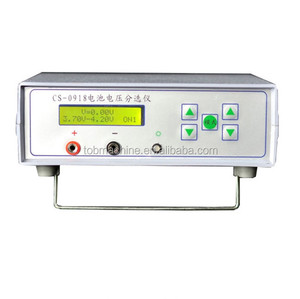
Lithium Ion Battery Voltage Current Capacity Tester
Comprehensive multi-channel automated test system designed for rigorous capacity verification, internal resistance (ESR) diagnostics, and cycle life testing of high-energy Li-ion battery modules.

Engineered for high dynamic power cycling, electro-chemistry research, and automated BMS Hardware-in-the-Loop (HIL) test benches.
Comprehensive multi-channel automated test system designed for rigorous capacity verification, internal resistance (ESR) diagnostics, and cycle life testing of high-energy Li-ion battery modules.
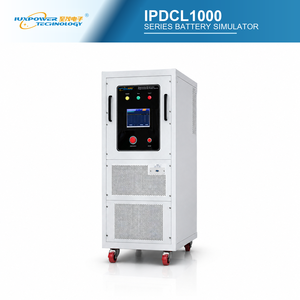
Features ultra-fast transient dynamic response and fast programmable switching. Perfectly suited for low-noise DC-DC converter evaluation and precision constant power load simulation.
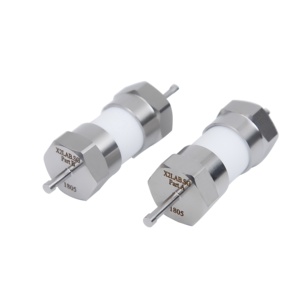
Modular laboratory fixture engineered for rapid coin cell swap-outs. Delivers ultra-stable micro-amp resolution required for electrochemical sensor testing and IoT device power profiling.
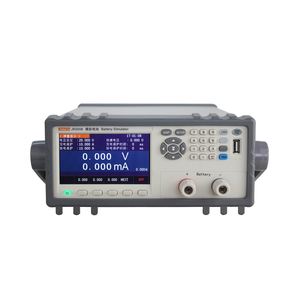
Industrial-grade multi-channel DC power supply providing sink and source operational capabilities. Essential for verifying BMS over-voltage and under-voltage protection thresholds.
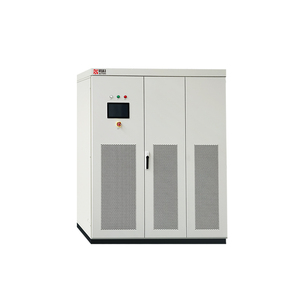
Megawatt-class bidirectional DC test bench built for EV traction inverters, heavy energy storage system (ESS) integration, and regenerative vehicle-to-grid (V2G) testing.
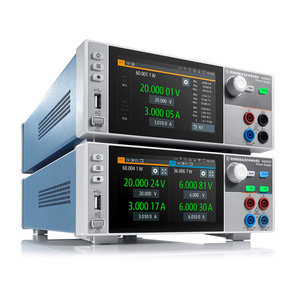
Dual-quadrant high-speed linear power supply delivering sub-microamp current measurement resolution with minimal ripple. Designed for sensitive wireless and medical R&D.
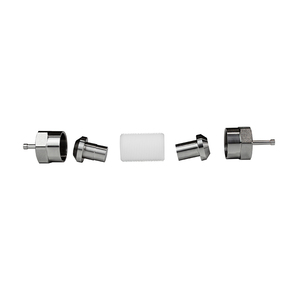
Precision emulative source designed specifically for battery chemistry analysis, coin cell parameter extraction, and high-accuracy impedance spectroscopy setups.
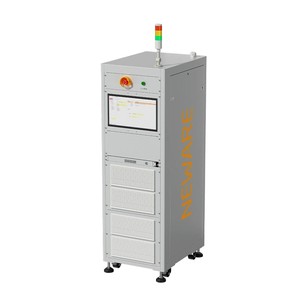
High-density cell emulation rack feature-built for BMS software verification, real-time active/passive balancing algorithm assessment, and fault insertion injection testing.
Combining four decades of power electronics expertise with current-fed topology design and vertically integrated manufacturing capability.
Unlike fragile voltage-fed systems, our current-fed architecture utilizes inductive energy storage on the DC bus. This provides natural short-circuit immunity, protection against reverse EMF from electric drives, and unexcelled durability in brutal test environments.
Native integration with SCPI command sets, NI LabVIEW drivers, Python automation libraries, Ethernet LXI, Modbus TCP, and CAN bus interfaces. Effortlessly drops into automated HIL testing platforms for instantaneous BMS algorithm verification.
Every magnetics assembly, high-frequency transformer, custom enclosure, sheet metal frame, and multi-layer SMT circuit board is produced completely in-house under strict ISO9001 and CE quality guidelines, eliminating extended supply chain risks.
Operating across wide constant-power output curves allows a single simulator bench to cover a wide spectrum of voltage and current test matrix combinations, dramatically lowering overall equipment CAPEX requirements for R&D labs.
The rapid transition of the automotive, aerospace, and renewable energy industries toward electrifying high-power platforms has completely transformed testing requirements. Standard variable power supplies no longer fulfill the stringent transient response speeds and bi-directional power flow requirements needed for next-generation validation.
With Silicon Carbide (SiC) and Gallium Nitride (GaN) power electronics operating at switching frequencies surpassing hundreds of kilohertz, modern test benches must deliver ultra-low bus inductance and lightning-fast dynamic transient response. Current test bench design is shifting toward high bandwidth output stages capable of emulating microsecond-level load steps without voltage overshoot or ringing, ensuring accurate efficiency measurement of traction drives and DC-DC converters.
Modern Battery Management Systems rely heavily on complex state-of-charge (SOC), state-of-health (SOH), and electro-thermal safety algorithms. Single-channel DC power supplies are inadequate for evaluating pack-level behavior. Test bench architecture now mandates isolated multi-channel battery cell simulators (such as 24-channel to 128-channel racks) capable of sink/source operation per cell. This setup allows researchers to inject artificial cell imbalance, wire fault open circuits, and extreme temperature sensor signals safely in hardware-in-the-loop environments.
As megawatt-scale testing becomes standard for heavy Electric Vehicles (EVs), eVTOL aircraft, and battery energy storage systems (BESS), traditional resistive load banks that turn kinetic energy into waste heat are cost-prohibitive. Next-generation China-manufactured export test benches leverage bidirectional regenerative active front-end (AFE) technology. This achieves upwards of 95% energy recovery efficiency during discharge cycles, returning clean AC power back to the facility grid while significantly reducing HVAC cooling costs.
For coin cell, ultra-capacitor, and fuel-cell research, high-frequency switching noise can distort impedance spectrum measurements and corrupt micro-amp sensors. Advanced test bench design incorporates hybrid configurations: utilizing linear MOSFET electronic loads for low-power, noise-free current sinking alongside switching topologies for main power delivery. This dual approach grants high accuracy without sacrificing dynamic performance.
Global procurement teams are changing how they evaluate, select, and acquire high-power testing infrastructure. Sourcing managers are moving beyond upfront capital cost (CAPEX) to prioritize modularity, software ecosystems, and supply chain agility.
Instead of purchasing fixed, single-block megawatt supplies that become obsolete when test voltage specs increase, procurement engineers are standardizing on 1U-3U modular building blocks. These can be wired in master-slave configurations up to 10MW, permitting rapid lab expansion and reducing downtime risk.
Hardware capabilities are bounded by software control flexibility. Buying teams now prioritize test benches supplied with open API documentation, Python scripts, IVI-C/IVI-COM drivers, and pre-built LabVIEW VIs. This allows smooth integration into automated CI/CD hardware testing pipelines.
Tier-1 Western OEMs often carry 24 to 52-week lead times for high-voltage custom power supplies. Top-tier Chinese manufacturers are winning global tenders by combining domestic supply chain integration with custom engineering options—delivering custom-configured test benches in under 6 weeks.
Compare performance envelopes across our primary battery simulator, load, and DC bench platform series to identify the ideal fit for your application.
| Platform Series | Voltage / Current Range | Power Output Range | Dynamic Response Speed | Target Application Engineering |
|---|---|---|---|---|
| SLx / SL 1U Series | 0-1000 V / 0-250 A | 1.5 kW – 10 kW | < 2 ms | Compact ATE Racks, Low-power Double Pulse Testing, DC Bus Supply |
| TS Rack-Mount Series | 0-2000 V / 0-4000 A | 5 kW – 100 kW | < 1 ms | EV Traction Inverter Testing, Magnet Power, Electrolysis Benches |
| IPDCL High Dynamic | 0-220 V / High Precision | 1 kW – 20 kW | < 500 µs | DC-DC Converter Evaluation, High Precision Constant Power Sinking |
| ABS Megawatt Series | 0-1500 V / High Current | 150 kW – 1000 kW+ | < 1 ms (Bi-directional) | Grid-tied ESS Cycling, Heavy EV Powertrain, Regenerative V2G Benches |
| 24-Channel BMS Cell Simulator | 0-5 V per channel / 5A | Multi-channel Modular | < 100 µs per channel | BMS HIL Validation, Active Balancing Verification, Fault Injection |
| Rohde & Schwarz NGM Bipolar | 0-20 V / 0-6 A | Precision Lab Scale | < 30 µs (Ultra-low noise) | IoT Battery Drain Profiling, Wireless Communications R&D, Micro-current Sinking |
Addressing technical, logistical, and operational considerations for international engineering procurement teams.
Consult with our test bench design engineers to specify the optimal power envelope, channel density, dynamic transient response, and control interface for your application.