Explore our industrial-grade semiconductor parametric testers, high-dynamic battery simulators, and multichannel ATE validation systems.
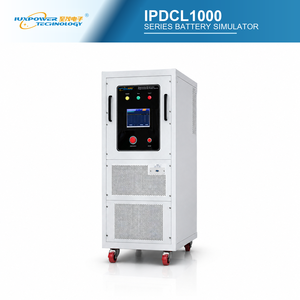
The rapidly escalating global demand for high-efficiency power semiconductors—driven by Silicon Carbide (SiC) and Gallium Nitride (GaN) wide-bandgap (WBG) devices, electric vehicle (EV) powertrains, and renewable energy storage system (ESS) architectures—has placed unprecedented demands on Automatic Test Equipment (ATE) and automated power simulation solutions. As leading China semiconductor tester manufacturers and global power electronics suppliers, engineered equipment must resolve the fundamental physics challenge: delivering high-power, low-noise, and sub-millisecond dynamic simulation across wide operational voltage and current envelopes.
Traditional voltage-fed programmable power architectures suffer from capacitive energy storage bottlenecks, resulting in sluggish transient response, vulnerability to destructive load shorts, and severe thermal ringing during double-pulse or dynamic switching tests. To overcome these limitations, premier test system engineering relies on a rugged current-fed power conversion topology. In this architecture, energy is stored predominantly in an inductive DC bus rather than an output capacitive bank. This fundamental shift guarantees natural short-circuit tolerance, exceptional stability under regenerative inductive loads, and rapid voltage slew rates essential for wafer-level parametric characterization and module-level functional validation.
“In modern semiconductor test environments, test equipment reliability and dynamic bandwidth directly govern production throughput and yield. Migrating from conventional voltage-fed DC systems to current-fed architectures reduces device-under-test (DUT) stress while delivering sub-millisecond precision.”
Furthermore, testing advanced integrated circuit (IC) systems, Battery Management Systems (BMS), and automotive electronic control units (ECUs) requires multi-channel isolation capable of mimicking complex cell-level balancing strategies. Equipment such as 24-channel precision battery simulators and bipolar linear MOSFET loads provide sub-millivolt accuracy per channel, allowing hardware-in-the-loop (HIL) simulators to execute full State-of-Charge (SOC) estimation, fault insertion, and over-current protection verification with zero switching noise interference.
The semiconductor test landscape is undergoing a massive paradigm shift. As China consolidates its position as a primary global powerhouse for semiconductor packaging, testing, and power electronics manufacturing, equipment suppliers are advancing along several critical technological vectors:
Wide-bandgap chips operate at switching frequencies exceeding hundreds of kilohertz with steep dV/dt slew rates. Modern ATE must incorporate low-inductance bus structures and integrated blocking diodes to perform double-pulse dynamic testing without ringing or EMI distortion.
Automotive battery packs are transitioning to 800V and 1000V architectures. Modern simulators require up to 24 isolated channels per rack-mount chassis with bidirectionality, permitting precise fault injection, active balancing evaluation, and millivolt-level SOC tracking.
Test engineers can no longer afford to rewrite driver sets when scaling from bench top R&D to multi-megawatt burn-in stations. Standard SCPI protocol support over LXI Ethernet, native IVI/LabVIEW drivers, and Python automation layers are now mandatory baseline features.
For sensitive electrochemical impedance spectroscopy (EIS) and fuel cell/coin-cell characterization, switching ripple is unacceptable. Electronic loads increasingly combine programmable digital controls with linear MOSFET power stages to sink current with near-zero noise output.
Global semiconductor foundries, OSAT (Outsourced Semiconductor Assembly and Test) vendors, and Tier-1 automotive suppliers are re-evaluating their capital equipment procurement strategies. When sourcing high-precision semiconductor testing systems and battery simulators from China, key procurement considerations focus on systemic reliability, lead-time predictability, and overall cost of ownership.
| Equipment Category | Primary Architecture | Key Operational Parameters | Target Application Domain |
|---|---|---|---|
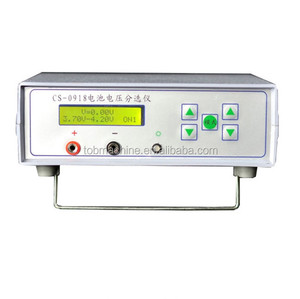
| BMS Validation Simulators | Isolated Multi-Channel DAC + Sink/Source | 1mV Precision / 24 Ch / 500V Isolation | BMS HIL Testing, SOC Balancing, Battery ECU Validation |
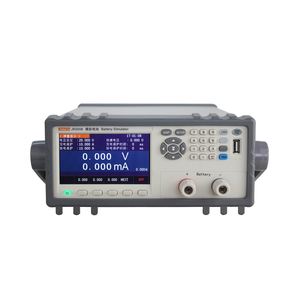
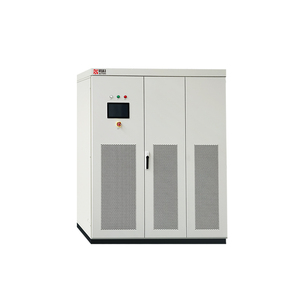
| High-Dynamic Battery Simulators | Bidirectional Current-Fed PWM / Active Front End | 150kW–1000kW / <1ms Response | EV Traction Inverter, DC Fast Charger Burn-In, Pack Testing |
| Industrial DC Power Supplies | Current-Fed Inductive Storage | 1.5kW–10MW / Ripple <0.05% | SiC/GaN Double Pulse Bus Supply, Magnet Power, Plasma |
| Linear MOSFET Electronic Loads | Linear Active Sinking Stage | 1.25kW–20kW / Zero-Switching Noise | Fuel Cell EIS, Micro-Battery Characterization, Converter Test |
Our manufacturing foundation builds upon four decades of power electronics refinement, stringent quality assurance, and cutting-edge structural engineering. We deliver world-class semiconductor and battery test instruments directly from vertically integrated production lines.
Unlike standard voltage-fed power units susceptible to short-circuit destructive failure, our current-fed topology utilizes inductive energy storage on the DC bus, guaranteeing absolute immunity against arc failures and severe electrical transients.
By executing precision sheet metal punching, custom high-frequency transformer winding, component SMT placement, and final load burn-in under one roof, standard build cycles are maintained at an industry-leading 4 to 6 weeks.
Equipped with high-speed digital signal processor (DSP) controls, our battery simulators dynamic voltage step response times are executed in under 100 microseconds, perfectly capturing transient EV accelerating and regenerative braking curves.
All instruments strictly comply with CE, UL, and ISO9001 certifications. Supported by factory-certified regional service networks, international clients receive continuous calibration assistance, remote technical guidance, and rapid spare-parts replacement.
Consult directly with our senior application engineers to define voltage, current, dynamic slew rate, and channel isolation specifications tailored to your exact manufacturing requirements.