Industry Whitepaper & Global Procurement Benchmark

China Top High Frequency Manufacturer & Factories

High-Precision Programmable DC Power Supplies, Battery Cell Simulators & Advanced Testing Systems for Global Electronics R&D

Precision High-Frequency Testing Equipment

Explore our flagship high-frequency DC power sources, cell-level simulators, and battery validation platforms engineered for extreme stability, dynamic response, and low ripple noise.
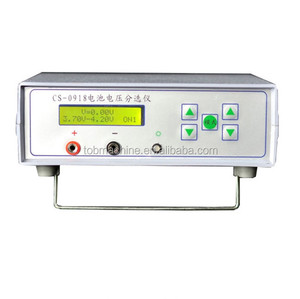
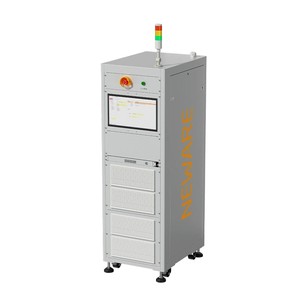
Lithium Ion Battery Voltage Current Capacity Tester
High-speed, multi-channel high-frequency testing rig designed for cell capacity grading, automated V/I curves, and internal resistance diagnostics.
Send an Inquiry
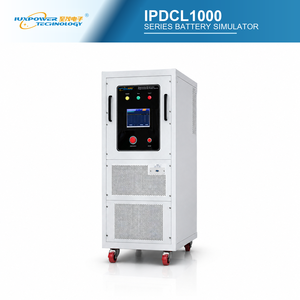
IPDCL1000 Series 220V 1KW High-Precision Battery Simulator
High-frequency programmable DC source with constant power function, sub-millisecond dynamic transient response, and bi-directional control.
Send an Inquiry
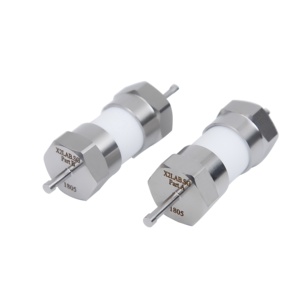
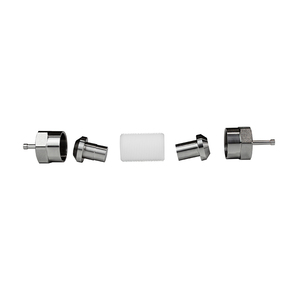
Removable Coin Battery Simulator for Coin Battery test
Removable Coin Battery Simulator for Coin Battery Test
Modular laboratory coin cell emulator offering high micro-amp resolution, rapid fixture switching, and ultra-low noise floor for electrochemical research.
Send an Inquiry
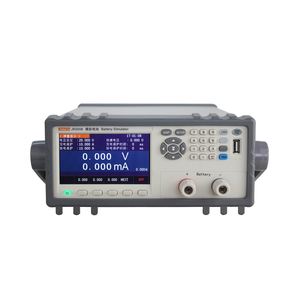
JK5506 Battery Simulator
JK5506 Industrial Battery Simulator System
Compact rack-mountable multi-channel simulator engineered for consumer electronics testing, BMS IC validation, and hardware-in-the-loop (HIL) setups.
Send an Inquiry
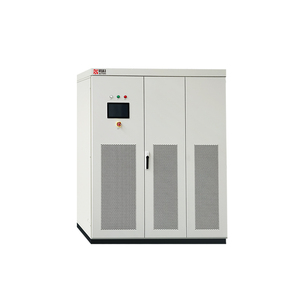
High-dynamic Battery Simulator 150-1000KW
High-Dynamic Megawatt Battery Simulator (150-1000KW)
Heavy-duty high-frequency power platform for EV powertrain testing, energy storage system (ESS) emulation, and megawatt grid-tied inverter testing.
Send an Inquiry
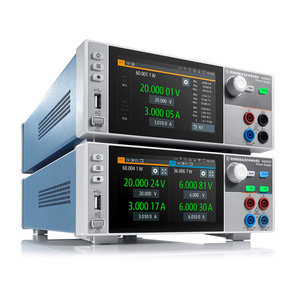
Industrial DC Power Bipolar Battery Simulator
Industrial High-Frequency Bipolar DC Battery Simulator
Seamless two-quadrant operation, sinking and sourcing current with linear-like stability, fast rise-time, and robust digital SCPI communications.
Send an Inquiry
Coin Cell Simulator for Electrochemical Labs
Electrochemical Lab Precision Cell Simulator (CR2032/2016)
Specialized high-frequency simulation source designed for coin cell lifecycle profiling, self-discharge rate analysis, and micro-power IoT DUTs.
Send an Inquiry
24-Channel Battery Cell Simulator for BMS Validation
Multi-channel isolated voltage simulator enabling SOC estimation, active/passive balance testing, fault injection, and real-time battery pack emulation.
Send an Inquiry
150kHz+
Switching Frequency Topology
< 100μs
Dynamic Transient Response
96.5%
Full-Load Power Efficiency
4-6 Weeks
Turnkey Factory Delivery

Engineering Architecture: Why High-Frequency Switching Redefines Power Dense Testing

In modern industrial manufacturing and power electronics testing, traditional low-frequency linear or phase-controlled SCR topologies no longer meet the stringent requirements of dynamic load response, power density, and energy efficiency. As global manufacturers shift toward silicon carbide (SiC) and gallium nitride (GaN) power semiconductor switching switches, high-frequency power processing has transitioned from an advanced engineering luxury to a mandatory industrial standard.

China's top high-frequency manufacturing facilities have led this technological paradigm shift by combining custom high-frequency planar transformer designs with current-fed and resonant converter switch-mode architectures. By operating switching frequencies above 100 kHz to 300 kHz, the physical footprint of magnetic components—such as inductors, transformers, and filter capacitors—is reduced by up to 70% compared to legacy line-frequency power systems.

Current-Fed Topology vs. Traditional Voltage-Fed Architectures

A fundamental differentiator in elite high-frequency power supplies is the adoption of a current-fed power processing topology. While standard power supplies utilize voltage-fed circuits that store energy primarily in large output capacitive banks, current-fed systems integrate an inductive storage component on the DC bus upstream of the high-frequency inverter stage.

  • Inherent Short-Circuit and Arc Immunity: Because the DC bus current is constrained by the primary inductor, sudden short-circuits or load breakdowns (common in battery testing, plasma discharge, and semiconductor fault injection) cannot cause catastrophic current spikes.
  • Minimal Output Capacitance for High Dynamic Slew Rates: By reducing the physical size of output capacitors, current-fed high-frequency supplies achieve voltage slew rates exceeding 50 V/ms and dynamic transient recovery times under 100 microseconds.
  • Graceful Handling of Reactive and Regenerative Loads: Dynamic battery simulators and electronic loads must frequently absorb inductive kickbacks or high-peak pulse currents from modern motor drives and battery management systems (BMS). Current-fed high-frequency stages seamlessly handle bi-directional energy transfer.
Electrical Parameter Legacy Line-Frequency (50/60Hz) Standard Switch-Mode (20-40kHz) Advanced High-Frequency (100kHz-300kHz+)
Power Density (kW/U) 0.5 kW / 3U Rack 3.0 kW / 1U Rack 10.0 kW / 1U Rack
Transient Recovery Time > 50 milliseconds 1 to 5 milliseconds < 100 microseconds
Output Ripple & Noise High Line-Frequency Hum 20mV - 50mV RMS < 5mV RMS (Filtered)
Full-Load Thermal Efficiency 65% - 75% 85% - 90% 94.5% - 96.8%
Acoustic Noise Floor Audible 60Hz Transformer Hum Variable Fan Noise Silent Ultrasonic Switching

Global Procurement & Technological Trends (2025–2030)

Insights for international engineering buyers, sourcing specialists, and enterprise procurement directors navigating the high-frequency equipment vendor landscape in China.

1. Wide-Bandgap Semiconductor Integration

Procurement teams are prioritizing factories utilizing third-generation semiconductors (SiC MOSFETs and GaN HEMTs). These components reduce thermal dissipation losses by 60%, allowing total cabinet footprints to shrink while enabling ultra-precise high-frequency pulse modulation.

2. Digital Twin & HIL Simulation

Modern battery simulators no longer just output static voltage; enterprise buyers demand dynamic battery model emulation (NMC, LFP, Solid-State) integrated directly into Hardware-in-the-Loop (HIL) environments via CAN FD, EtherCAT, and Modbus TCP digital buses.

3. Bi-Directional Energy Regeneration

Sustainability mandates require high-frequency testing instruments to feature active front-end (AFE) regenerative capability. Sunk discharge energy during cell/BMS testing is inverted back into the facility power grid at >95% power factor efficiency.

4. Supply Chain & Modular Lead-Time Reduction

Leading Chinese high-frequency factories have adopted modular building block architectures. By standardizing 1U/2U high-frequency power sub-assemblies, custom made-to-order high-power systems (up to 1MW+) can be built and shipped in 4 to 6 weeks rather than standard 20-week lead times.

Enterprise Factory Capability: Vertical Integration from Blueprint to Burn-In

When selecting a high-frequency power manufacturer in China, total quality control hinges on a manufacturer’s level of vertical integration. Reliance on third-party sub-contractors for critical magnetics, CNC sheet metal, or surface-mount technology (SMT) introduces quality variance and delivery bottlenecks. Our manufacturing operations maintain strict in-house control across every engineering discipline:

1. Precision Magnetics Engineering

In-house automated planar transformer and high-frequency inductor winding facilities. Every core is vacuum-impregnated and tested for partial discharge, minimizing copper losses and leakage inductance.

2. Automated SMT & PCB Assembly

High-speed multi-axis SMT placement lines coupled with 3D Automated Optical Inspection (AOI) and X-ray inspection for high-density control circuit boards and IGBT/MOSFET driver stages.

3. CNC Sheet Metal & Thermal Enclosures

Precision laser cutting, CNC turret punching, and automated robotic welding ensure rigid EMI/RFI shielded instrument chassis designed to survive harsh industrial environments.

4. 100% Full-Load Thermal Burn-In

Before shipment, every unit undergoes rigorous full-load thermal burn-in inside climate-controlled chambers, monitored in real-time by automated SCPI test routines to ensure zero infant mortality.

Industrial Application Matrix

Matching high-frequency DC sources and battery simulation platforms to specific automotive, aerospace, laboratory, and industrial manufacturing workflows.

BMS Hardware-in-the-Loop (HIL) Testing

Validation of multi-cell Battery Management Systems requires isolated individual cell channels with micro-amp leakage currents. Our 24-channel battery simulators emulate individual cell voltages, cell imbalances, shorted conditions, and thermal sensor faults with sub-millivolt accuracy.

Key Product: 24-Channel BMS Cell Simulator

Electric Vehicle Powertrain & Inverter R&D

Simulating 400V/800V/1200V traction battery packs under dynamic acceleration and regenerative braking conditions requires megawatt-level high-frequency bipolar sources capable of instantaneous power reversals without voltage overshoot.

Key Product: 150-1000KW High-Dynamic Simulator

Electrochemical & Coin Cell Research

Characterizing next-generation solid-state materials, coin cell chemistry (CR2032/2016), and nano-power energy harvesting sensors demands high-frequency DC supplies with stable sub-milliamp current sensing and negligible EMI noise.

Key Product: Removable Coin Cell Simulator

Frequently Asked Questions (FAQ)

Expert answers to operational, engineering, and procurement queries regarding custom high-frequency power manufacturing and equipment deployment.

What specific advantages does a high-frequency power supply offer over a standard switch-mode power supply?
High-frequency power supplies (operating at 100 kHz to 300 kHz+) drastically reduce the physical size of internal inductors and capacitors. This results in significantly higher power density (up to 10 kW in a 1U rack-mount chassis), sub-100-microsecond dynamic transient response times, lower ripple noise, and ultrasonic operation that eliminates audible transformer hum.
Can your battery simulators simulate real-time battery degradation and internal resistance (Rint)?
Yes. Our high-precision battery simulators incorporate programmable internal resistance (Rint) algorithms. Engineers can dynamic set cell SOC (State of Charge), temperature lookup tables, and active internal impedance changes in real-time, matching dynamic battery behavior during charging and discharging cycles.
How do high-frequency current-fed topologies handle arc conditions or sudden load shorts?
Unlike traditional voltage-fed topologies that release massive capacitive energy into a load short, current-fed systems naturally limit fault current via the primary inductor on the DC bus. The high-frequency control loop detects short-circuit events within microseconds and safely folds back current without blowing output fuses or damaging internal switching MOSFETs.
What communication protocols are supported for automated production line integration?
All standardized units come equipped with Ethernet/LXI, USB, and RS-232/RS-485 interfaces natively supporting SCPI (Standard Commands for Programmable Instruments). High-speed industrial interfaces such as CAN FD, EtherCAT, Modbus TCP, and isolated 0-10V/4-20mA analog control cards are available for automated factory integration.
What is the standard manufacturing lead-time for customized high-frequency power systems?
Thanks to our modular sub-assembly inventory and vertically integrated manufacturing facility in China (including in-house magnetics and CNC fabrication), standard made-to-order lead times range from 4 to 6 weeks. Standard catalog models are frequently stocked for immediate delivery.
Are liquid-cooled option architectures available for megawatt-scale high-frequency units?
Yes. For continuous high-power testing applications above 100 kW (up to multi-megawatt systems) or cleanroom testing bays where fan airflow and heat rejection must be contained, we provide closed-loop water/glycol liquid cooling systems with quick-disconnect stainless steel manifolds.
How is multi-channel synchronization achieved in 24-channel BMS simulators?
Our multi-channel BMS cell simulators utilize an ultra-fast internal system bus governed by a master DSP engine. Each individual cell output channel features optical galvanic isolation (rated up to 1000V DC channel-to-channel and channel-to-ground), allowing thousands of simulated battery cells to be connected in series without ground loop interference.
What international safety standards and certifications do your high-frequency products comply with?
Our factory adheres strictly to ISO 9001 quality control management. All high-frequency power supplies, simulators, and load platforms carry full CE marking compliance, adhering to Low Voltage Directive (LVD 2014/35/EU) and Electromagnetic Compatibility (EMC Directive 2014/30/EU) standards, with optional NRTL/UL listing compliance for North American installations.

Partner with China's Premier High-Frequency Power Manufacturer

Request technical datasheets, request custom electrical parameter configurations, or schedule an engineering consultation with our technical sales specialists today.